
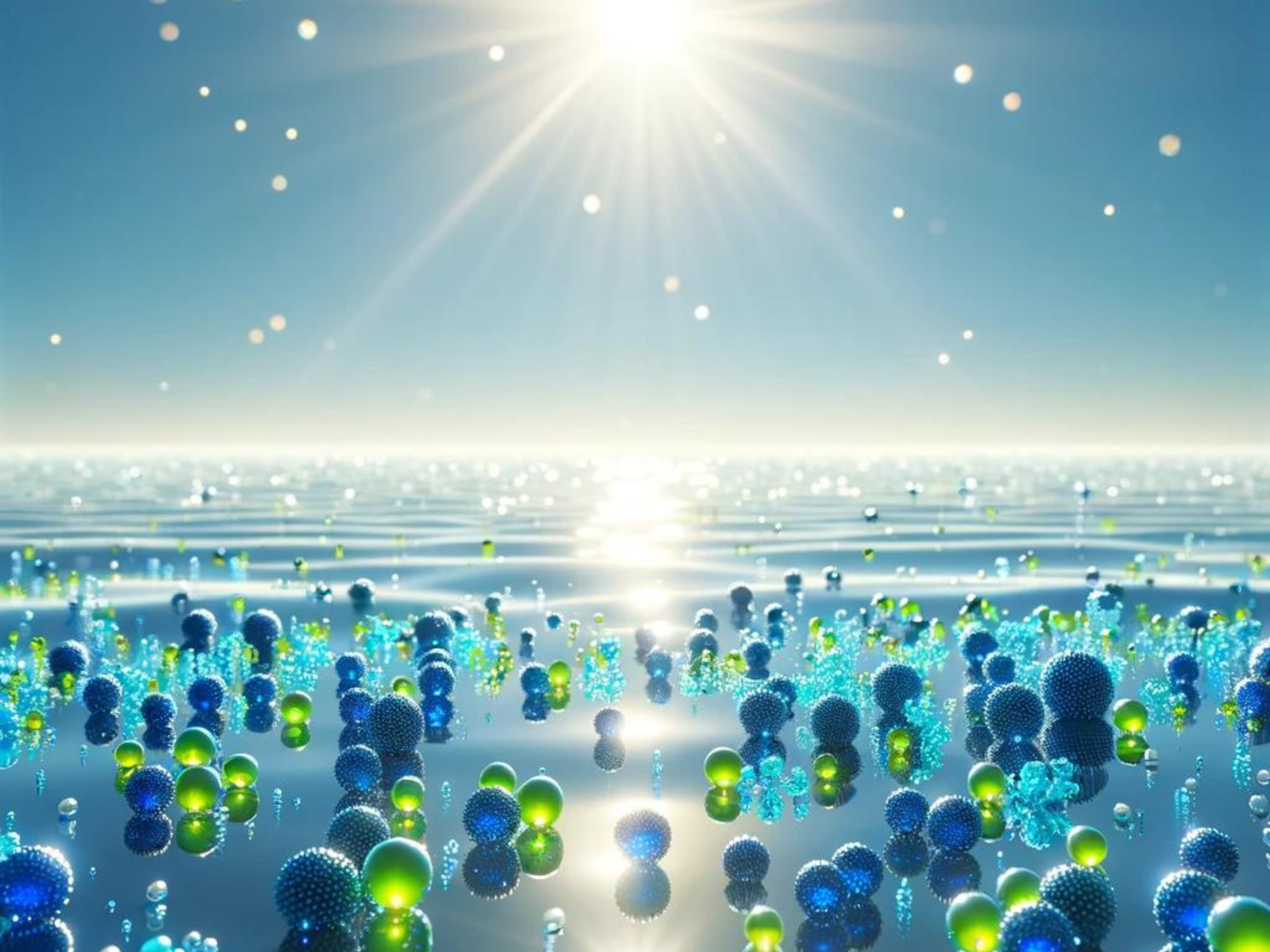

In an era where environmental pollution poses significant challenges to both ecosystem health and human safety, innovative solutions for the removal of micropollutants from water are critically needed. Researchers have developed a pioneering approach that leverages the photo-Fenton process for the efficient degradation of contaminants, utilizing Fe-Co Prussian Blue Analogue (PBA) nanospheres immobilized on biochar. This groundbreaking study demonstrates that the floating biochar not only facilitates the absorption of sunlight but also enhances the transfer of photogenerated electrons within the FeCo PBA, improving the catalyst’s stability in aqueous environments.
The immobilization of PBA on biochar significantly increases its loading capacity, which is influenced by the aging temperature and time of the PBA. This configuration showcases a robust ability to degrade chloroquine phosphate, a notable contaminant, under both artificial and natural light sources. Interestingly, the degradation process remains efficient across a broad range of pHpH is a measure of how acidic or alkaline a substance is. A pH of 7 is neutral, while lower pH values indicate acidity and higher values indicate alkalinity. Biochars are normally alkaline and can influence soil pH, often increasing it, which can be beneficial More values and in the presence of various anions, indicating the system’s versatility. Moreover, the study proposes a potential pathway for the degradation process, identifying nine intermediate products.
Beyond its efficacy in contaminant degradation, the PBA-on-biochar system exhibits excellent floatability and photo-Fenton activity, making it exceptionally effective against the proliferation of Microcystis aeruginosa under sunlight. These findings underscore the potential of PBA-on-biochar in practical applications for rapid micropollutant oxidation from water, marking a significant step forward in the quest for sustainable and effective water decontamination technologies.






Leave a Reply