
Rani, M., Keshu & Shanker, U. Green synthesis of sunlight active rice husk biocharBiochar is a carbon-rich material created from biomass decomposition in low-oxygen conditions. It has important applications in environmental remediation, soil improvement, agriculture, carbon sequestration, energy storage, and sustainable materials, promoting efficiency and reducing waste in various contexts while addressing climate change challenges. More loaded with metal ferrite nanocomposite for efficient removal of pesticides: kinetics and photoactivity. BiomassBiomass is a complex biological organic or non-organic solid product derived from living or recently living organism and available naturally. Various types of wastes such as animal manure, waste paper, sludge and many industrial wastes are also treated as biomass because like natural biomass these More Conv. Bioref. (2024). https://doi.org/10.1007/s13399-024-06000-7
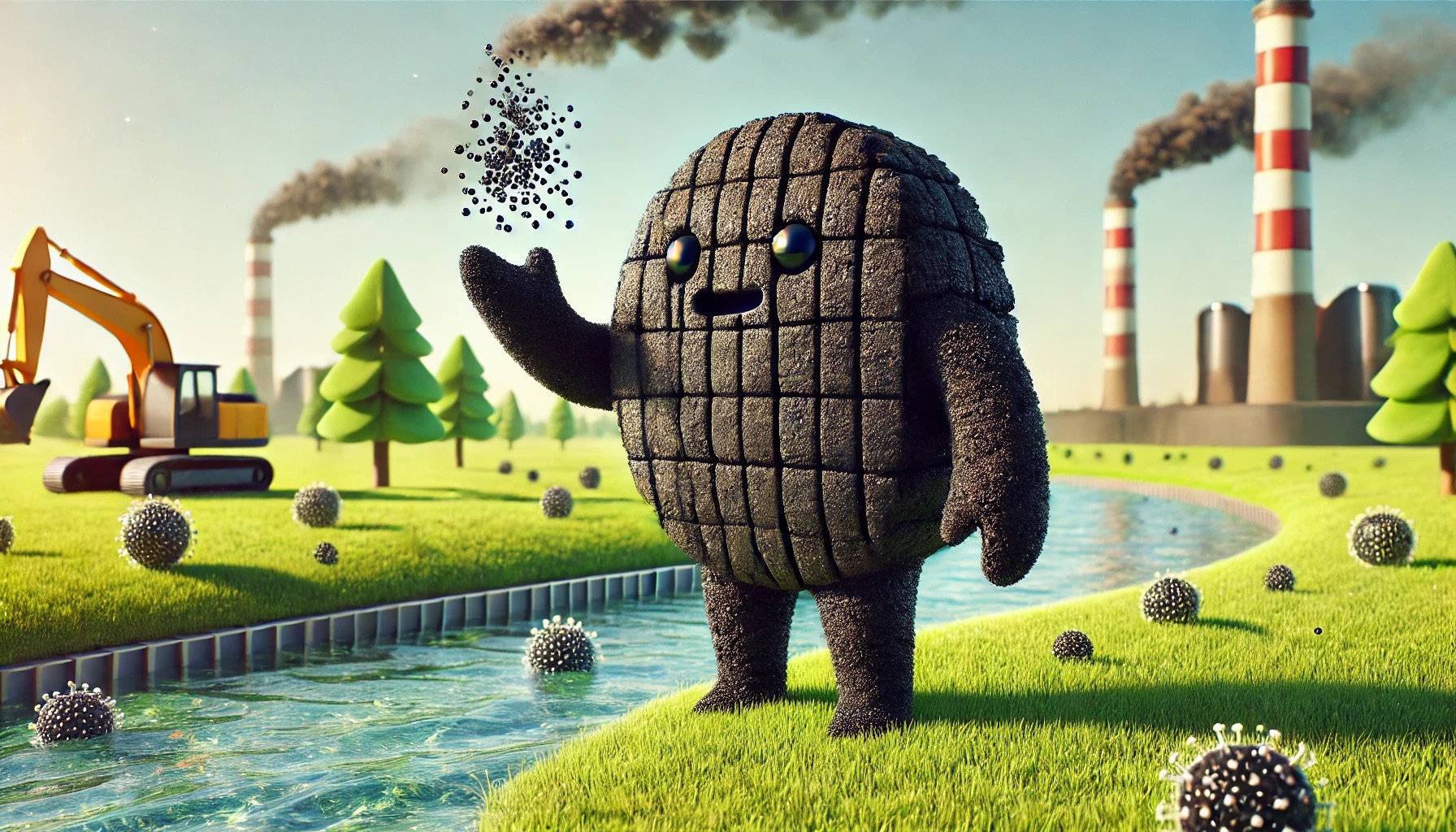
The improper disposal and persistent nature of pesticides like Lindane and DDE have raised serious health concerns due to their endocrine-disrupting and genotoxic effects. A promising solution is photocatalysis, using nanomaterials to break down these toxic chemicals in wastewater. Recent research focused on a biochar (BC)-loaded CoFe2O4 nanocomposite (BC@CoFe2O4), derived from agricultural waste like rice husks, for the photocatalytic degradation of Endosulfan and 4,4-DDD pesticides. This semi-crystalline composite demonstrated excellent removal rates—95% for Lindane and 91% for DDE—under optimal conditions. The degradation followed Langmuir adsorption and first-order kinetics, with hydroxyl radicals playing a key role. Notably, BC@CoFe2O4 proved highly sustainable, retaining its effectiveness over six cycles with minimal decline. Given its cost-effectiveness, eco-friendliness, and impressive surface properties, this nanocomposite offers significant potential for industrial applications in environmental cleanup.




Leave a Reply