
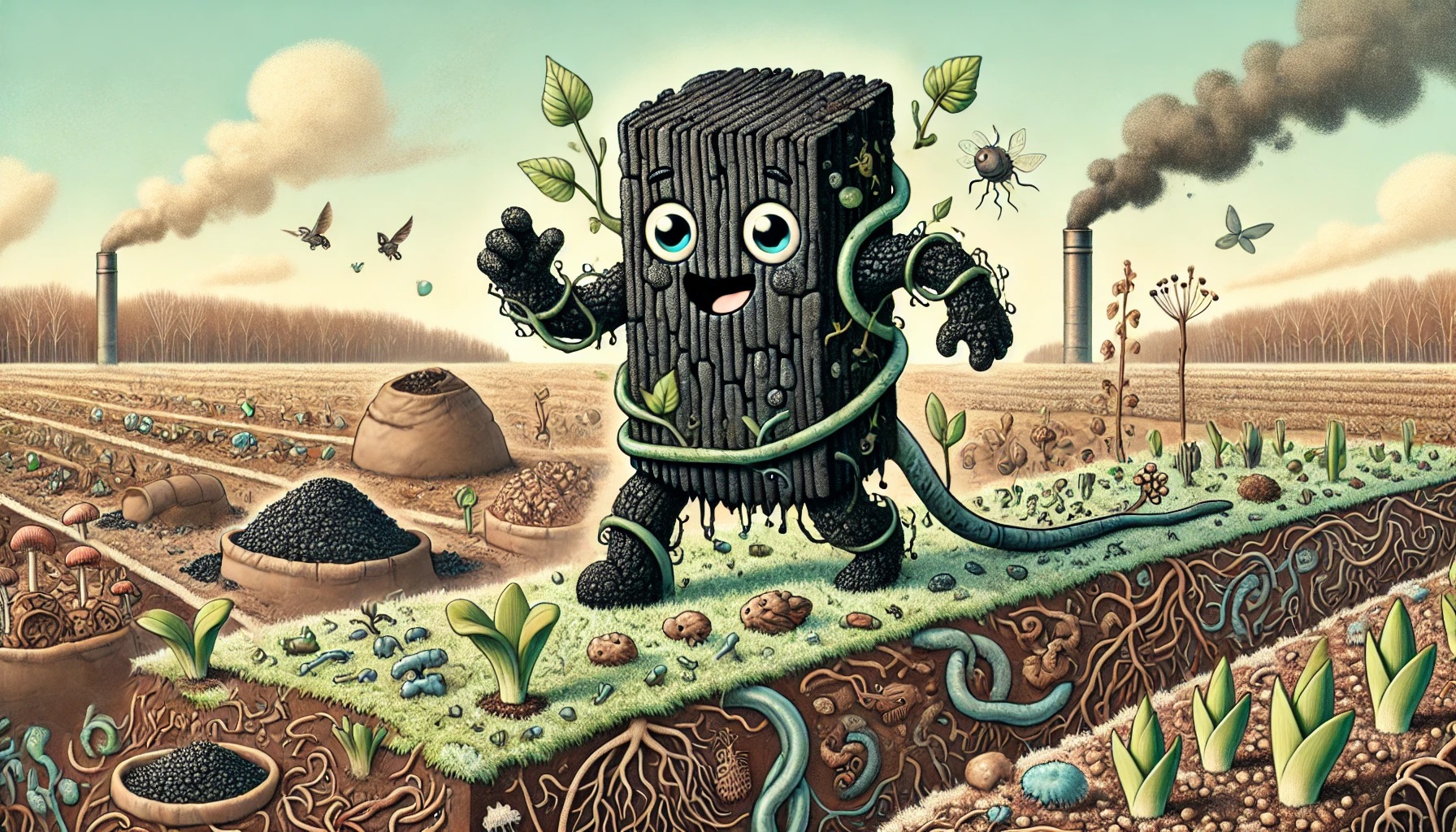

Effects of biocharBiochar is a carbon-rich material created from biomass decomposition in low-oxygen conditions. It has important applications in environmental remediation, soil improvement, agriculture, carbon sequestration, energy storage, and sustainable materials, promoting efficiency and reducing waste in various contexts while addressing climate change challenges. More and compost on the abundant and rare microbial communities assembly and multifunctionality in pesticide-contaminated soil under freeze‒thaw cycles. Environmental Pollution. https://doi.org/10.1016/j.envpol.2024.125003
A recent study published in Environmental Pollution investigates how biochar and compost affect microbial communities in pesticide-contaminated soils under freeze-thaw cycles. The study focuses on soils polluted with glyphosate, imidacloprid, and pyraclostrobin, which are widely used pesticides that persist in the environment, potentially harming soil health.
The researchers found that freeze-thaw cycles enhance the adsorption capacity of biochar and compost, improving their ability to immobilize pesticide residues. This combination treatment altered the structure of both abundant and rare microbial communities, promoting a healthier microbial balance. Rare microbial taxa, though less abundant, played a critical role in improving soil multifunctionality, including nutrient cycling and organic matter decomposition.
The study also highlights that biochar and compost significantly reduced pesticide concentrations and half-lives, thus promoting pesticide degradation in the soil. Additionally, the freeze-thaw cycles improved the structure of the soil, further supporting microbial activity and soil health.
By driving changes in microbial community assembly and enhancing the resilience of rare taxa, biochar and compost are promising tools for remediating contaminated soils in cold climates. This research provides valuable insights for developing sustainable agricultural practices to maintain soil productivity and ecosystem health, especially in regions subject to seasonal freezing.




Leave a Reply