
Soursos, N.; Kottis, T.; Premeti, V.; Zafeiropoulos, J.; Govatsi, K.; Sygellou, L.; Vakros, J.; Manariotis, I.D.; Mantzavinos, D.; Lianos, P. Study of the Suitability of Corncob BiocharBiochar is a carbon-rich material created from biomass decomposition in low-oxygen conditions. It has important applications in environmental remediation, soil improvement, agriculture, carbon sequestration, energy storage, and sustainable materials, promoting efficiency and reducing waste in various contexts while addressing climate change challenges. More as Electrocatalyst for Zn–Air Batteries. Batteries2024,10,209. https://doi.org/10.3390/batteries10060209
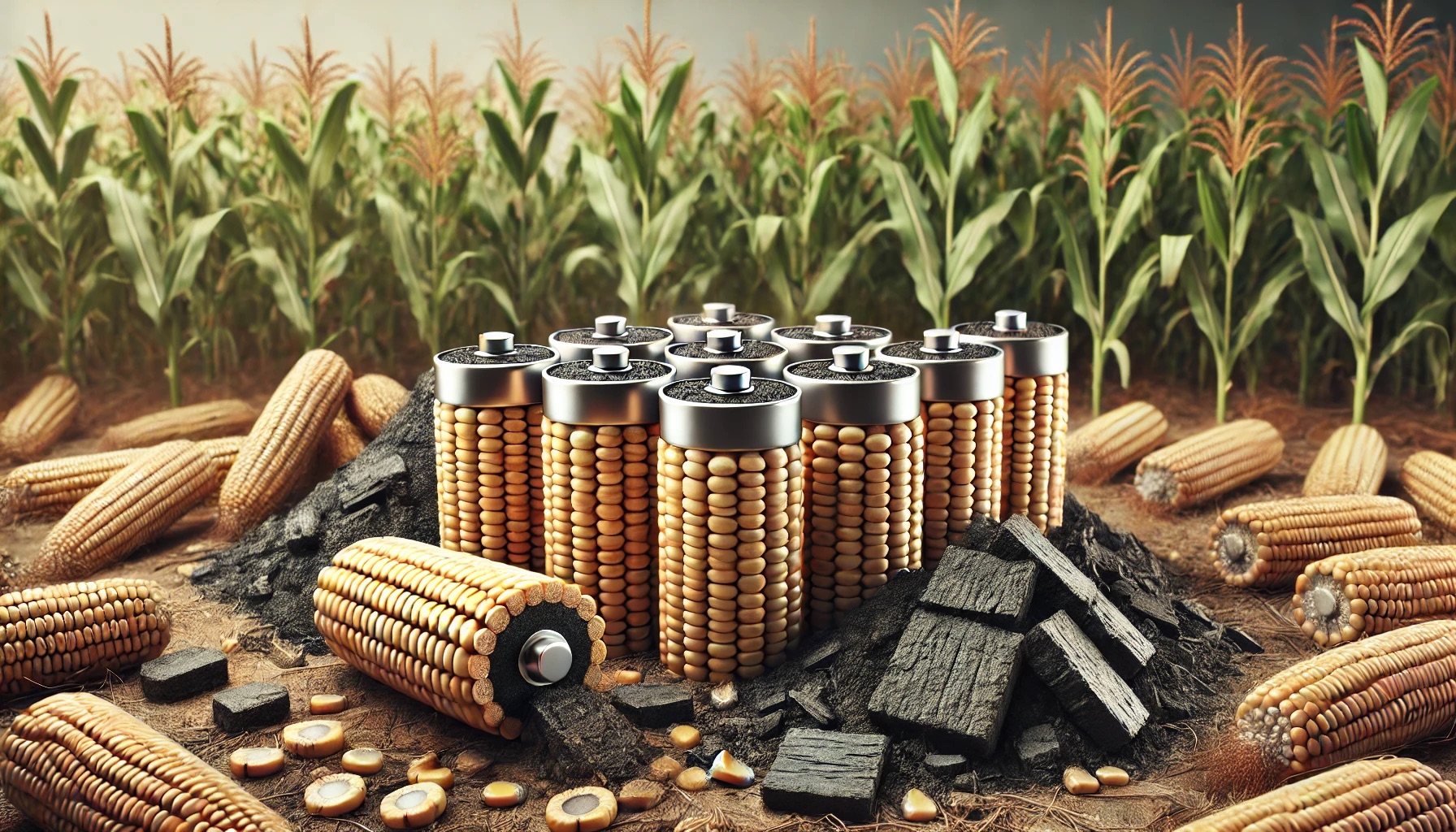
Researchers have explored the use of corncob biochar as an electrocatalyst for zinc-air batteries, a promising alternative to lithium-ion batteries due to their abundance, lower cost, and environmental friendliness. Corncob biochar, derived from waste biomassBiomass is a complex biological organic or non-organic solid product derived from living or recently living organism and available naturally. Various types of wastes such as animal manure, waste paper, sludge and many industrial wastes are also treated as biomass because like natural biomass these More, offers a low-cost and electrically conductive material suitable for this purpose. The process involves drying, mincing, and pyrolyzing corncobs, followed by a second pyrolysisPyrolysis is a thermochemical process that converts waste biomass into bio-char, bio-oil, and pyro-gas. It offers significant advantages in waste valorization, turning low-value materials into economically valuable resources. Its versatility allows for tailored products based on operational conditions, presenting itself as a cost-effective and efficient More with potassium hydroxide (KOH) activation.
Characterization of the biochar showed a hierarchical pore structure, moderate surface area, and a carbon phase with a relatively low sp2/sp3 ratio. Despite these modest characteristics, the biochar demonstrated significant oxygen reduction (ORR) and oxygen evolution (OER) reactions essential for zinc-air battery performance. The study found that corncob biochar could reach an open-circuit voltage of about 1.4V, with stable performance over several hours, a short-circuit current density of 142 mA cm-2, and a maximum power density of 55 mW cm-2.
This research indicates that corncob biochar, despite its lower surface area and sp2/sp3 ratio, can effectively serve as an electrocatalyst in zinc-air batteries due to its rich oxygen sites. This highlights the potential for biochars from various biomass sources to contribute to sustainable and efficient energy storage solutions.




Leave a Reply