
Barbosa, F.L.A., Santos, J.M.R., Mota, J.C.A. et al.Potential of biocharBiochar is a carbon-rich material created from biomass decomposition in low-oxygen conditions. It has important applications in environmental remediation, soil improvement, agriculture, carbon sequestration, energy storage, and sustainable materials, promoting efficiency and reducing waste in various contexts while addressing climate change challenges. More to restoration of microbial biomassBiomass is a complex biological organic or non-organic solid product derived from living or recently living organism and available naturally. Various types of wastes such as animal manure, waste paper, sludge and many industrial wastes are also treated as biomass because like natural biomass these More and enzymatic activity in a highly degraded semiarid soil. Sci Rep14, 26065 (2024). https://doi.org/10.1038/s41598-024-77368-9
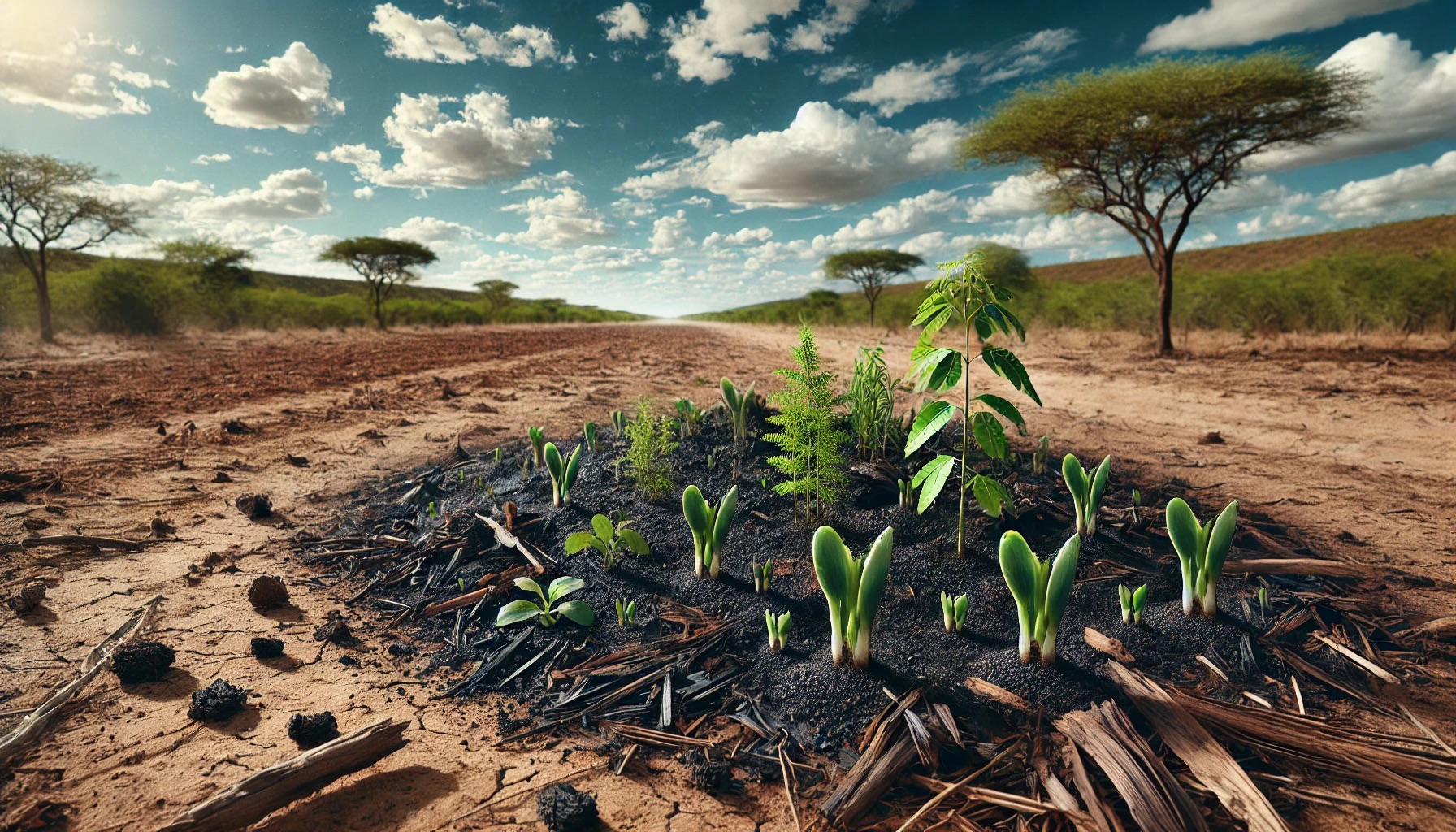
Recent research explores how biochar made from cashew residues and sewage sludge impacts degraded semiarid soils, especially focusing on microbial activity and soil nutrient cycling. Degraded soils, common in dryland regions, struggle with nutrient loss and reduced microbial biomass due to overgrazing and erosion. This study examined biochar’s potential to revive microbial properties in such soils by using biochar to improve soil chemistry and support microbial activity.
The study found that cashew biochar notably boosted soil respiration, indicating increased carbon availability for microorganisms. While both cashew and sewage sludge biochars increased microbial nitrogen, they left the soil more limited in phosphorus. Enzyme activities involved in nutrient cycling also changed: both biochars enhanced enzymes linked to carbon and nitrogen but varied in effects on phosphorus-related enzymes. Sewage sludge biochar showed more consistent increases in microbial biomass than cashew biochar.
A critical insight was that while biochar improves carbon and nitrogen levels, it intensifies phosphorus limitations, suggesting the need for phosphorus supplementation to maximize microbial activity and soil health restoration.
These findings point to biochar’s role in enhancing soil health through microbial growth and nutrient balance in degraded soils, especially if complemented with phosphorus. This approach offers a sustainable, bio-based option for soil restoration, which could be vital for revitalizing degraded landscapes and supporting agricultural productivity in semiarid areas.




Leave a Reply