
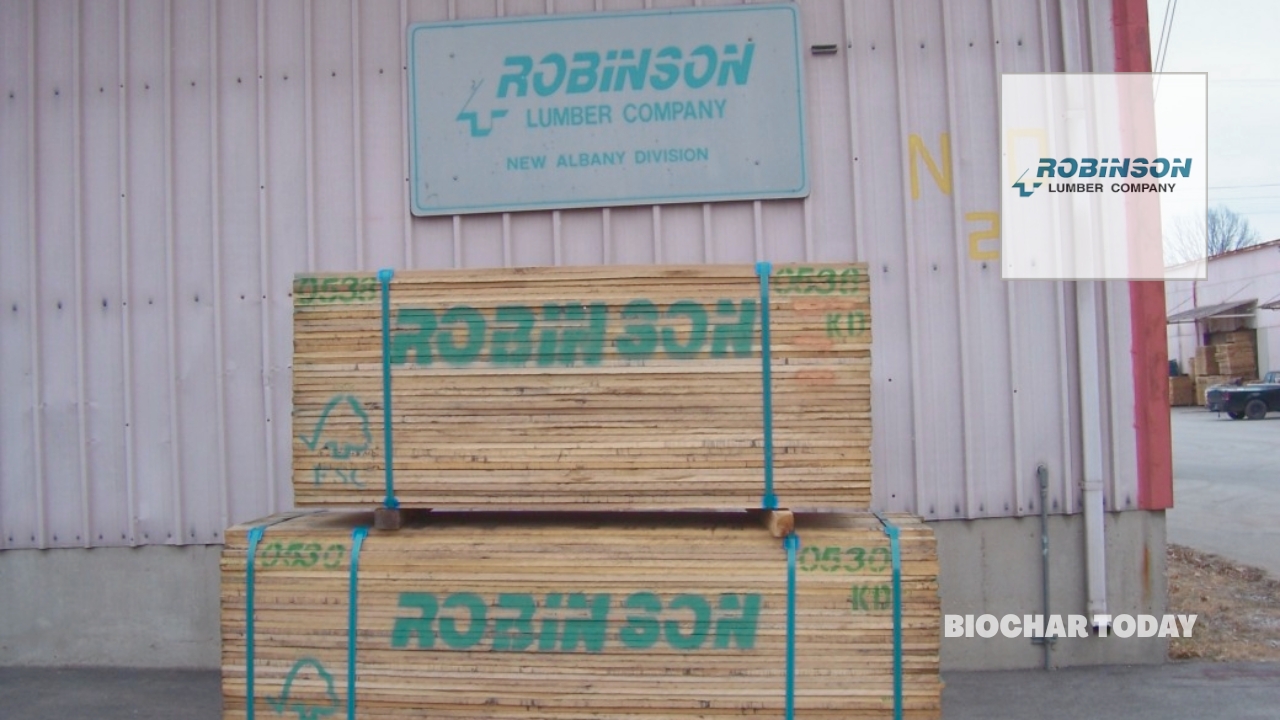
Robinson Lumber Company in New Albany, Indiana, recently installed a biochar production system on its lumber yard property, prompting questions from nearby residents about a newly erected smokestack and its environmental impact. Local reporting noted that neighbors were surprised to see the stack before Christmas and voiced concerns about its purpose and potential emissions, while the company emphasized that the installation is part of a system to heat wood chips for producing biocharBiochar is a carbon-rich material created from biomass decomposition in low-oxygen conditions. It has important applications in environmental remediation, soil improvement, agriculture, carbon sequestration, energy storage, and sustainable materials, promoting efficiency and reducing waste in various contexts while addressing climate change challenges. More in a controlled process. Robinson Lumber has characterized the equipment as safe and without adverse effects on local air quality.
The primary challenge in this development has been addressing community uncertainty and perception of risk surrounding the biochar production installation. Without clear information, residents interpreted the stack as a potential source of pollution, which can occur when unfamiliar industrial equipment is introduced into residential areas. This highlights a broader issue for the biochar field: the need for transparent communication when deploying thermal conversion units that involve stacks or apparent combustion equipment in proximity to homes or urban environments.
Robinson Lumber’s response has been to clarify the function and safety of the system. Company representatives explained that the stack is associated with a “wood BBQ” style heater that thermally processes wood chips to produce a stable carbon-rich product. The emphasis on environmental friendliness and the absence of reported impacts on quality of life aim to mitigate neighborhood concerns. By framing the system as controlled and safe, Robinson Lumber seeks to reassure stakeholders that operations comply with expected norms and do not pose undue risk, albeit without citing specific monitoring data in the available local reports.
Early outcomes of this engagement include raising public awareness of biochar production and highlighting the importance of outreach when industrial biochar systems are introduced near populated areas. While no documented environmental issues have arisen from the installation to date, local attention has underscored the need for proactive explanation of technology and emissions controls as part of biochar deployment strategies, particularly for companies entering production with new equipment in community settings. Robinson Lumber’s approach reflects how traditional wood processors can integrate biochar production into existing operations while navigating the communication and transparency expectations that increasingly accompany industrial decarbonization technologies.




Leave a Reply