
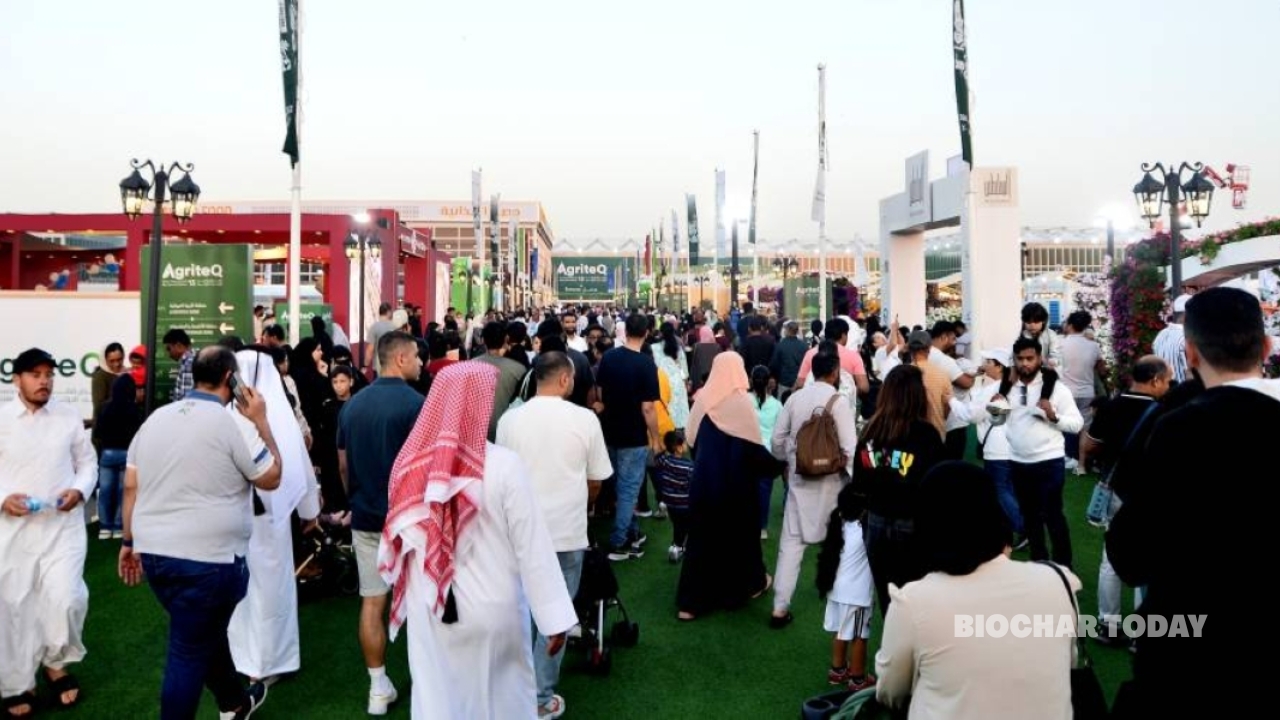
The Qatar International Agricultural Exhibition (AgriteQ 2026), held in Qatar at Katara Cultural Village, convened global experts, researchers, policymakers, and industry leaders to explore sustainable agriculture and technological innovation. The exhibition featured more than 520 exhibitors from 41 countries and included a scientific conference addressing climate change mitigation, waste management, and agricultural productivity. Among the technologies discussed were biochar-based applications, including food-waste-derived biocharBiochar is a carbon-rich material created from biomass decomposition in low-oxygen conditions. It has important applications in environmental remediation, soil improvement, agriculture, carbon sequestration, energy storage, and sustainable materials, promoting efficiency and reducing waste in various contexts while addressing climate change challenges. More and locally modified biochar for vegetable production. The event also facilitated international cooperation agreements and technical exchanges aimed at strengthening sustainable agricultural development and food security.
The central challenge addressed at the exhibition is the need to improve agricultural productivity and resilience under increasing environmental pressures, particularly climate change and resource constraints. Countries in arid regions such as Qatar face challenges related to soil quality, water scarcity, and sustainable waste management, which affect crop yields and long-term food security. The conference highlighted the importance of reducing greenhouse gas emissions, managing organic waste streams, and improving crop performance in controlled and open-field conditions. These issues underscore the need for scalable technologies and collaborative frameworks that support sustainable agricultural systems while addressing environmental impacts.
Proposed solutions presented at AgriteQ 2026 emphasized technological innovation and international collaboration. Research sessions explored decentralized bokashi fermentation to reduce emissions and the production of quantum carbon points derived from biochar generated from food waste. Presentations also examined the use of locally sourced modified biochar to enhance vegetable production, particularly in challenging growing environments. In parallel, the exhibition promoted knowledge exchange through bilateral agreements, including agricultural cooperation between Qatar and Oman and municipal partnerships involving Doha, Beirut, and Kinshasa. These initiatives support technical exchange, research collaboration, and the adoption of sustainable agricultural practices.
The outcomes of AgriteQ 2026 include strengthened international partnerships, expanded knowledge sharing, and increased attention to biochar applications in agricultural systems. The event provided a platform for advancing sustainable technologies, fostering collaborative research, and promoting practical solutions for climate mitigation and food production challenges. By facilitating dialogue among stakeholders and showcasing applied research, the exhibition contributes to the development of resilient agricultural practices and supports ongoing innovation in biochar deployment within broader sustainability strategies.


Leave a Reply