
Key Takeaways
- Converting agricultural waste into biocharBiochar is a carbon-rich material created from biomass decomposition in low-oxygen conditions. It has important applications in environmental remediation, soil improvement, agriculture, carbon sequestration, energy storage, and sustainable materials, promoting efficiency and reducing waste in various contexts while addressing climate change challenges. More can significantly reduce carbon emissions.
- Optimal biochar production occurs at temperatures between four hundred and six hundred degrees.
- Biochar helps improve soil fertility and can store carbon in the ground for a long time.
- This technology is more sustainable than burning waste or turning it into gas.
- Using palm kernel shell waste for biochar supports a sustainable and circular economy.
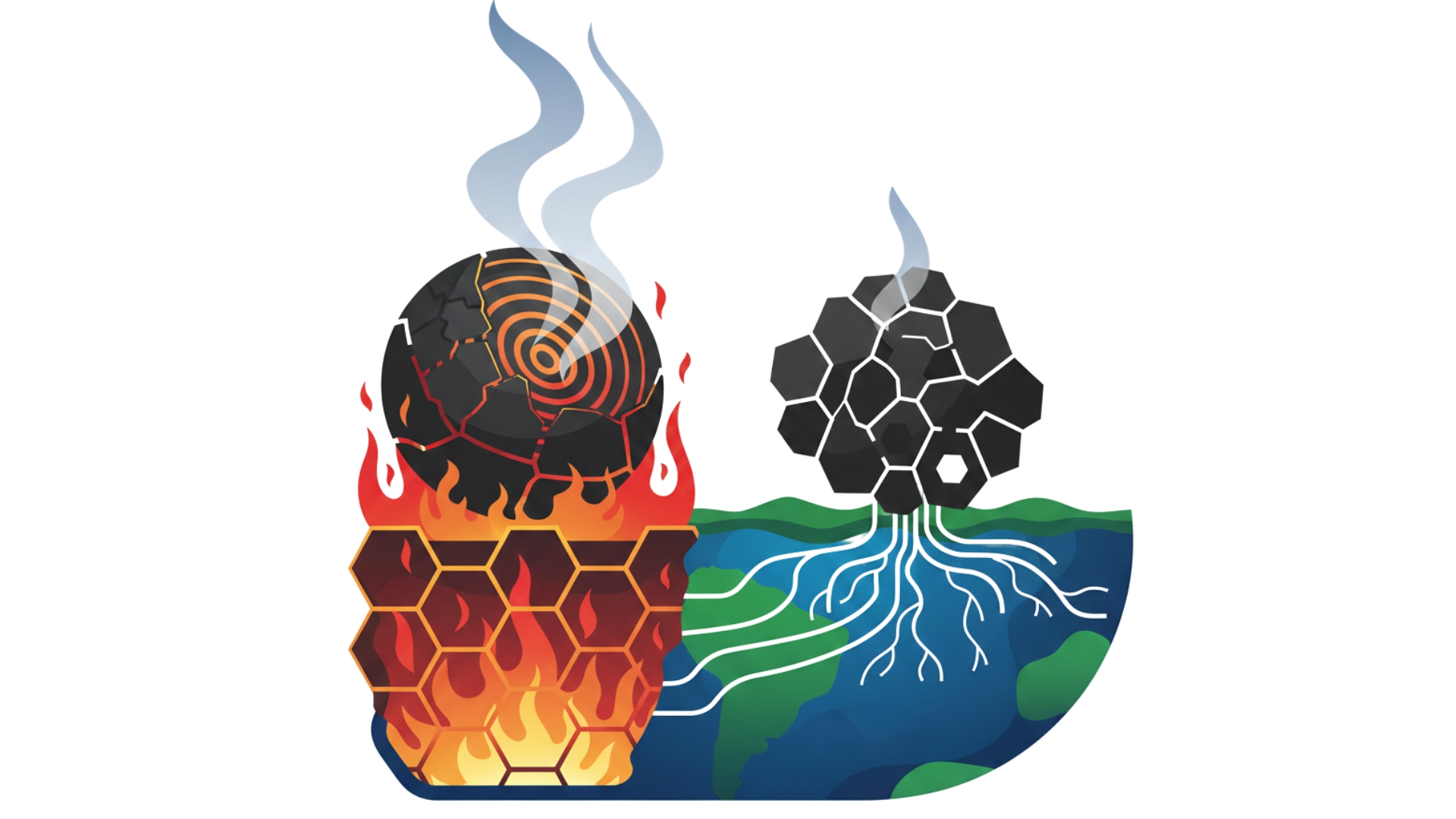
The Indonesian Journal of Multidisciplinary Science recently published a systematic review by Shafira Quamila Dewi, Astryd Viandila Dahlan, and Djoko M. Hartono exploring the sustainable conversion of palm kernel shells. The researchers examined how this abundant solid waste from the palm oil industry can be transformed into value-added products like biochar, bio-oil, and syngasSyngas, or synthesis gas, is a fuel gas mixture consisting primarily of hydrogen and carbon monoxide. It is produced during gasification and can be used as a fuel source or as a feedstock for producing other chemicals and fuels. More. Their findings suggest that moving away from conventional disposal methods toward thermochemical conversion can address immediate energy needs while contributing to long-term climate change mitigation. By focusing on the dual benefits of renewable energy recovery and carbon storage, the study positions pyrolysisPyrolysis is a thermochemical process that converts waste biomass into bio-char, bio-oil, and pyro-gas. It offers significant advantages in waste valorization, turning low-value materials into economically valuable resources. Its versatility allows for tailored products based on operational conditions, presenting itself as a cost-effective and efficient More as a superior technology for managing industrial waste in a way that aligns with global sustainability goals.
The findings reveal that the most effective way to produce high-quality biochar is through slow pyrolysis. When palm kernel shells are heated between four hundred and six hundred degrees Celsius for thirty to ninety minutes, the process yields a solid material rich in carbon and energy. This biochar possesses a high calorific value of approximately twenty-seven megajoules per kilogram, making it an excellent candidate for eco-friendly briquettes that can replace traditional coal. Beyond energy, the resulting material features a complex microporous structure that is highly effective at absorbing pollutants. When activated with substances like phosphoric acid, the surface area of the biochar can exceed twelve hundred square meters per gram, allowing it to remove heavy metals and organic dyes from contaminated water with remarkable efficiency.
In agricultural settings, palm kernel shell biochar serves as a powerful soil amendmentA soil amendment is any material added to the soil to enhance its physical or chemical properties, improving its suitability for plant growth. Biochar is considered a soil amendment as it can improve soil structure, water retention, nutrient availability, and microbial activity. More. It enhances fertility by adding essential nutrients like potassium, calcium, and magnesium while simultaneously improving the soil’s ability to retain water. One of the most significant environmental advantages is its carbon sequestration potential. By locking carbon into a stable solid form that is resistant to degradation, the use of biochar can sequester zero point sixty-three kilograms of carbon dioxide equivalent for every kilogram of shells processed. This process transforms the palm oil industry from a source of greenhouse gas emissions into a participant in a circular bioeconomy, where waste is no longer burned or left to rot but is instead used to restore soil health and protect the atmosphere.
When compared to other common waste management technologies like incineration and gasificationGasification is a high-temperature, thermochemical process that converts carbon-based materials into a gaseous fuel called syngas and solid by-products. It takes place in an oxygen-deficient environment at temperatures typically above 750°C. Unlike combustion, which fully burns material to produce heat and carbon dioxide (CO2), gasification More, pyrolysis offers distinct economic and environmental advantages. While incineration is effective for generating heat and electricity, it oxidizes nearly all biomassBiomass is a complex biological organic or non-organic solid product derived from living or recently living organism and available naturally. Various types of wastes such as animal manure, waste paper, sludge and many industrial wastes are also treated as biomass because like natural biomass these More carbon into carbon dioxide, missing the opportunity for long-term storage. Gasification is technically feasible for producing fuel gas but remains sensitive to moisture and often results in high tar levels. Pyrolysis stands out because it is economically viable at smaller scales, making it ideal for decentralized implementation at individual palm oil mills. Furthermore, the market value of the resulting biochar is significantly higher than the revenue generated from energy-only pathways, especially when carbon credits are factored into the economic model.
The study concludes that integrating pyrolysis into the palm oil industry can help nations meet their emission reduction targets. For a country like Indonesia, which produces millions of tons of palm kernel shells annually, this technology provides a clear roadmap for sustainable industrial development. By implementing regulatory frameworks and economic incentives, the industry can transition toward a model that prioritizes carbon negativity and multifunctional material development. This shift not only mitigates the environmental impact of agricultural waste but also creates new income streams through the production of high-value adsorbents, fertilizers, and renewable fuels, ultimately fostering a more resilient and sustainable economy.
Source: Dewi, S. Q., Dahlan, A. V., & Hartono, D. M. (2025). Pyrolytic conversion of palm kernel shells to biochar and comparative insights with incineration and gasification for environmental sustainability. Indonesian Journal of Multidisciplinary Science, 5(3), 115-129.





Leave a Reply