
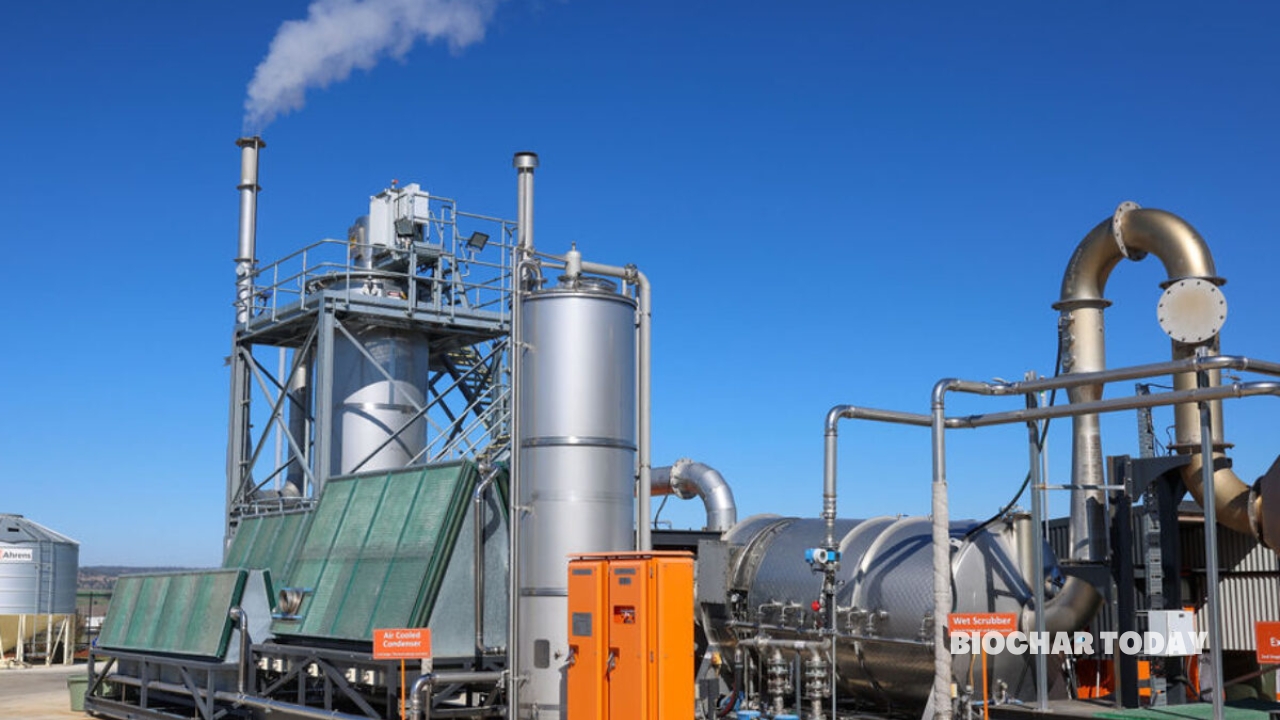
The Australian engineering firm Pyrocal has been appointed as the preferred contractor to implement its proprietary Continuous Carbonization Technology (CCT) within the Capital Regional District (CRD) of British Columbia, Canada. This agreement involves integrating a specialized pyrolysisPyrolysis is a thermochemical process that converts waste biomass into bio-char, bio-oil, and pyro-gas. It offers significant advantages in waste valorization, turning low-value materials into economically valuable resources. Its versatility allows for tailored products based on operational conditions, presenting itself as a cost-effective and efficient More system into the CRD’s Residuals Treatment Facility at the Hartland Landfill to process 100 percent of the region’s Class A biosolids. The project represents a national first for Canada, establishing a local circular economy model by converting municipal waste into high-value biocharBiochar is a carbon-rich material created from biomass decomposition in low-oxygen conditions. It has important applications in environmental remediation, soil improvement, agriculture, carbon sequestration, energy storage, and sustainable materials, promoting efficiency and reducing waste in various contexts while addressing climate change challenges. More. This initiative aligns with the CRD’s Long-term Biosolids Management Strategy, which was formally confirmed in March 2025 to prioritize sustainable and technologically advanced waste treatment solutions.
The primary challenge addressed by this project is the growing environmental and economic burden of biosolids management on Vancouver Island. Traditional disposal methods, such as landfilling or transporting waste to distant facilities, are increasingly unsustainable due to rising costs, limited space, and the associated greenhouse gas emissions. Furthermore, the presence of persistent organic pollutants and microplastics in municipal sludge requires a treatment method that can guarantee the destruction of contaminants while adhering to stringent Class A standards. Finding a cost-competitive solution that simultaneously reduces the region’s carbon footprint and eliminates reliance on external disposal sites has been a critical hurdle for the CRD.
To resolve these issues, Pyrocal will deploy its CCT system, which utilizes a controlled carbonization process to transform organic waste into stable carbon in an oxygen-deficient environment. The technology operates autothermally after startup, capturing and combusting rising gases to generate the heat required for the process, thereby maximizing energy efficiency. This system is specifically designed to handle the high-moisture content of biosolids, drying and heating the material to temperatures that ensure the destruction of pathogens and synthetic contaminants. By processing all regional biosolids on-site at the Hartland Landfill, the facility provides a definitive end-of-life solution for waste that was previously considered a liability.
The implementation of the Pyrocal system is expected to yield significant environmental and operational outcomes for the Capital Regional District. By converting biosolids into biochar, the project facilitates long-term carbon sequestration and creates a product capable of improving soil moisture and nutrient retention in local applications. Economically, the facility is projected to offer production costs that are competitive with current out-of-region disposal options while opening new revenue streams through the sale of biochar and potentially carbon removal credits. Ultimately, this partnership sets a new benchmark for municipal liquid waste management in North America, demonstrating the viability of carbonization as a primary tool for achieving regional carbon neutrality.


Leave a Reply