
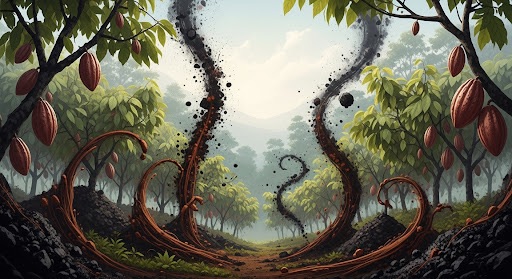
BiocharBiochar is a carbon-rich material created from biomass decomposition in low-oxygen conditions. It has important applications in environmental remediation, soil improvement, agriculture, carbon sequestration, energy storage, and sustainable materials, promoting efficiency and reducing waste in various contexts while addressing climate change challenges. More offers a promising solution for enhancing agricultural sustainability in Central America. This regenerative farming practice not only improves soil health and boosts crop productivity but also plays a significant role in sequestering carbon. Successful pilot projects in Nicaragua have demonstrated biochar’s capacity to enhance water retention, decrease greenhouse gas emissions, and provide an accessible pathway toward regenerative farming for smallholder producers.
The initiative to scale biochar’s impact across Central America emerged from a strategic partnership between Solidaridad and Ritter Sport, a prominent cocoa company. Ritter Sport, after assessing its supply chain’s carbon footprint, identified post-harvest residues as a notable source of emissions. This realization, coupled with Nicaraguan cocoa farmers’ reliance on natural fertilization, spurred the idea of converting this agricultural waste into biochar, simultaneously improving soil conditions and reducing emissions. This collaboration exemplifies a commitment to sustainable practices within the agricultural supply chain.
Biochar acts as more than just a soil amendmentA soil amendment is any material added to the soil to enhance its physical or chemical properties, improving its suitability for plant growth. Biochar is considered a soil amendment as it can improve soil structure, water retention, nutrient availability, and microbial activity. More; it’s a valuable climate ally. Its porous structure allows it to retain water and nutrients, reduce soil acidity, and foster beneficial microorganisms. The process of producing biochar from agricultural waste, such as cocoa husks and pruning residues, transforms what was once a source of greenhouse gases into a valuable resource, thereby contributing to circular economy principles.
Preliminary findings from trials in Nicaragua highlight several key benefits. In plant nurseries, cocoa seedlings treated with biochar exhibited stronger early growth. In mature cocoa plantations, improvements in moisture retention were observed, along with potential short-term gains in productivity. Critically, initial research estimates suggest that applying 500 kg of biochar per hectare of cocoa in Nicaragua could reduce emissions by 1 to 2.5 tCO₂e per metric tonne of cocoa produced. These advancements have been documented through trials with five cooperatives and their associated nurseries, as well as with individual producers like Don Toñito, who reported a 10% yield increase in a previously abandoned plot after just one year of biochar application, particularly when combined with mycorrhizae.
To ensure the verifiable outcomes of these projects, Solidaridad Central America implemented a rigorous protocol. This included controlled biochar production using the low-cost Kontiki method, suitable for smallholder farms. Comprehensive soil analyses were conducted, including baseline assessments, biochar composition analysis, and post-application monitoring to track changes in soil pHpH is a measure of how acidic or alkaline a substance is. A pH of 7 is neutral, while lower pH values indicate acidity and higher values indicate alkalinity. Biochars are normally alkaline and can influence soil pH, often increasing it, which can be beneficial More, nutrient levels, and organic matter. It was determined that cocoa-based biochar is alkaline, suggesting that its combination with organic compost can further enhance soil resilience and productivity.
Building on the success of these pilot projects, Solidaridad Central America is now focused on developing a scalable model for biochar implementation. The aim is to expand its application to other cocoa and coffee-growing regions across Mesoamerica and to forge new partnerships with sustainability-focused companies committed to decarbonizing their supply chains. Integrating biochar with other sustainable agricultural practices, such as agroforestry, is also a priority to maximize benefits for both farmers and the broader supply chain. Biochar represents a transformative tool for cocoa farming, laying the groundwork for regenerative agriculture that ensures productive soils for future generations.
LEARM MORE: LOWER EMISSIONS, BETTER YIELDS: THE BENEFITS OF BIOCHAR IN CENTRAL AMERICA





Leave a Reply