
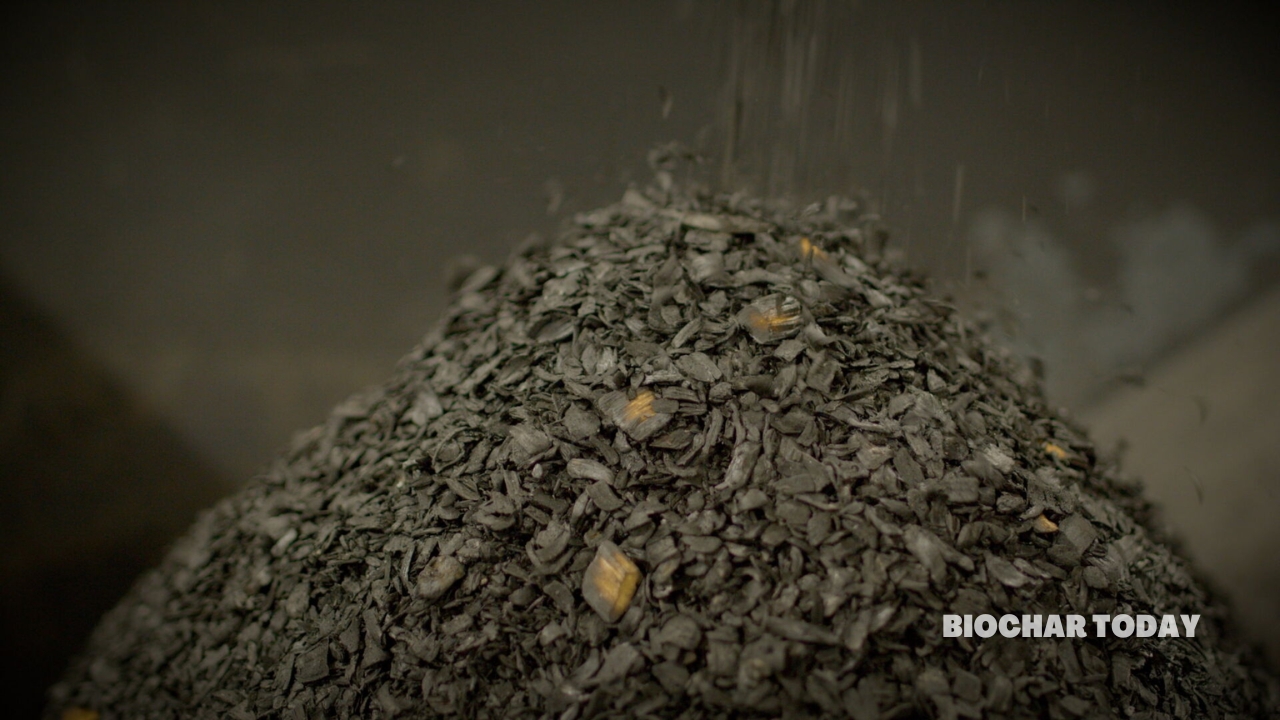
A recent study conducted by researchers at Pennsylvania State University in the United States has quantified the significant impact of biocharBiochar is a carbon-rich material created from biomass decomposition in low-oxygen conditions. It has important applications in environmental remediation, soil improvement, agriculture, carbon sequestration, energy storage, and sustainable materials, promoting efficiency and reducing waste in various contexts while addressing climate change challenges. More amendments on soil physical properties, specifically focusing on water-holding capacity. Published in a context relevant to agricultural conservation, the research utilized advanced imaging and laboratory analysis to observe how biochar interacts with various soil textures. The findings confirm that biochar not only reduces soil bulk density but also increases the volume of micropores, which are essential for retaining moisture. This study provides empirical evidence for the international agricultural community regarding the optimization of biochar application rates to maximize hydrological benefits in diverse environments.
The primary challenge addressed by the Pennsylvania State University team is the increasing frequency of hydrological extremes, such as prolonged droughts, which threaten global food security. In many agricultural regions, coarse-textured or sandy soils suffer from low water retention, leading to rapid nutrient leachingLeaching is the process where nutrients are dissolved and carried away from the soil by water. This can lead to nutrient depletion and environmental pollution. Biochar can help reduce leaching by improving nutrient retention in the soil. More and crop stress. While biochar has long been recognized for its carbon sequestration potential, its specific mechanical influence on “plant-available water”—the moisture actually accessible to roots—has remained inconsistent in previous literature. Identifying the precise mechanisms by which biochar particles store and release water was necessary to move beyond anecdotal evidence toward scalable agricultural prescriptions.
To resolve these uncertainties, the researchers investigated the performance of different biochar feedstocks, including woodchip and poultry litter, across varying application rates. By employing neutron imaging, the team was able to visualize the spatial and temporal distribution of water within and around biochar particles. This technology revealed that water retained within the internal pores of biochar is gradually released into the surrounding soil matrix as it dries. The study determined that while water retention generally increases with the application rate, the “readily available water” often peaks at specific concentrations, suggesting that more biochar is not always better for crop performance.
The outcomes of this research underscore the importance of matching biochar characteristics to soil texture. For coarse-textured soils, the study observed significant increases in field capacity and available water content, with some amendments improving moisture retention by over 45 percent. Conversely, the impact on fine-textured or clay-heavy soils was found to be more limited, highlighting that biochar’s internal pore volume is a critical factor in its efficacy. These results provide a technical framework for farmers and land managers to utilize biochar as a strategic tool for mitigating drought risk and improving the resilience of agricultural systems.

Leave a Reply