

Key Takeaways
- Adding peanut shell biocharBiochar is a carbon-rich material created from biomass decomposition in low-oxygen conditions. It has important applications in environmental remediation, soil improvement, agriculture, carbon sequestration, energy storage, and sustainable materials, promoting efficiency and reducing waste in various contexts while addressing climate change challenges. More to tobacco fields for several years significantly improves soil fertility by increasing organic matter and essential nutrients.
- Long-term use of this biochar helps create a more stable and complex network of beneficial soil bacteria, which is essential for healthy plant growth.
- The practice specifically encourages the growth of helpful microbes like Bacilli, which act as natural defenders against crop diseases.
- Farmers using peanut shell biochar can see a direct improvement in crop quality, specifically higher sugar levels in tobacco leaves.
- While the biochar works well in most areas, its effectiveness depends on the original soil type, meaning local soil testing is still important for the best results.
In a comprehensive study published in the journal Biochar, researchers Zhuzhu Liao, Peiyan Li, Xianjie Cai, Zhongke Sun, Huilin Feng, Zhihong Huang, Yaowei Wei, Quanyu Yin, Guoshun Liu, Chengwei Li, Yu Shi, and Tianbao Ren explored how long-term agricultural management affects the hidden engine of our food systems: soil microorganisms. Soil microbes are the primary drivers of nutrient cycling and fertility, yet their long-term response to specialized amendments like peanut shell biochar has remained poorly understood under large-scale field conditions. To bridge this gap, the team conducted field experiments over six years across five major tobacco-growing regions in China, spanning diverse climate zones from temperate to subtropical.
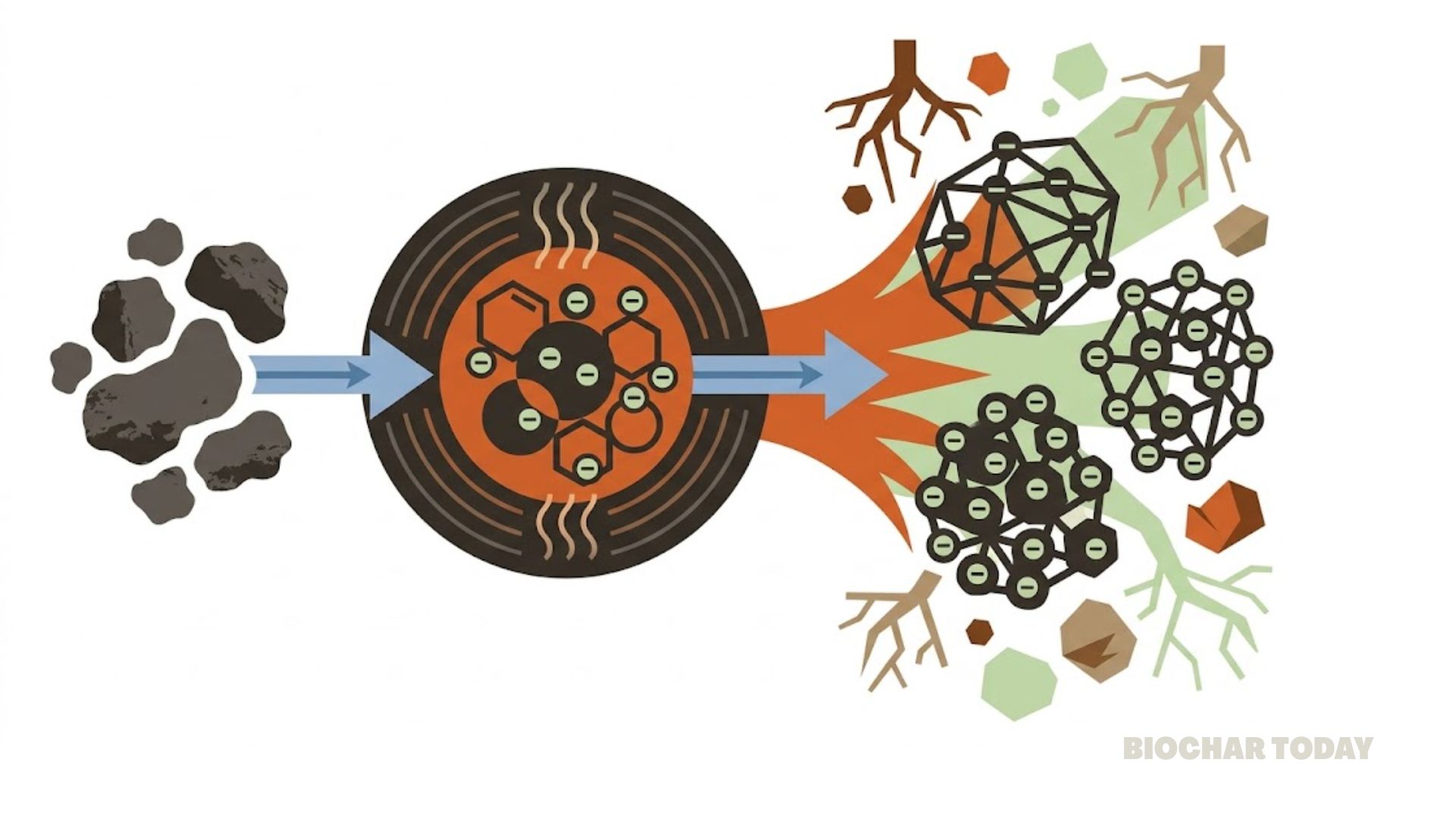
The research found that the consistent application of peanut shell biochar acted as a powerful soil conditioner, significantly elevating the chemical quality of the land. Across four of the five study sites, the biochar treatment increased vital soil components, including available potassium, phosphorus, and organic matter. Furthermore, the amendment boosted the activity of essential soil enzymes such as sucrase, catalase, and urease, which are critical for breaking down nutrients into forms that plants can easily use. These chemical improvements were largely driven by the biochar’s unique porous structure and its ability to neutralize soil acidity through its inherent alkalinity.
A particularly fascinating discovery was the biochar’s selective influence on the microscopic inhabitants of the soil. While the overall diversity of the microbial community remained stable over time, the long-term presence of biochar induced a significant functional shift. It favored the enrichment of specific beneficial groups, most notably the class Bacilli, which accounted for seventy percent of the significantly enriched bacterial taxa. These microbes are renowned in agriculture for their ability to promote plant growth and act as natural biological agents against harmful pathogens. By providing a porous habitat that protects these microbes from predators and environmental stress, the biochar effectively turned the soil into a sanctuary for helpful bacteria.
The study also utilized advanced network analysis to show that peanut shell biochar increased the complexity and stability of bacterial interactions in the plant’s root zone. A more stable bacterial network means the soil ecosystem is more resilient to changes and better equipped to support consistent crop health. Interestingly, the effects on fungi were different, with biochar slightly reducing the complexity of fungal networks. This suggests that the spatial structure of biochar might physically restrict larger fungi that rely on wide mycelial networks while favoring smaller bacteria that thrive in its tiny pores.
Ultimately, these belowground changes had a direct and measurable impact on the quality of the harvested crop. The researchers found that biochar application indirectly increased the soluble sugar content of tobacco leaves. This occurred through a chain reaction: the biochar improved soil organic matter and fostered a more beneficial bacterial community, which in turn optimized the plant’s metabolic processes for sugar accumulation.
These findings provide a clear theoretical basis for using peanut shell biochar as a sustainable strategy to enhance both soil health and agricultural productivity. It demonstrates that biochar is not just a simple fertilizer, but a “super material” capable of re-engineering the soil microenvironment to favor long-term stability and higher crop quality. As agriculture faces the challenges of modern intensive farming, such ecologically sustainable practices offer a promising path toward greener and more productive fields.
Source: Liao, Z., Li, P., Cai, X., Sun, Z., Feng, H., Huang, Z., Wei, Y., Yin, Q., Liu, G., Li, C., Shi, Y., & Ren, T. (2026). Long-term peanut shell biochar application improves soil fertility and bacterial network stability across tobacco-growing regions in China. Biochar, 8, 63.


Leave a Reply