
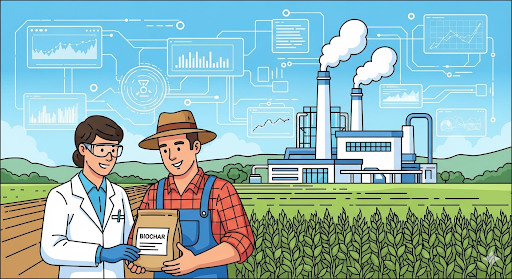
A new announcement from Green Carbon and its partners, Varhad Capital and now, Carbonfuture, has provided updated details on their biocharBiochar is a carbon-rich material created from biomass decomposition in low-oxygen conditions. It has important applications in environmental remediation, soil improvement, agriculture, carbon sequestration, energy storage, and sustainable materials, promoting efficiency and reducing waste in various contexts while addressing climate change challenges. More project in India. While some data from earlier reports from Green Carbon has remained consistent, like the projected total of 440,000 tons of carbon credits by 2040; there are new, more refined, figures. The project is now targeting the generation of 120,300 carbon removal credits, adjusted from 110,000. This adjustment reflects a more refined scope, with the project now focusing on the construction of two industrial-scale biochar production facilities in the state of Maharashtra, as opposed to the previously reported four plants.
The updated plan emphasizes the project’s efficiency and local impact. These facilities are designed to process more than 6,000 tonnes of agricultural residues annually, which would otherwise contribute to significant air pollution through open burning. The project leverages India’s vast agricultural sector, a source of 736 million tons of greenhouse gas emissions annually. By converting cotton and pigeon pea stalks into biochar, the initiative not only sequesters carbon but also produces valuable by-products like bio-oil. The biochar will be sold locally, improving soil fertility, water retention, and drought resilience for local farmers.
This initiative, a collaboration under Project Reignite: Turning Farm Waste into Climate Action, also highlights a shift in certification strategy. The original plan mentioned seeking certification from Puro.earth, but the new partnership with Carbonfuture, which offers a digital Monitoring, Reporting, and Verification (MRV) platform, suggests a focus on live transparent data, using a tech-driven approach to credit generation.





Leave a Reply