
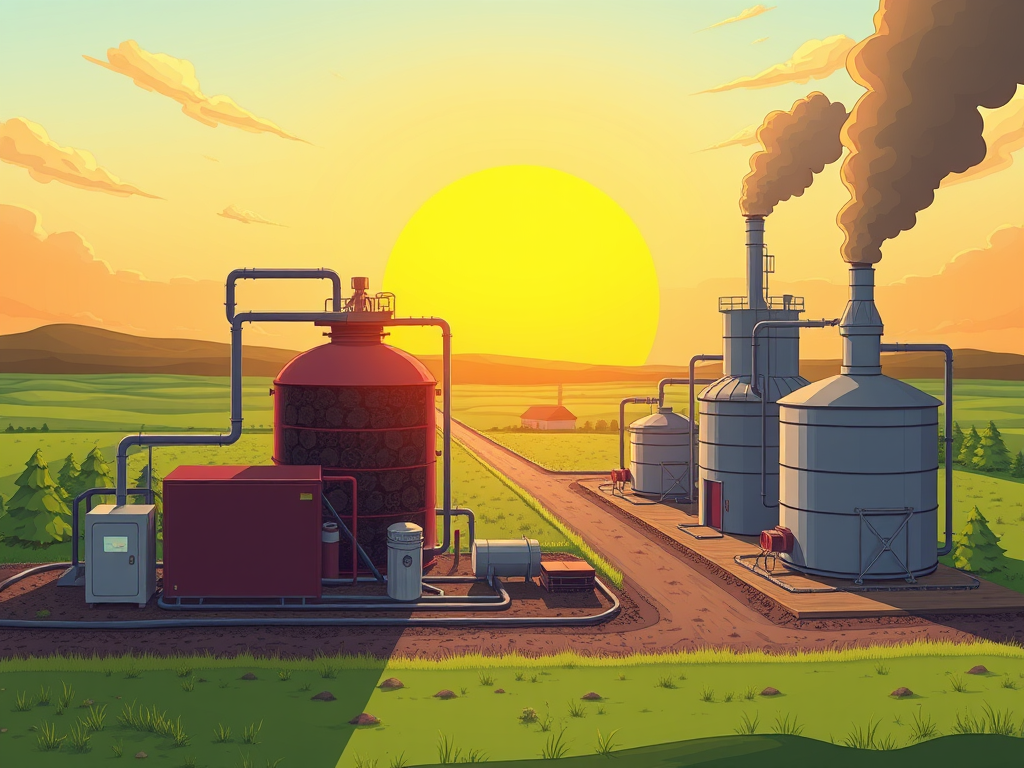
A new grant program in Nebraska is offering financial incentives to help entities establish biocharBiochar is a carbon-rich material created from biomass decomposition in low-oxygen conditions. It has important applications in environmental remediation, soil improvement, agriculture, carbon sequestration, energy storage, and sustainable materials, promoting efficiency and reducing waste in various contexts while addressing climate change challenges. More processing facilities, with the goal of sequestering carbon and supporting sustainable agricultural practices. The initiative, funded through a Climate Pollution Reduction Grant (CPRG), will provide reimbursement for a significant portion of the costs associated with purchasing and installing the necessary equipment. This includes material handling equipment, pyrolysisPyrolysis is a thermochemical process that converts waste biomass into bio-char, bio-oil, and pyro-gas. It offers significant advantages in waste valorization, turning low-value materials into economically valuable resources. Its versatility allows for tailored products based on operational conditions, presenting itself as a cost-effective and efficient More units, wiring, and utility upgrades.
The Nebraska Department of Environment and Energy (NDEE) will administer the program, which aims to fund up to four projects across the state by 2030. The first of these is a subaward to the City of Lincoln, providing them with funds to build and operate a biochar unit at their solid waste transfer station. This facility will convert wood waste, including debris from invasive Eastern Red Cedar trees, into a valuable soil amendmentA soil amendment is any material added to the soil to enhance its physical or chemical properties, improving its suitability for plant growth. Biochar is considered a soil amendment as it can improve soil structure, water retention, nutrient availability, and microbial activity. More. This is a crucial step for the city, which had previously acquired a pyrolysis unit but lacked the funds for installation.
For the three additional projects, NDEE will open a rolling application period in March 2025. The program will offer reimbursements of 80% of project costs, up to a cap of $800,000 for any single entity. This financial support is designed to lower the barrier to entry for businesses and organizations interested in biochar production. The grant also allows for the combination of these funds with other federal grants, such as those from the USDA’s wood innovations program.
Projects will be evaluated based on factors like their ability to begin operations quickly, the amount of woody biomassBiomass is a complex biological organic or non-organic solid product derived from living or recently living organism and available naturally. Various types of wastes such as animal manure, waste paper, sludge and many industrial wastes are also treated as biomass because like natural biomass these More they propose to process annually, and their location, with a preference for projects that don’t negatively impact low-income disadvantaged communities. The initiative is projected to achieve cumulative net greenhouse gas reductions of 12,050 metric tons of carbon dioxide equivalent by 2030. This program is part of a larger effort to address woody invasive species, improve soil health, and reduce the state’s carbon footprint. It represents biochar taking another step towards mainstream awareness and integration, which makes this an initiative stretching far beyond Nebraska.
For more information: ONE RED – Biochar Incentive Program



Leave a Reply