

Researchers at the National Institute of Technology Karnataka (NITK) Surathkal in India have successfully engineered a synergistic biochar–microbe system designed to remediate toxic pollutants from soil and water. Led by Dr. Vaishakh Nair, the team utilized agricultural residues—including rice husks, peanut shells, coconut shells, and sugarcane bagasse—to produce biocharBiochar is a carbon-rich material created from biomass decomposition in low-oxygen conditions. It has important applications in environmental remediation, soil improvement, agriculture, carbon sequestration, energy storage, and sustainable materials, promoting efficiency and reducing waste in various contexts while addressing climate change challenges. More, which serves as a scaffold for immobilizing beneficial functional bacteria such as Pseudomonas stutzeri, Aeromonas veronii, and various Bacillus species. This integrated approach not only targets the removal of hazardous contaminants like heavy metals and pesticides but also concurrently improves soil fertility and enhances crop growth indicators.
The fundamental challenge addressed by this research is the escalating contamination of agricultural land and water bodies due to industrial waste and the excessive use of agrochemicals. In India, the presence of toxic heavy metals like cadmium, nickel, and hexavalent chromium, alongside persistent pesticides such as chlorpyrifos, poses a dual threat to food security and public health. These pollutants degrade soil structure, reduce microbial diversity, and diminish long-term fertility. Traditional remediation methods often struggle to balance the removal of toxins with the restoration of the soil’s productive capacity, creating a need for versatile, low-cost, and sustainable interventions.
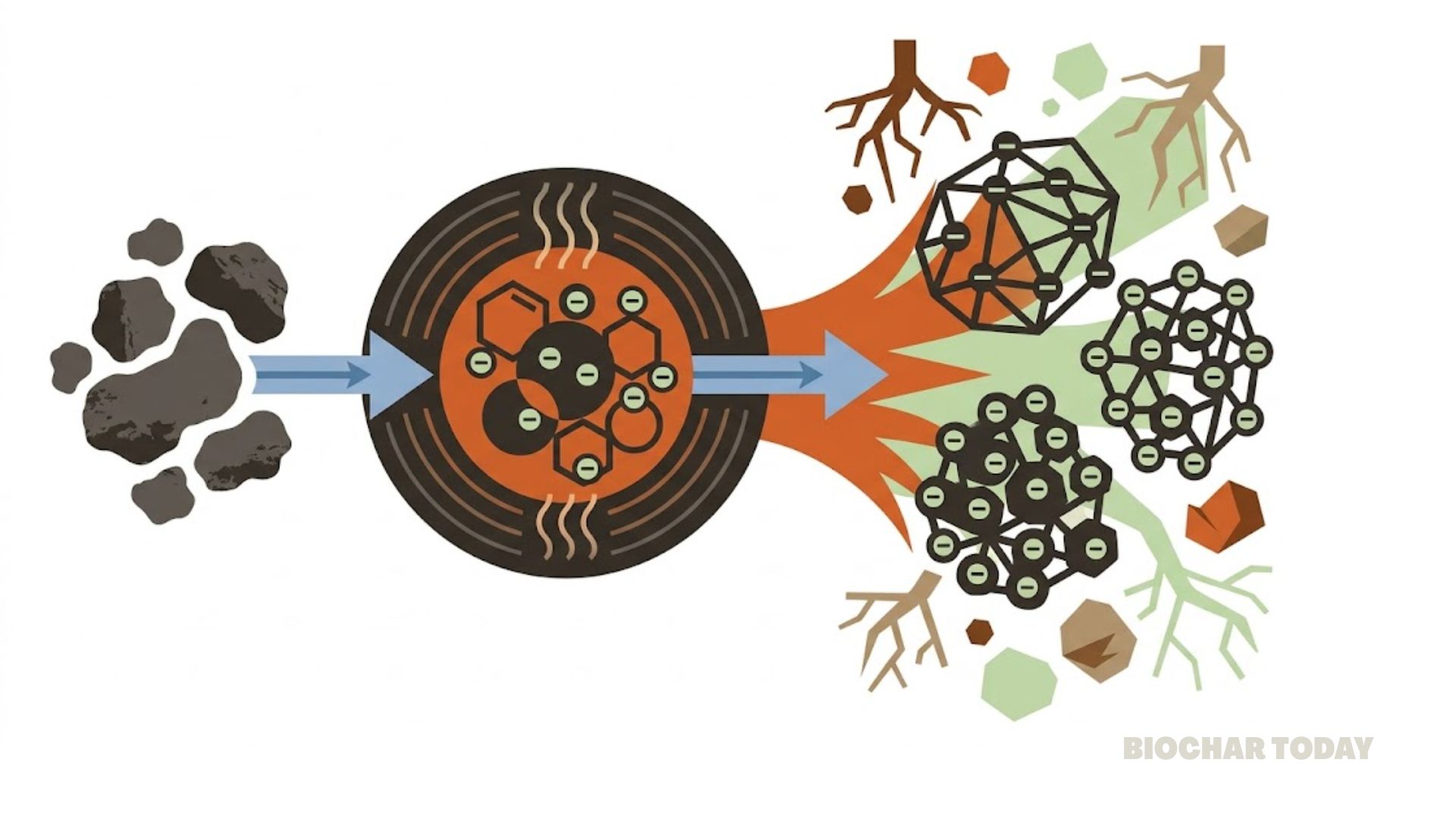
To mitigate these issues, the NITK team developed a dual-action solution that leverages the complementary strengths of carbonaceous materials and biology. The biochar component provides a high-surface-area porous structure that physically adsorbs pollutants, while the immobilized microbial cells biologically degrade or transform these toxins into less harmful forms. Laboratory validation demonstrated removal efficiencies of up to 92% for heavy metals and 96% for pesticides. Furthermore, the immobilised complexes were found to be 31% to 48% more efficient than using biochar or microbial cells independently, proving that the synergy between the two components significantly optimizes the bioremediation process.
The outcomes of this research demonstrate significant potential for commercial and environmental applications in sustainable agriculture. The study recorded an increase in soil water-holding capacity of up to 41.5% and improved seed vigor indices for crops such as spinach, okra, and tomato. The National Institute of Technology Karnataka has secured a patent for the “Method of Developing Pseudomonas stutzeri Immobilised Rice Husk Biochar,” highlighting the technology’s readiness for wider adoption. These findings support national initiatives like the National Mission on Sustainable Agriculture (NMSA) by providing a circular economy solution that converts farm waste into a high-value tool for soil restoration and climate-resilient farming.


Leave a Reply