

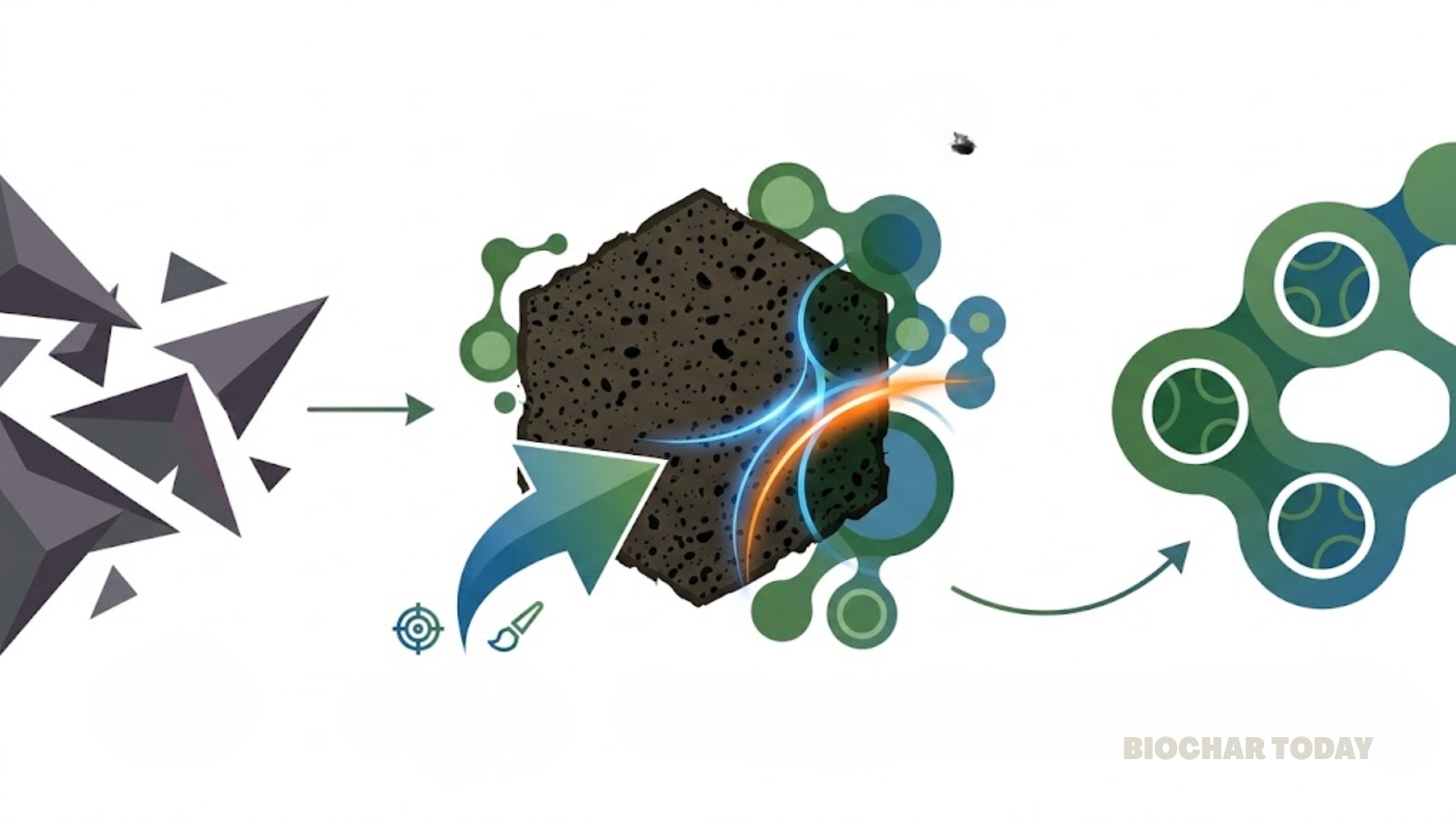
A recent study published in Carbon Research by Li et al., investigates the use of modified biocharBiochar is a carbon-rich material created from biomass decomposition in low-oxygen conditions. It has important applications in environmental remediation, soil improvement, agriculture, carbon sequestration, energy storage, and sustainable materials, promoting efficiency and reducing waste in various contexts while addressing climate change challenges. More to enhance the removal of ginsenoside Rb1, a toxic compound, from soils. The research demonstrates that modified biochar alters electron transfer processes, creating a unique “charosphere” that favors the removal of ginsenoside Rb1 in soils planted with Panax notoginseng.
The study reveals that modified biochar not only promotes ginsenoside Rb1 chemisorption and biodegradation but also enhances microbial community diversity compared to unmodified biochar. The modification of biochar increased its capacitance values by 14.62 to 316.2 µF/cm², indicating improved electron transfer properties. This modification process also reduced the abundance of major Panax notoginseng pathogens, including Fusarium spp., Alternaria, and Sarocladium, by 3.77% to 4.79% in Soil-2 and 9.08% to 17.18% in Soil-3. The introduction of modified biochar also activated electro-nutrient microorganisms like Lactobacillus, Pseudomonas, and Klebsiella.
The research highlights that altering electron transfer processes within the charosphere through biochar application regulates the soil microbiome structure. This regulation has the potential to mitigate continuous-cropping disorders in agricultural soils, addressing a significant challenge to global food security. The study suggests that biochar with a high electron-donating capacity can stimulate the growth of electron-nutrient microorganisms, accelerating the degradation of organic compounds like ginsenoside Rb1.
In summary, this research proposes a method to alleviate continuous cropping obstacles by using biochar-regulated microbial communities. The findings offer significant implications for sustainable agriculture, land management, and enhanced food production.
SOURCE: Li, S., Wang, X., Qin, W., Wu, M., Pan, B., & Steinberg, C. (2025). Increased removal of ginsenoside Rb1 through the application of capacitance-enhanced biochars in soils. Carbon Research, 4(32).



Leave a Reply