
Key Takeaways
- Engineering biocharBiochar is a carbon-rich material created from biomass decomposition in low-oxygen conditions. It has important applications in environmental remediation, soil improvement, agriculture, carbon sequestration, energy storage, and sustainable materials, promoting efficiency and reducing waste in various contexts while addressing climate change challenges. More with chemicals or minerals can make it much more effective at trapping harmful toxins like lead and cadmium in the soil.
- Specialized biochar coatings can prevent plants from soaking up heavy metals, potentially reducing arsenic uptake in crops by more than 80 percent.
- Using these advanced soil additives helps restore the natural biological health of farmland while keeping toxic elements out of the human food chain.
- Modified biochar also helps the planet by trapping carbon in the ground and reducing the release of harmful greenhouse gases into the atmosphere.
The journal Discover Soil recently published a comprehensive review by lead author Jyotirmay Roy and an international team of researchers, highlighting a significant shift in how we manage contaminated land. Potentially toxic elements, such as lead, cadmium, and arsenic, pose a global threat to food safety and agricultural productivity because they persist in the soil and accumulate in crops. While standard biochar has long been used for soil improvement, this new analysis of over a decade of research shows that modified biochar—biochar that has been chemically or physically engineered—is far superior at immobilizing these dangerous substances. By altering the surface chemistry of biochar, scientists have developed a tailored approach to cleaning up the environment.
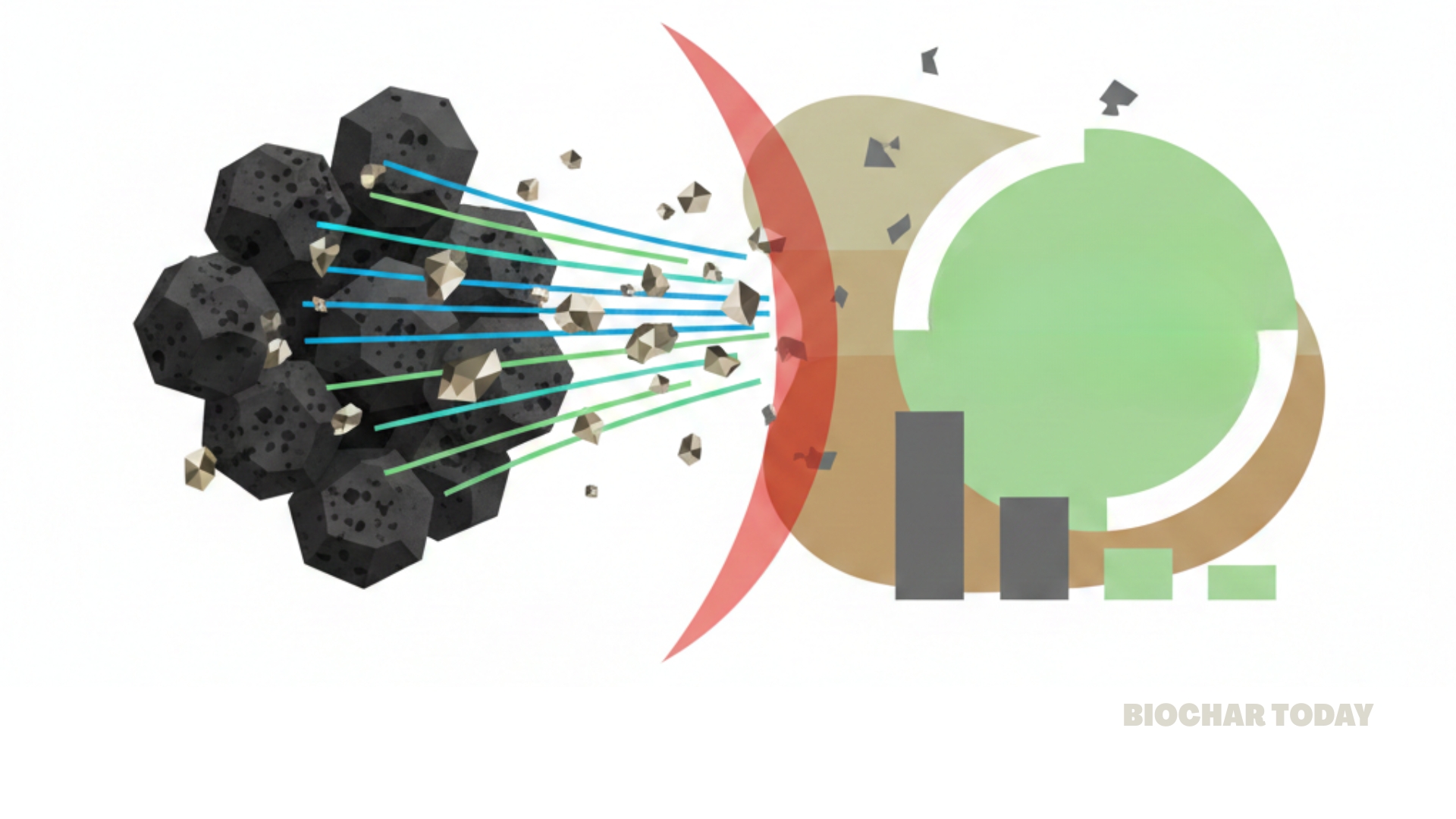
One of the most striking findings discussed in the study is the dramatic increase in efficiency provided by surface modification. For example, treating biochar with specific surfactants can reduce the uptake of arsenic by plants by over 80 percent compared to using untreated biochar. Similarly, acid-treated versions have been shown to increase the adsorption capacity for lead by nearly 25 times. These engineered materials work by creating more “sticky” sites on the biochar’s surface, which act like microscopic magnets to grab and hold onto toxic metal ions. This process effectively locks the pollutants in the soil matrix, preventing them from being absorbed by the roots of staple crops like rice, wheat, and maize.
The study categorizes various modification strategies, such as mineral impregnation with iron or manganese and nano-modification, which impart multifunctional properties to the biochar. These treatments do more than just trap toxins; they also help the soil breathe and hold onto nutrients. In multimetal polluted areas, co-precipitation mechanisms enabled by these modifications can lower the mobility of chromium and copper by more than 90 percent. This is particularly vital for agricultural land where multiple types of pollution often exist simultaneously, requiring a broad-spectrum remediation tool that general-purpose amendments cannot provide.
Beyond immediate detoxification, modified biochar offers significant ecological and climate benefits. The review highlights that these materials can improve soil pHpH is a measure of how acidic or alkaline a substance is. A pH of 7 is neutral, while lower pH values indicate acidity and higher values indicate alkalinity. Biochars are normally alkaline and can influence soil pH, often increasing it, which can be beneficial More and boost the activity of beneficial soil microbes and enzymes, which are often suppressed by heavy metal toxicity. Furthermore, biochar acts as a long-term carbon reservoir. By sequestering carbon in the soil, it prevents it from entering the atmosphere as carbon dioxide, directly supporting global climate change mitigation efforts. Some modified versions are even being used to capture greenhouse gases directly from flue gases, demonstrating the versatility of this carbon-rich material.
However, the researchers also point out that the effectiveness of these treatments can change over time as the biochar “ages” in the field. Environmental factors like acid rain or seasonal flooding can slowly shift the chemistry of the biochar, potentially leading to the slow release of trapped metals. This underscores the importance of the study’s proposed decision framework, which helps farmers and scientists select the right type of biochar based on specific soil conditions and the type of contamination present. Long-term monitoring and adaptive management are essential to ensuring that the remediation remains stable for decades.
In conclusion, the evolution from basic biochar to high-tech, modified biochar represents a major leap forward for sustainable agriculture. By upcycling organic waste into powerful environmental cleaners, we can rehabilitate degraded land and ensure that the food we grow is safe for human consumption. While challenges remain in scaling up production and standardizing quality, the potential for modified biochar to provide a cost-effective, eco-friendly solution to soil pollution is immense. Future research focusing on long-term field trials and microbial interactions will be key to turning these scientific insights into a standard practice for farmers worldwide.
Source: Roy, J., Dutta, S., Pal, T., Sarowar, S. G., Saha, C., & Rupesh, T. (2026). Modified biochar for remediation of potentially toxic elements in soils: a systematic review of modification approaches, novel mechanisms and field-scale applications. Discover Soil, 3(1), 14.




Leave a Reply