
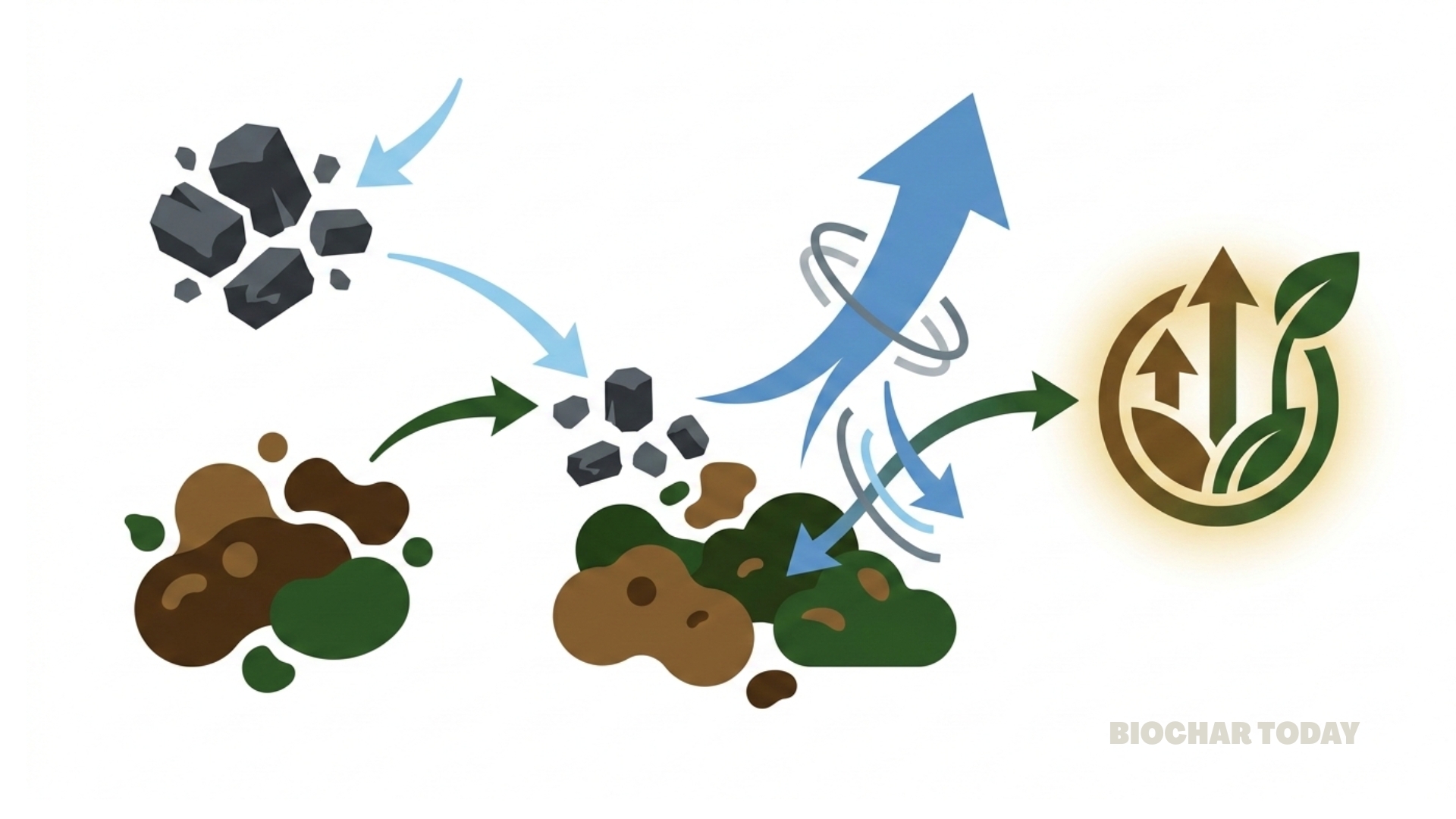
Key Takeaways
- Scientists have developed biocharBiochar is a carbon-rich material created from biomass decomposition in low-oxygen conditions. It has important applications in environmental remediation, soil improvement, agriculture, carbon sequestration, energy storage, and sustainable materials, promoting efficiency and reducing waste in various contexts while addressing climate change challenges. More -an additive enriched with phosphorus and magnesium that significantly improves the quality of farm compost.
- Using this special additive helps trap nitrogen within the compost pile, preventing it from escaping into the air as smelly and harmful ammonia gas.
- The additive works by encouraging the growth of beneficial bacteria that transform organic waste into high-quality plant food more efficiently than normal composting.
- The final product is a richer fertilizer that contains more stable nutrients and is safer for seeds to sprout in compared to traditional compost.
- This new method provides a double benefit by protecting the environment from air pollution while simultaneously creating a more powerful soil builder for farmers.
Converting organic waste into nutrient-rich fertilizer through composting is a vital part of sustainable agriculture, but the process often suffers from significant nitrogen loss and slow development of stable organic matter. In a research paper published in the journal Biochar, lead author Ruolan Tang along with a team of researchers including Yan Liu and Jing Yuan investigated how specially modified biochar can solve these persistent issues. The team developed two types of enhanced additives: one modified with phosphorus and another co-modified with both phosphorus and magnesium. Their goal was to see if these engineered materials could better manage the nitrogen cycle and speed up the formation of humus, which is the essential component that gives high-quality compost its dark color and soil-building properties. By testing these additives with swine manure, the study revealed a sophisticated synergy between physical chemical reactions and biological activity that transforms how waste matures.
The results showed that the modified biochars significantly outperformed conventional biochar in keeping nitrogen where it belongs. While standard composting can lose a massive amount of nitrogen to the atmosphere, the phosphorus and magnesium enriched biochars acted like a chemical sponge. The magnesium-modified version was particularly effective, reducing ammonia gas emissions by nearly twenty-eight percent. This happens because the magnesium and phosphorus on the biochar surface react with the nitrogen to form a stable mineral called struvite, effectively locking the nutrient into a solid form. Furthermore, the researchers found that total nitrogen retention was increased by three percent overall. This means the final compost is not only less smelly during production but is also a much more potent fertilizer once it is applied to the fields, containing a higher concentration of the essential nutrients plants need to thrive.
Beyond just saving nitrogen, the study found that these modified additives dramatically improved the “humification” of the compost, which is the process of turning raw waste into stable organic substances. The researchers observed that the humification index increased by as much as one-third when using the modified biochars. This improvement is largely driven by a shift in the microbial community living within the compost pile. The specialized biochar encouraged the growth of beneficial bacteria, such as those from the Bacillaceae and Thermobifida families, which are experts at breaking down tough materials like lignin and protein. These microbes take the nitrogen that was trapped by the biochar and use it as a building block to create complex, aromatic humic substances. This biological transformation ensures that the organic matter in the compost is stable and won’t wash away easily, providing long-term benefits to soil health and structure.
The health of the compost was also significantly improved, as shown by the seed germination index. Compost can sometimes be “hot” or toxic to young plants if it isn’t finished properly, but the piles treated with the modified biochars reached much higher safety levels, with a ten percent increase in the germination index compared to standard treatments. This suggests that the additives help neutralize toxic substances like volatile fatty acids more quickly. Additionally, the final products were found to have up to thirty-two percent more bioavailable phosphorus, making them an excellent choice for nutrient-deficient soils. The researchers concluded that while phosphorus alone is great for improving the dark, rich organic matter in compost, adding magnesium creates a powerful synergy that maximizes ammonia reduction.
This research establishes a clear framework for creating the next generation of composting additives. By moving away from simple charcoalCharcoal is a black, brittle, and porous material produced by heating wood or other organic substances in a low-oxygen environment. It is primarily used as a fuel source for cooking and heating. More and toward functionally designed materials that manage both minerals and microbes, the study provides a practical solution for the environmental challenges of industrial livestock farming. The co-design of material and microbiota allows for a more precise way to upcycle organic waste into high-value agricultural products. As the agricultural industry seeks new ways to improve efficiency and reduce its environmental footprint, these engineered biochars offer a promising path forward. The study highlights that by simply adjusting the ratios of phosphorus and magnesium loaded onto the biochar, producers can tailor their compost to be either a high-nitrogen fertilizer or a long-lasting soil conditioner, depending on the specific needs of the farm and the environment.
Source: Tang, R., Liu, Y., Ma, J., Yao, S., Ren, T., Li, G., Gong, X., Ma, R., & Yuan, J. (2026). Enhancing the transformation of nitrogenous organics to humification in composting: biotic and abiotic synergy mediated by phosphorus and magnesium modified biochar. Biochar, 8(25).

Leave a Reply