
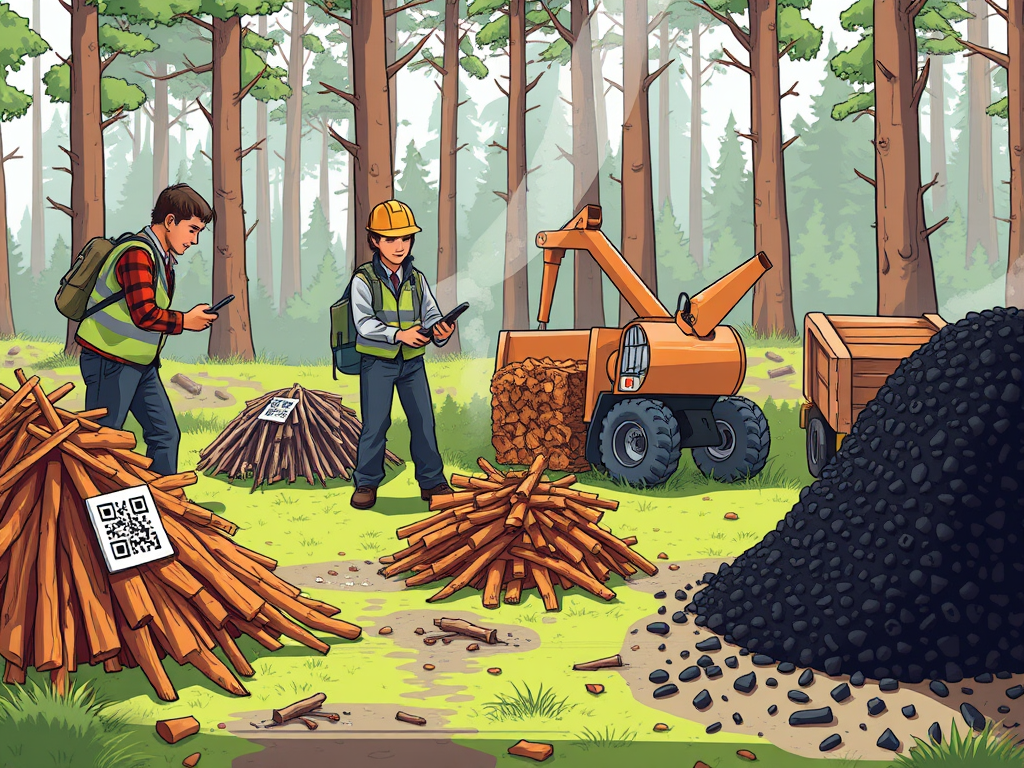
Malaga’s provincial authority has undertaken a significant forest cleaning initiative in the Sierra de las Nieves. The project, a cornerstone of the broader Bio+a Málaga program, has yielded a substantial 562.57 tonnes of wood biomassBiomass is a complex biological organic or non-organic solid product derived from living or recently living organism and available naturally. Various types of wastes such as animal manure, waste paper, sludge and many industrial wastes are also treated as biomass because like natural biomass these More. This material, which would otherwise pose a fire hazard, is being salvaged and prepared for a new life as a renewable energy source.
Instead of being discarded, the chipped biomass will be used to fuel boilers and provide heating for public buildings across the local area. This strategy is expected to save local councils an average of 65% on their energy bills while drastically cutting carbon dioxide emissions. The initiative is a powerful example of the growing bioenergy sector’s ability to create a circular economy, turning forest waste into valuable resources. The Bio+a Lab center, also part of the program, is set to become a hub for research and training, focusing on the ecological and digital transition, further cementing the region’s commitment to sustainable practices.
While this project focuses on bioenergy for heating, the implications for the adjacent biocharBiochar is a carbon-rich material created from biomass decomposition in low-oxygen conditions. It has important applications in environmental remediation, soil improvement, agriculture, carbon sequestration, energy storage, and sustainable materials, promoting efficiency and reducing waste in various contexts while addressing climate change challenges. More industry are significant. The efficient collection and processing of forest biomass on this scale could serve as a model for biochar production. The same wood chips used for biomass boilers could also be pyrolyzed to create biochar, a stable form of carbon that can be used for soil enrichment, water filtration, and long-term carbon sequestration.
The infrastructure and supply chains established for this bioenergy project, including the collection and chipping of wood waste, could be readily adapted for biochar production. The waste wood is identified by the forester and given a QR code, which ensures traceability across the biomass supply chain. Simple uses of technology like this would be extremely effective in biochar feedstockFeedstock refers to the raw organic material used to produce biochar. This can include a wide range of materials, such as wood chips, agricultural residues, and animal manure. More procurement, as the characteristics of the char could be tailored depending on the identified feedstock, with verification coming from the QR code linked. This Malaga initiative not only bolsters the local bioenergy sector but also lays the groundwork for a potential future expansion into the biochar market, creating new opportunities for sustainable land management and carbon removal.


Leave a Reply