
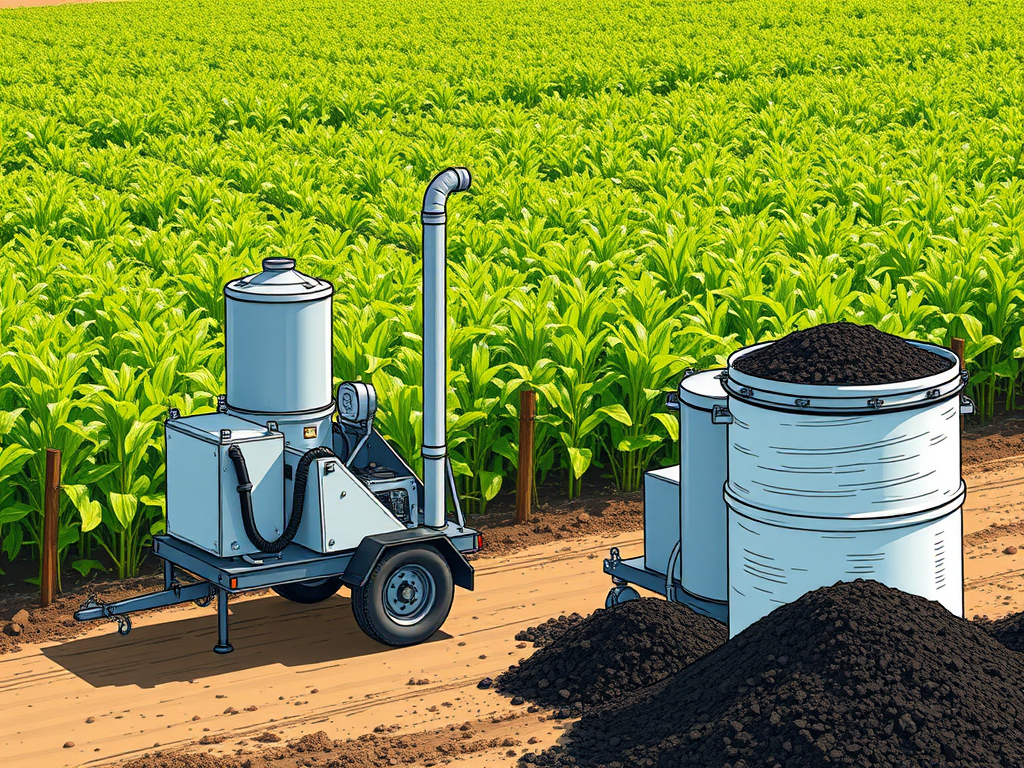
For those following the intersection of sustainable agriculture and biocharBiochar is a carbon-rich material created from biomass decomposition in low-oxygen conditions. It has important applications in environmental remediation, soil improvement, agriculture, carbon sequestration, energy storage, and sustainable materials, promoting efficiency and reducing waste in various contexts while addressing climate change challenges. More, a new project in Idaho, USA, offers a compelling example of innovation. The Idaho Sustainable Agriculture Initiative for Dairy (ISAID), a collaboration led by the University of Idaho, has been working for five years to transform cattle manure into valuable, transportable products. The core of their work focuses on capturing nutrients like nitrogen and phosphorus and converting them into high-value resources.
A key development is the creation of nutrient-enriched biochar. Researchers extract nitrogen and phosphorus from the liquid waste (digestate) left over after anaerobic digestion. These nutrients are then added to biochar, which acts as a carrier. This fortified biochar is designed to release the nutrients gradually when used as a fertilizer, which improves their uptake by plants and significantly reduces nutrient runoff and leachingLeaching is the process where nutrients are dissolved and carried away from the soil by water. This can lead to nutrient depletion and environmental pollution. Biochar can help reduce leaching by improving nutrient retention in the soil. More into waterways.
The project is also developing a mobile treatment unit that uses hydrothermal carbonization to produce a dry, phosphorus-rich soil improver on-site at dairy farms. Lab-scale reactors have shown that at specific temperatures and pressures, this process can retain up to 90% of the phosphorus in a stable form. This fall, a continuous system will be built for use on farms, with a full cost-benefit analysis to follow.
Beyond soil amendments, the team is also converting manure into a raw material for bioplastics. A three-step fermentation process uses bacteria to turn volatile fatty acids from manure into polyhydroxyalkanoates (PHA), the basis for biodegradable plastics. With conversion rates exceeding 60%, the process is comparable to industrial bioplastics production.
Finally, water purification is another critical component of the initiative. A mobile “Clean Water Machine” uses a combination of sedimentation, filtration, and chemical treatments to produce water clean enough for crop irrigation. With further treatment, this water could potentially be suitable for drinking. Data from ongoing trials on dairy farms will be collected until the end of 2025. This suite of technologies presents a holistic approach to waste management, demonstrating how a traditional waste product can be a source of multiple valuable outputs.
SOURCE: In Idaho, cattle manure is processed using a combination of techniques


Leave a Reply