
Key Takeaways
- Adding lime to soil can reduce the amount of toxic cadmium available for plants to absorb by as much as fifty-eight percent.
- BiocharBiochar is a carbon-rich material created from biomass decomposition in low-oxygen conditions. It has important applications in environmental remediation, soil improvement, agriculture, carbon sequestration, energy storage, and sustainable materials, promoting efficiency and reducing waste in various contexts while addressing climate change challenges. More is less effective than lime, reducing soil cadmium bioavailability by roughly thirty-nine percent at its highest dosage.
- While these treatments lower toxic metal levels in the thallus, or edible stem, children still face significant health risks from consumption.
- Lime significantly raises soil alkalinity, which causes heavy metals to become trapped in harmless, solid forms like hydroxides or carbonates.
- Researchers recommend using a three percent concentration of lime or a five percent concentration of biochar to help clean up contaminated farmland.
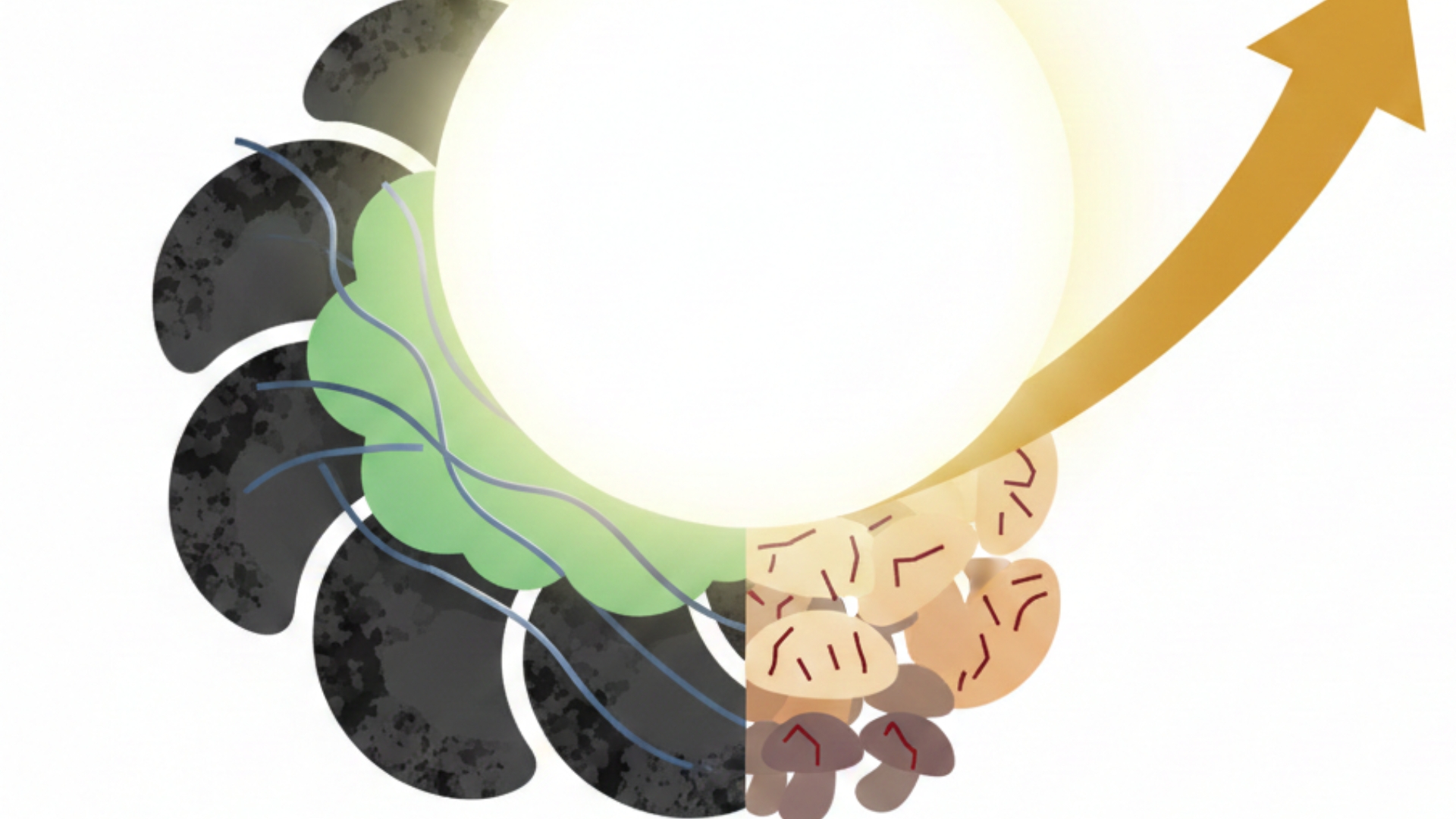
In a comprehensive study published in the journal Applied Ecology and Environmental Research, Guihua Liu, Hu Wang, and their colleagues from the Guizhou Academy of Agricultural Sciences examined how different remediation materials like biochar impact the safety of the edible fungus Dictyophora rubrovolvata. This mushroom, frequently called the queen of fungi due to its high nutritional and medicinal value, is particularly prone to accumulating cadmium from the surrounding environment. Because cadmium is a highly toxic element that can cause neurological damage and cancer even at low concentrations, finding ways to prevent its uptake in high-risk regions like Southwest China is critical for public health.
The research findings clearly demonstrate that both lime and biochar serve as powerful soil conditioners, though they work through different mechanisms and with varying degrees of success. When lime is added to the soil, it releases calcium and carbonates that neutralize acidity, causing the soil pHpH is a measure of how acidic or alkaline a substance is. A pH of 7 is neutral, while lower pH values indicate acidity and higher values indicate alkalinity. Biochars are normally alkaline and can influence soil pH, often increasing it, which can be beneficial More to rise significantly. This shift in chemistry promotes the precipitation of cadmium into stable forms, such as hydroxides or phosphates, which are much harder for the fungus to absorb. Quantitative data from the study revealed that lime treatments increased soil pH by nearly two units and reduced bioavailable cadmium by roughly twenty-nine to fifty-eight percent. Biochar, derived from coconut shells, also improved soil conditions by increasing pH and cation exchange capacity, though its reduction of bioavailable cadmium was more modest, topping out at approximately thirty-nine percent.
A significant portion of the research focused on how cadmium is distributed throughout the different parts of the fungus. The study found a consistent pattern in cadmium concentration, with the thallus containing the highest levels, followed by the pileus or cap, and finally the volva, which is the cup-like structure at the base. By applying lime at higher concentrations, the researchers were able to reduce the cadmium content in the thallus by as much as twenty-seven percent. Biochar provided a similar benefit, reducing thallus cadmium by about twenty percent. These reductions are vital because the thallus is the primary region where soil cadmium accumulates and is the part most commonly consumed by people.
Despite these measurable improvements in soil quality and reduced metal uptake, the evaluation of edible safety provided a sobering perspective. The researchers utilized the target hazard quotient, a standard risk assessment method, to determine if the treated fungi were safe for human consumption. While the hazard values were significantly lower in treated groups compared to the control, the scores remained above the critical threshold of one for both adults and children. A score higher than one indicates that consumers are still exposed to potential health risks. Notably, children were found to face a greater health risk than adults, likely due to their lower body weight and higher relative intake rates. This suggests that while soil remediation materials are helpful, they may not be a complete solution for safety in heavily contaminated areas.
For farmers and environmental managers, the study offers specific practical recommendations. To achieve the best remediation results in cadmium-contaminated soils intended for Dictyophora rubrovolvata cultivation, the researchers suggest a dosage of three percent lime or five percent biochar. Lime was ultimately judged to be more applicable than biochar because of its superior ability to reduce metal bioavailability. However, the authors also cautioned about the long-term impacts of these materials. Continuous use of lime can eventually lead to soil compaction and nutrient imbalances, while excessive biochar application might result in micronutrient deficiencies. These findings provide a vital scientific foundation for safer food production while highlighting the ongoing challenges of managing heavy metal pollution in intensive agriculture.
Source: Liu, G. H., Fan, C. W., Qin, S., Chai, G. Q., Wang, L., Jiang, Y., & Wang, H. (2026). Comparative effects of lime and biochar on accumulation and translocation of Cd in Dictyophora rubrovolvata and the evaluation of its edible safety. Applied Ecology and Environmental Research, 24(1), 1133-1146.



Leave a Reply