
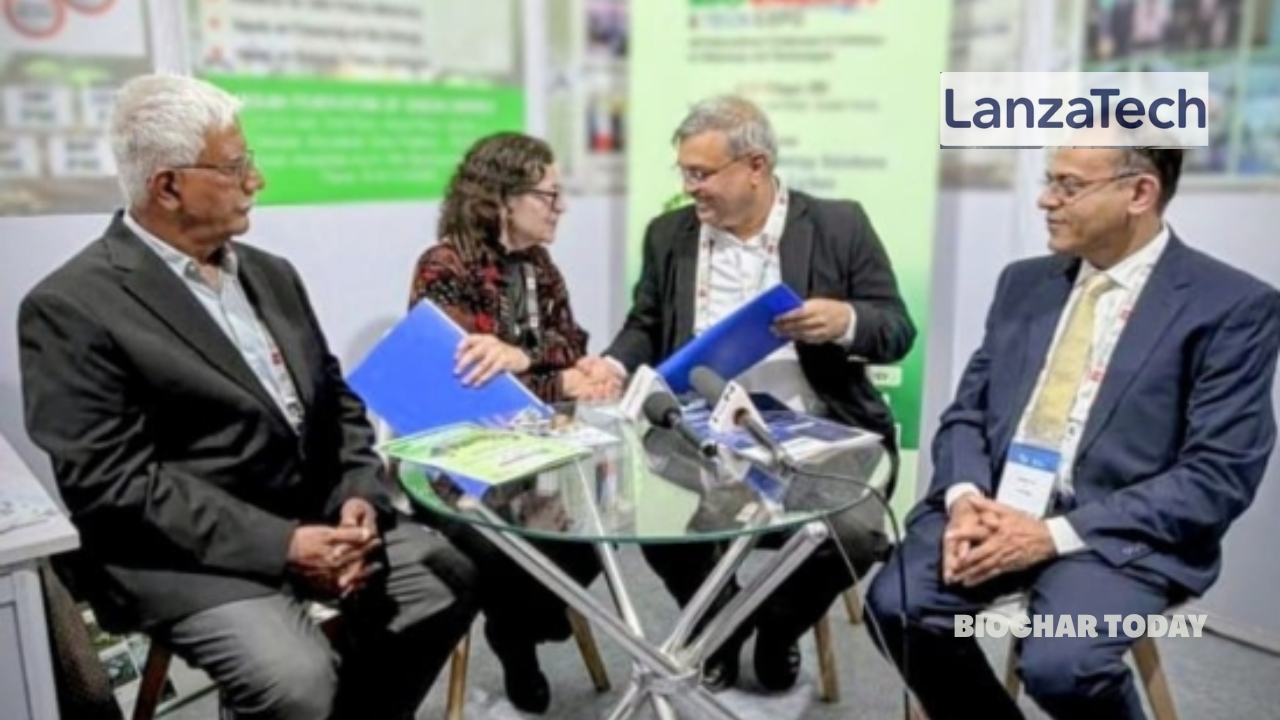
LanzaTech Global, Inc. has been awarded a contract by Spray Engineering Devices Ltd (SED) to construct a next-generation ethanol facility in Uttar Pradesh, India. This project utilizes LanzaTech’s proprietary gas fermentation technology to process up to 300 tons of sugarcane bagasse per day, converting this agricultural by-product into sustainable fuels and chemicals. A central feature of the development is its integration into the “SED Smart Village” concept, an initiative designed to foster rural economic growth by capturing the full value of renewable power and carbon resources. Beyond the production of 24,000 metric tons of ethanol annually, the facility is engineered to produce nutrient-rich biocharBiochar is a carbon-rich material created from biomass decomposition in low-oxygen conditions. It has important applications in environmental remediation, soil improvement, agriculture, carbon sequestration, energy storage, and sustainable materials, promoting efficiency and reducing waste in various contexts while addressing climate change challenges. More as a functional co-product.
A primary challenge addressed by this initiative is the environmental degradation and economic waste associated with the disposal of sugarcane bagasse. In India, vast quantities of this agricultural residue are traditionally burned in open fields or utilized in inefficient, low-value power generation, contributing significantly to air pollution and carbon emissions. Furthermore, the intensive cultivation of sugarcane has historically led to the depletion of soil organic matter, creating a critical need for sustainable soil amendments that can restore fertility and enhance the long-term productivity of local farming lands.
To resolve these interconnected issues, the facility will utilize an oxygen-enriched air gasificationGasification is a high-temperature, thermochemical process that converts carbon-based materials into a gaseous fuel called syngas and solid by-products. It takes place in an oxygen-deficient environment at temperatures typically above 750°C. Unlike combustion, which fully burns material to produce heat and carbon dioxide (CO2), gasification More system, developed by Ankur Scientific, to transform bagasse into syngasSyngas, or synthesis gas, is a fuel gas mixture consisting primarily of hydrogen and carbon monoxide. It is produced during gasification and can be used as a fuel source or as a feedstock for producing other chemicals and fuels. More. LanzaTech’s bioreactor then uses proprietary microbes to ferment this syngas into ethanol. Crucially for the local agricultural sector, the process is expected to yield between 5% and 10% biochar from the feedstockFeedstock refers to the raw organic material used to produce biochar. This can include a wide range of materials, such as wood chips, agricultural residues, and animal manure. More. This biochar serves as a stable, carbon-rich soil amendmentA soil amendment is any material added to the soil to enhance its physical or chemical properties, improving its suitability for plant growth. Biochar is considered a soil amendment as it can improve soil structure, water retention, nutrient availability, and microbial activity. More, effectively recycling the nutrients and carbon from the original biomassBiomass is a complex biological organic or non-organic solid product derived from living or recently living organism and available naturally. Various types of wastes such as animal manure, waste paper, sludge and many industrial wastes are also treated as biomass because like natural biomass these More back into the earth. This approach aligns with the PM JI-VAN Yojana program, which supports advanced bioethanol production from agricultural waste.
The expected outcomes of this partnership include the establishment of a circular economy model that supports India’s “Make in India” initiative. By diverting bagasse from open burning, the project will mitigate local air pollution while providing farmers with a high-quality soil amendment to improve crop yields and soil health. Financially, the project aims to demonstrate the commercial viability of agricultural residue as a feedstock for high-value products like green chemicals and sustainable aviation fuel. With operations slated to begin within two years, the facility represents a scalable roadmap for decarbonizing agriculture and strengthening rural infrastructure through localized carbon recycling.





Leave a Reply