
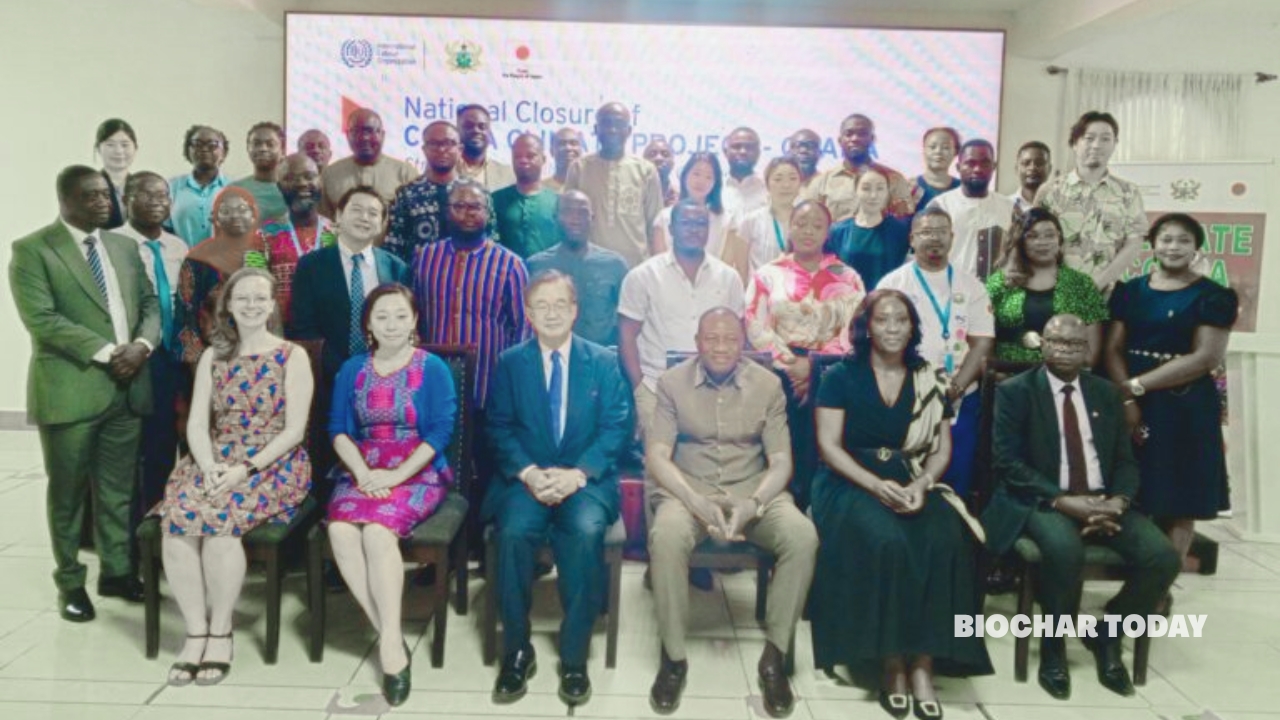
The International Labour Organization (ILO) and the Government of Japan have announced the successful conclusion of the “CLIMATE COCOA” project in Ghana, marking a significant milestone in the integration of climate-smart agriculture with social protection. Implemented in the Bibiani Ahwiaso Bekwai Municipal area of the Western North Region, the initiative utilized biocharBiochar is a carbon-rich material created from biomass decomposition in low-oxygen conditions. It has important applications in environmental remediation, soil improvement, agriculture, carbon sequestration, energy storage, and sustainable materials, promoting efficiency and reducing waste in various contexts while addressing climate change challenges. More technology as a central mechanism to improve farmer livelihoods and eliminate the economic drivers of child labour. By providing training and equipment to hundreds of cocoa-farming families, the project has demonstrated that environmental sustainability and human rights are mutually reinforcing objectives within the global cocoa supply chain.
A primary challenge addressed by this project is the systemic link between rural poverty, climate vulnerability, and child labour. In Ghana, irregular rainfall and deteriorating soil fertility have historically reduced cocoa yields, forcing smallholder families to rely on children for farm work because they cannot afford to hire adult laborers. Furthermore, the rising cost of synthetic fertilizers often depletes the limited financial reserves of these households, creating a cycle of economic instability. Without a method to restore productivity and lower input costs, families remain trapped in a predicament where child involvement in hazardous agricultural tasks becomes a perceived economic necessity.
To resolve these issues, the ILO and Japanese partners introduced a localized biochar production system utilizing cocoa pod husks—a readily available agricultural byproduct. The project established the Diaso Biochar Production Centre and trained 300 farming families in the technical aspects of pyrolysisPyrolysis is a thermochemical process that converts waste biomass into bio-char, bio-oil, and pyro-gas. It offers significant advantages in waste valorization, turning low-value materials into economically valuable resources. Its versatility allows for tailored products based on operational conditions, presenting itself as a cost-effective and efficient More and soil application. By converting waste into a high-value soil amendmentA soil amendment is any material added to the soil to enhance its physical or chemical properties, improving its suitability for plant growth. Biochar is considered a soil amendment as it can improve soil structure, water retention, nutrient availability, and microbial activity. More, the solution addresses soil acidity and nutrient retention without the need for expensive external inputs. Additionally, the project established 24 youth-led biochar business units, creating formal employment opportunities and diversifying the local economy away from a sole dependence on raw cocoa sales.
The outcomes of the CLIMATE COCOA project include a documented 30% increase in cocoa yields for participating farmers and the successful remediation of over 200 children previously involved in child labour. The rise in household income has enabled parents to hire adult workers and enroll their children in school, supported by the establishment of “Child Labour Free Zones” in eight communities. Beyond immediate economic gains, the project has pioneered a carbon trading model that could provide long-term supplemental income for farmers. These results provide a scalable framework for the International Labour Organization to replicate climate-resilient, ethical farming practices across other cocoa-growing regions globally.



Leave a Reply