
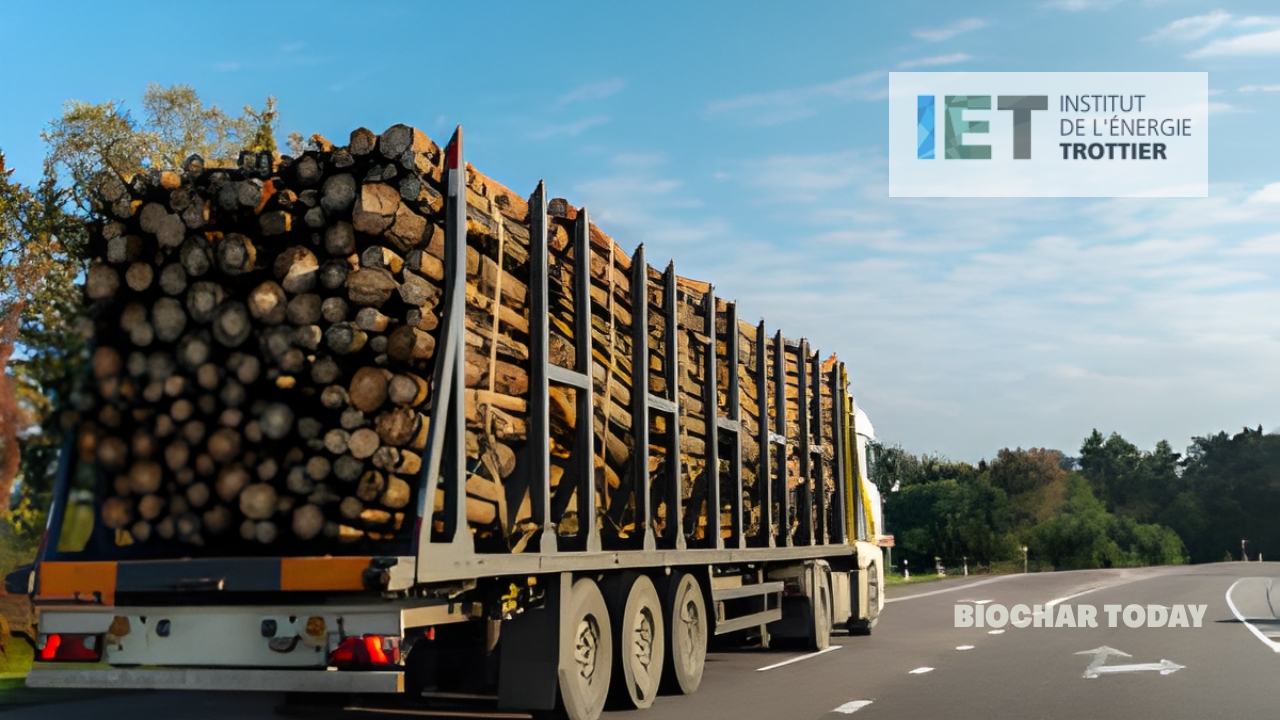
Researchers at the Institut de l’Énergie Trottier (IET) in Canada have recently advocated for the development of a comprehensive national biomassBiomass is a complex biological organic or non-organic solid product derived from living or recently living organism and available naturally. Various types of wastes such as animal manure, waste paper, sludge and many industrial wastes are also treated as biomass because like natural biomass these More strategy to align the country’s vast organic resources with its net-zero emissions targets. The analysis highlights that while Canada possesses significant volumes of agricultural and forestry residues, these materials remain largely underutilized in the broader climate transition. By integrating biomass into a formal policy framework, the researchers suggest that the country can better support decarbonization efforts, particularly through high-value applications such as biocharBiochar is a carbon-rich material created from biomass decomposition in low-oxygen conditions. It has important applications in environmental remediation, soil improvement, agriculture, carbon sequestration, energy storage, and sustainable materials, promoting efficiency and reducing waste in various contexts while addressing climate change challenges. More production and bioenergy with carbon capture and storage.
The primary challenge identified by the IET is the absence of a unified, coordinated roadmap to manage biomass across provincial and federal jurisdictions. Currently, the Canadian bioeconomy faces fragmentation, where available residues from the forestry and agricultural sectors are not systematically directed toward the most effective carbon-sequestration or energy-substitution pathways. This lack of coordination creates market uncertainty and risks the misallocation of resources, potentially leading to missed opportunities for permanent carbon removal and industrial decarbonization. Furthermore, external economic pressures and natural disturbances, such as forest fires, continue to complicate the stability of biomass supply chains.
To address these systemic inefficiencies, the IET researchers propose a solution modeled after the Canadian Hydrogen Strategy. This involves the creation of a national biomass roadmap that utilizes rigorous modeling to determine the optimal use of resources across different regions and industries. The proposed strategy would provide a clear signal to investors and industry stakeholders, ensuring that organic waste is prioritized for technologies that offer the greatest environmental returns. This framework would bridge the gap between various government departments, creating a synchronized approach to biomass harvesting, processing, and application.
The expected outcomes of implementing such a strategy include a significant increase in Canada’s carbon sequestration capacity and the stabilization of its domestic bioeconomy. The researchers estimate that a coordinated approach could help sequester up to 94 million tonnes of CO2 equivalent annually. By providing a clear policy direction, the strategy would likely accelerate the deployment of industrial-scale projects, such as biochar facilities and renewable fuel plants. Ultimately, this strategic alignment would transform Canada’s organic residues from a management burden into a cornerstone of a carbon-neutral industrial sector.


Leave a Reply