
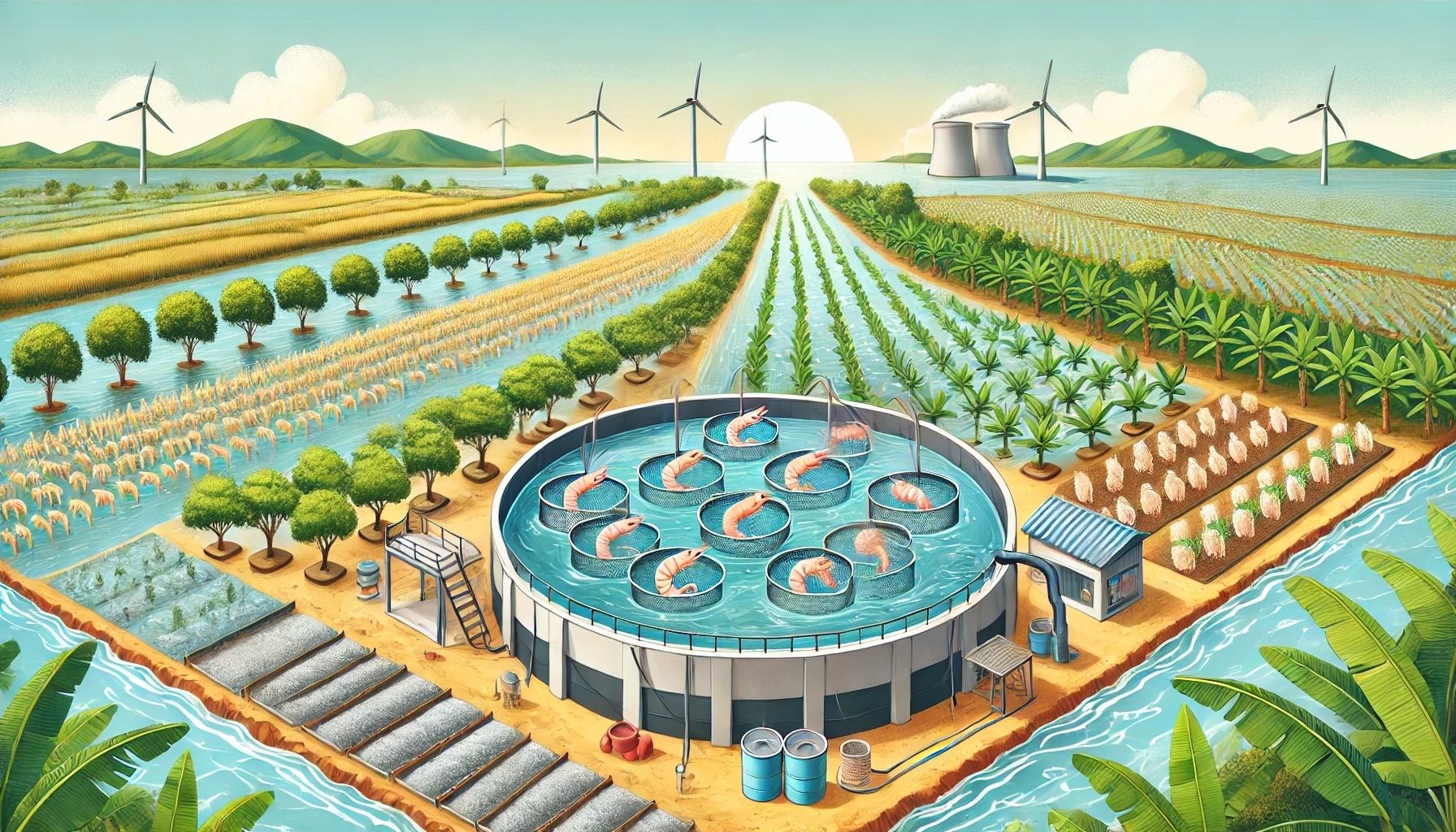
A recent study published in Scientific Reports explored the potential of biocharBiochar is a carbon-rich material created from biomass decomposition in low-oxygen conditions. It has important applications in environmental remediation, soil improvement, agriculture, carbon sequestration, energy storage, and sustainable materials, promoting efficiency and reducing waste in various contexts while addressing climate change challenges. More, a carbon-rich material derived from agricultural waste, in improving the water quality and growth of Penaeus vannamei (whiteleg shrimp) in inland saline aquaculture systems. Conducted over 60 days in controlled tank environments, the research examined three treatments using biochar derived from paddy straw (PSB), banana peduncles (BPB), and a mixture of both. The aim was to assess how biochar amendments could enhance ionic balance, reduce ammonia levels, and support shrimp health and growth.
Salinity and poor ionic balance are major challenges in inland shrimp farming, limiting productivity. Traditional solutions often involve costly chemical supplements that pose environmental risks. Biochar, produced through the pyrolysisPyrolysis is a thermochemical process that converts waste biomass into bio-char, bio-oil, and pyro-gas. It offers significant advantages in waste valorization, turning low-value materials into economically valuable resources. Its versatility allows for tailored products based on operational conditions, presenting itself as a cost-effective and efficient More of biomassBiomass is a complex biological organic or non-organic solid product derived from living or recently living organism and available naturally. Various types of wastes such as animal manure, waste paper, sludge and many industrial wastes are also treated as biomass because like natural biomass these More residues, offers a promising alternative. With its high carbon content, large surface area, and nutrient-rich composition, biochar improves soil and water properties, making it a suitable candidate for aquaculture applications.
The study revealed several significant benefits of biochar treatments. Mixed biochar (PSB + BPB) emerged as the most effective, showing reduced ammonia levels, improved pHpH is a measure of how acidic or alkaline a substance is. A pH of 7 is neutral, while lower pH values indicate acidity and higher values indicate alkalinity. Biochars are normally alkaline and can influence soil pH, often increasing it, which can be beneficial More and alkalinity, and a better calcium-to-magnesium ratio in the water. These factors created an optimal environment for shrimp growth. Shrimp in the mixed biochar group demonstrated the highest survival rates (92%), improved weight gain, and a lower feed conversion ratio (1.01), indicating efficient nutrient utilization.
Biochar also positively influenced shrimp physiology. Enzyme activity related to digestion and stress management improved significantly in biochar-treated groups, reflecting better health and reduced oxidative stress. The mixed biochar treatment enhanced hemocyanin levels, a key indicator of immune and respiratory function, while minimizing serum glucose, a stress marker.
The results underscore biochar’s potential as a sustainable, eco-friendly solution for inland shrimp farming. By converting agricultural waste into a valuable resource, biochar supports circular economy principles while addressing the environmental and economic challenges of aquaculture. Further studies could help refine this approach and unlock broader applications in aquaculture and beyond.
SOURCE: Tachangliu, N., Bharti, V.S., Amal, C.T. et al.Enhancing water quality and well-being of Penaeus vannamei (Boone, 1931) in Inland saline systems using mixed biochar amendments. Sci Rep15, 1280 (2025). https://doi.org/10.1038/s41598-024-84973-1

Leave a Reply