
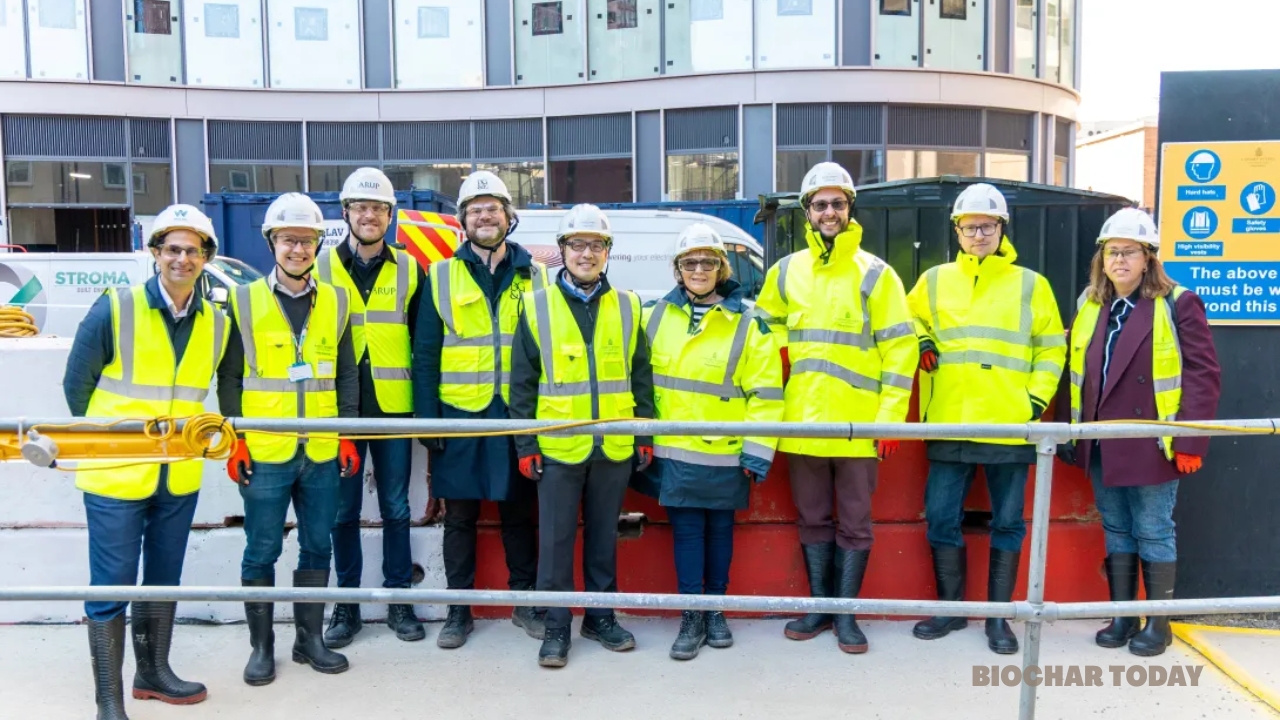
Holcim UK and Canary Wharf Group have successfully deployed a specialized concrete mix that utilizes biocharBiochar is a carbon-rich material created from biomass decomposition in low-oxygen conditions. It has important applications in environmental remediation, soil improvement, agriculture, carbon sequestration, energy storage, and sustainable materials, promoting efficiency and reducing waste in various contexts while addressing climate change challenges. More to achieve net-zero carbon performance in a commercial setting. The project, centered in London’s Canary Wharf district, involved a series of full-scale trials designed to test the viability of carbon-storing materials in high-density urban infrastructure. By integrating biochar derived from locally sourced spent coffee grounds and forestry residues, the partnership demonstrated a measurable pathway for the construction industry to transition from carbon-intensive practices to carbon-negative solutions.
The primary challenge addressed in these trials is the significant embodied carbon associated with traditional concrete production, which typically relies on CEM I Portland cement. Reducing the global warming potential (GWP) of structural slabs without compromising mechanical strength or durability is a persistent technical hurdle. For urban developers like Canary Wharf Group, meeting stringent net-zero targets requires materials that not only lower emissions during manufacturing but also actively offset remaining footprints through long-term carbon storage within the building fabric itself.
The implemented solution involved the development and optimization of a “Bio-Espresso” biochar concrete mix. This formulation, created in collaboration with the Holcim Innovation Center, replaces a portion of the traditional binder with biochar produced from the pyrolysisPyrolysis is a thermochemical process that converts waste biomass into bio-char, bio-oil, and pyro-gas. It offers significant advantages in waste valorization, turning low-value materials into economically valuable resources. Its versatility allows for tailored products based on operational conditions, presenting itself as a cost-effective and efficient More of waste wood and coffee grounds collected from local retailers. This approach locks biogenic carbon—previously absorbed by plants during growth—into the concrete matrix. During the final phase of trials in September 2025, the team optimized the mix to reach a projected net Global Warming Potential (A1–A3) of -14 kgCO₂e/m³, effectively creating a carbon sink.
The outcomes of this project establish a new benchmark for circular construction in the United Kingdom. The trial pours, which included two-meter-deep raft slabs at the Bank Street site, proved that the biochar-enhanced concrete meets all structural code requirements while maintaining expected performance levels. Beyond the immediate carbon reduction, the project successfully diverted organic waste from landfills, preventing the release of methane and carbon dioxide. This successful commercial application provides the necessary technical validation for the wider supply chain to adopt biochar-integrated materials as a standard for sustainable urban development.


Leave a Reply