
Key Takeaways
- Adding high amounts of biocharBiochar is a carbon-rich material created from biomass decomposition in low-oxygen conditions. It has important applications in environmental remediation, soil improvement, agriculture, carbon sequestration, energy storage, and sustainable materials, promoting efficiency and reducing waste in various contexts while addressing climate change challenges. More to soil can lower the presence of harmful metals by as much as 91 percent.
- Biochar is much more effective at locking away pollutants and storing carbon than traditional farm waste like straw.
- This special charcoalCharcoal is a black, brittle, and porous material produced by heating wood or other organic substances in a low-oxygen environment. It is primarily used as a fuel source for cooking and heating. More helps clean the environment by turning toxic metals into stable forms that plants cannot easily absorb.
- Using biochar creates a double benefit by improving soil safety and helping to fight climate change at the same time.
- Long-term evidence shows that these benefits last for at least fourteen years, making it a reliable solution for farmers.
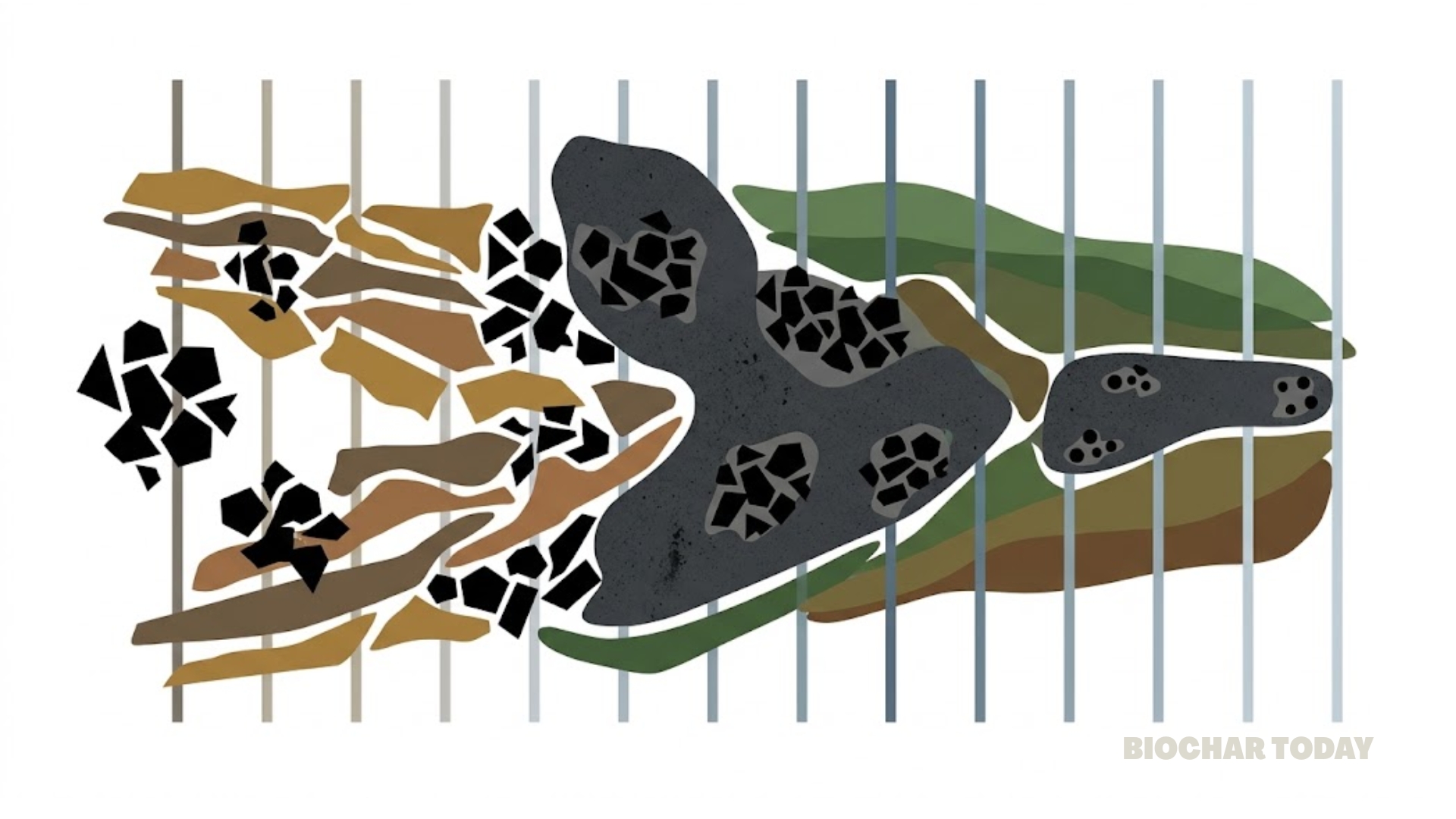
A long-term field study published in the journal Biochar by Mengmeng Ma and a team of international researchers provides substantial evidence regarding the enduring effectiveness of biochar in agricultural systems. The study utilized a fourteen-year field trial to examine how different levels of biochar application compare to conventional straw amendments in managing soil health. By monitoring the soil over more than a decade, the researchers were able to move beyond short-term observations and provide a definitive look at how these materials perform under real-world conditions. The findings underscore a major shift in how we understand the lifecycle of soil amendments and their role in environmental protection and agricultural productivity.
The central challenge addressed by this research is the dual burden of heavy metal contamination and the need for durable carbon storage in agricultural land. Heavy metals like lead, cadmium, and zinc are persistent pollutants that pose significant risks to food safety and human health when they are absorbed by crops. Traditional methods of managing these soils often focus on either reducing pollution or improving carbon levels, but rarely achieve both effectively over long periods. Straw, a common agricultural byproduct, is often returned to the fields to boost organic matter, yet this study reveals that it may actually increase the mobility of certain toxic metals, creating a potential risk rather than a solution.The research identifies biochar as a superior solution because of its unique chemical and physical stability. Unlike straw, which decomposes relatively quickly, biochar is produced through a heating process called pyrolysisPyrolysis is a thermochemical process that converts waste biomass into bio-char, bio-oil, and pyro-gas. It offers significant advantages in waste valorization, turning low-value materials into economically valuable resources. Its versatility allows for tailored products based on operational conditions, presenting itself as a cost-effective and efficient More that creates a highly porous and stable carbon structure. When applied at high dosages, this material significantly alters the soil environment. It increases the capacity of the soil to hold onto nutrients and binds tightly to heavy metals through various chemical interactions. Furthermore, the study highlights how biochar reshapes the microbial life in the soil. These tiny organisms play a dominant role in determining whether metals remain in a dangerous, mobile state or are locked away in the ground.
The outcomes of this fourteen-year trial are significant for both environmental policy and practical farming. High-dosage biochar was found to reduce the bioavailability of toxic metals by a range of 2 to 91 percent, far exceeding the performance of low-dosage biochar and straw. The researchers also developed a coupling index to measure the joint success of metal immobilization and carbon sequestration, where high-dosage biochar scored significantly higher than all other treatments. This means that using biochar not only makes the soil safer for growing food by keeping toxins out of plants but also serves as a robust tool for removing carbon dioxide from the atmosphere and storing it safely in the earth for decades.
Source: Ma, M., Zhang, Y., Ma, Q., Wang, Z., Du, Z., Chen, Y., Gao, Q., Wang, F., Gao, B., & Sun, K. (2026). Fourteen-year field evidence reveals superior co-benefits of biochar in immobilizing heavy metals and sequestering carbon. Biochar, 8(51).


Leave a Reply