
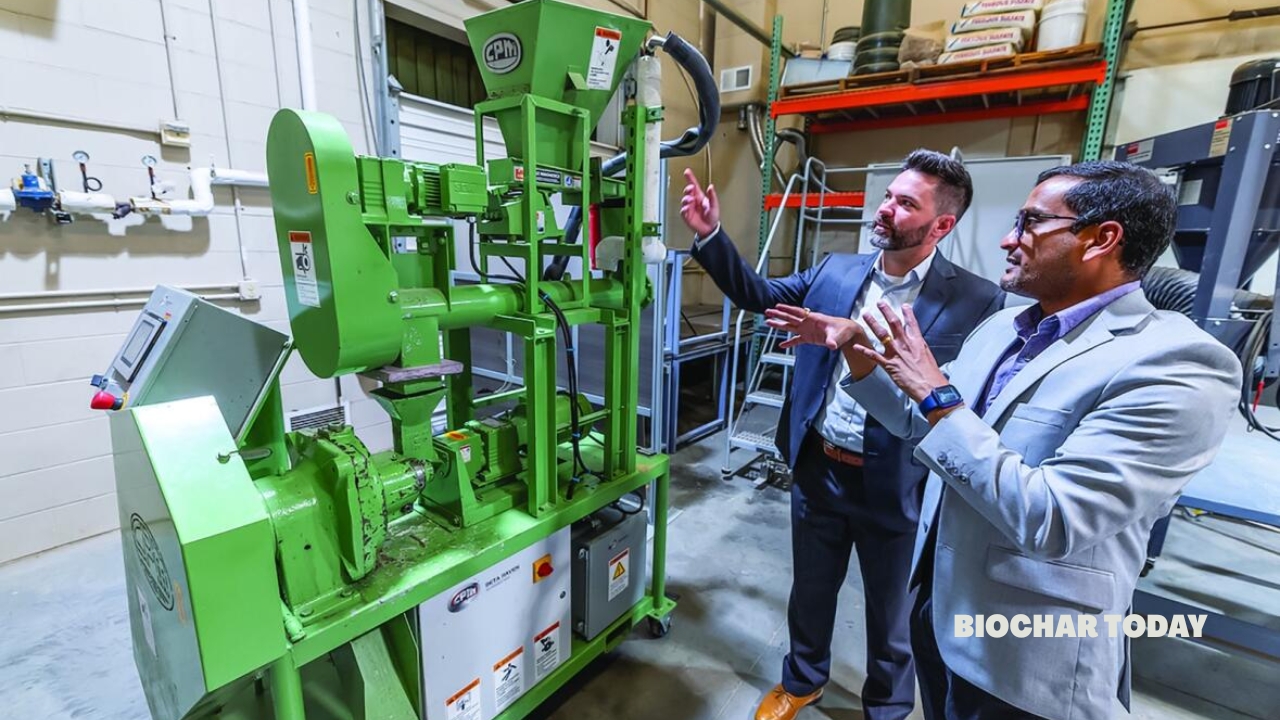
Heartland BiocharBiochar is a carbon-rich material created from biomass decomposition in low-oxygen conditions. It has important applications in environmental remediation, soil improvement, agriculture, carbon sequestration, energy storage, and sustainable materials, promoting efficiency and reducing waste in various contexts while addressing climate change challenges. More, an Iowa-based startup originating from Iowa State University’s BioCentury Research Farm, represents a strategic intersection of mechanical engineering and agricultural waste management. Founded by researchers and entrepreneurs in the United States, the company focuses on commercializing modular pyrolysisPyrolysis is a thermochemical process that converts waste biomass into bio-char, bio-oil, and pyro-gas. It offers significant advantages in waste valorization, turning low-value materials into economically valuable resources. Its versatility allows for tailored products based on operational conditions, presenting itself as a cost-effective and efficient More technology to process corn stover into high-quality biochar. By leveraging academic research and local biomassBiomass is a complex biological organic or non-organic solid product derived from living or recently living organism and available naturally. Various types of wastes such as animal manure, waste paper, sludge and many industrial wastes are also treated as biomass because like natural biomass these More resources, the venture aims to transition laboratory-scale thermal conversion into a viable industrial business model that serves the Midwestern agricultural sector.
The primary challenge addressed by this initiative is the logistical and economic difficulty of managing excess agricultural residues while simultaneously improving soil productivity. In states like Iowa, the abundance of corn stover often leads to management issues on the field, where slow decomposition can interfere with planting and nutrient cycling. Furthermore, many existing carbon sequestration technologies remain cost-prohibitive for individual farmers, necessitating a localized, scalable engineering solution that can process biomass at the source without requiring massive infrastructure investments.
To resolve these challenges, the team at Heartland Biochar developed a mobile, containerized pyrolysis system designed for deployment directly on or near farm sites. This engineering approach reduces transportation costs—a major bottleneck in the biochar industry—and allows for the flexible processing of varied biomass feedstocks. The technology utilizes controlled thermal decomposition to lock carbon into a stable form, creating a value-added product from what was previously considered waste. By integrating automated controls and optimizing heat recovery, the startup ensures a consistent output that meets the physical and chemical standards required for soil amendmentA soil amendment is any material added to the soil to enhance its physical or chemical properties, improving its suitability for plant growth. Biochar is considered a soil amendment as it can improve soil structure, water retention, nutrient availability, and microbial activity. More applications.
The outcomes of this project include the successful validation of the modular pyrolysis unit and the establishment of a functional supply chain within the regional agricultural economy. Heartland Biochar has demonstrated that engineering-driven startups can bridge the gap between university research and market-ready climate solutions. The resulting biochar provides farmers with a tool to enhance soil water retention and nutrient density, while the business model offers a blueprint for decentralized carbon sequestration. This advancement positions Iowa as a significant hub for biochar innovation, proving that targeted mechanical solutions can effectively commercialize sustainable agricultural practices.


Leave a Reply