
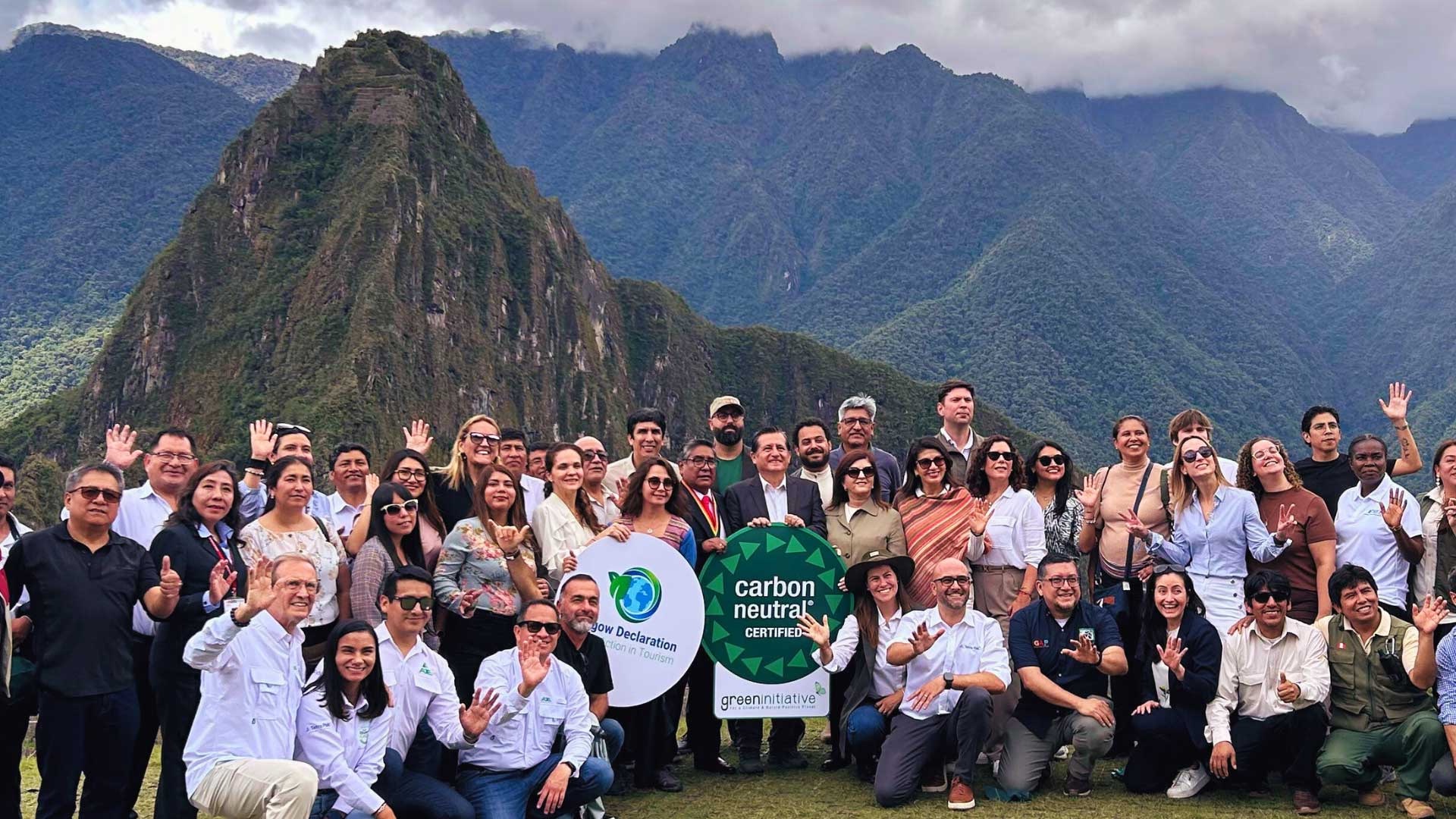
Green Initiative International has certified Machu Picchu as carbon neutral for the third consecutive year. This achievement is the result of a coordinated effort between the Municipality of Machu Picchu, Inkaterra, AJE Group, SERNANP, and other key partners to reduce the environmental impact of one of the world’s most visited heritage sites. The certification highlights the destination’s continued leadership in climate action and its successful implementation of science-based governance to manage emissions and waste.
Iconic tourist destinations face immense environmental pressure. Machu Picchu faces the dual difficulty of managing high volumes of visitor traffic and handling the resulting waste streams in a sensitive, remote ecological zone. Without effective intervention, the accumulation of organic waste and reliance on conventional energy sources would result in an unsustainable carbon footprint, threatening both the local ecosystem and the site’s status as a premier travel destination.
The solution implemented by the coalition relies heavily on an integrated circular economy model. A critical component of this strategy is the utilization of pyrolysisPyrolysis is a thermochemical process that converts waste biomass into bio-char, bio-oil, and pyro-gas. It offers significant advantages in waste valorization, turning low-value materials into economically valuable resources. Its versatility allows for tailored products based on operational conditions, presenting itself as a cost-effective and efficient More technology to convert organic waste into biocharBiochar is a carbon-rich material created from biomass decomposition in low-oxygen conditions. It has important applications in environmental remediation, soil improvement, agriculture, carbon sequestration, energy storage, and sustainable materials, promoting efficiency and reducing waste in various contexts while addressing climate change challenges. More. By processing waste on-site, the project not only reduces landfill usage but also produces a stable carbon sink that supports local agriculture and reforestation. This biochar production is complemented by other circular measures, including the conversion of used cooking oils into biodiesel, extensive PET recycling, and the adoption of electric vehicles for sustainable mobility.
The outcomes of this multi-faceted approach are quantifiable and robust. In 2024, Machu Picchu achieved a 7.26% reduction in its carbon footprint per tourist. Additionally, ecological restoration efforts, supported by the soil-enhancing properties of the produced biochar, captured 5,057 tons of CO2e. These metrics confirm the viability of the model, which is now being expanded to create the world’s first Carbon Neutral Tourism Corridor connecting Machu Picchu to Cusco.





Leave a Reply