
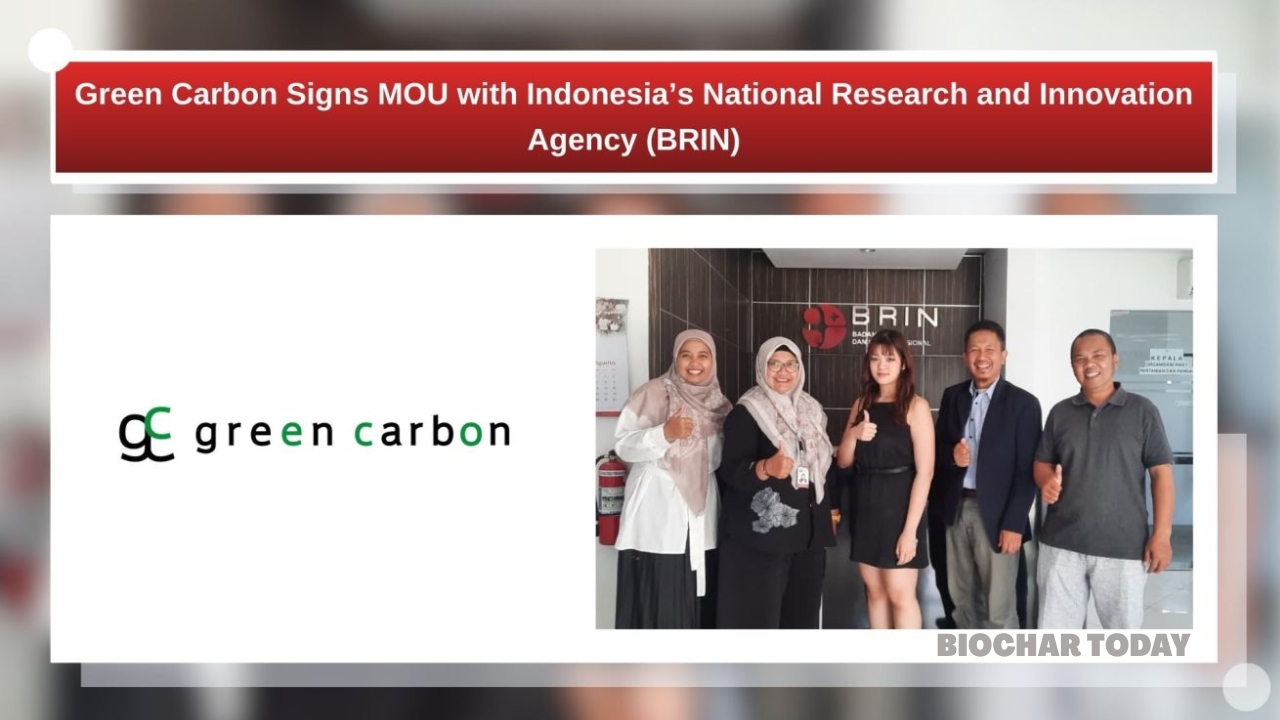
Green Carbon Inc. and Indonesia’s National Research and Innovation Agency (BRIN) recently signed a Memorandum of Understanding (MoU) to advance research on greenhouse gas emission reductions and environmental sustainability. This Public-Private Partnership (PPP) focuses on the land-use and agricultural sectors in Indonesia, leveraging scientific expertise to quantitatively assess carbon reduction potential. By combining Green Carbon’s operational experience in nature-based carbon credit generation with BRIN’s academic rigor, the collaboration seeks to bridge the gap between academic findings and future policy design or commercial implementation.
Indonesia faces significant geographic and environmental challenges as an archipelagic nation with roughly 10 million hectares of rice paddies. A major hurdle is the lack of standardized, science-based methodologies to accurately capture and evaluate the environmental impact of sustainable land-use practices. Without precise assessment tools, the market potential for carbon credits remains underutilized, and the transition to a low-carbon construction and agricultural sector is hindered by inadequate measurement, reporting, and verification capacity.
The solution proposed by the partnership involves the joint development of methodologies specifically for the agricultural sector, including Climate-Smart Agriculture (CSA) evaluations. Green Carbon will apply its “Agreen” platform and satellite data monitoring to ensure transparency and efficiency in site selection. Meanwhile, BRIN will provide the necessary scientific foundation to validate emission reduction assessments. A key component of this strategy is the upcycling of abundant wood and agricultural residues into biocharBiochar is a carbon-rich material created from biomass decomposition in low-oxygen conditions. It has important applications in environmental remediation, soil improvement, agriculture, carbon sequestration, energy storage, and sustainable materials, promoting efficiency and reducing waste in various contexts while addressing climate change challenges. More, which sequesters carbon in durable forms and prevents the emissions typically associated with waste decay or burning.
The outcomes of this agreement are expected to unlock a carbon credit market in Indonesia with an estimated potential value of roughly 42.8 billion JPY. By establishing a scalable model for carbon farming and biochar projects, the partnership supports Indonesia’s commitment to its Nationally Determined Contribution (NDC) goals. Beyond economic benefits, the initiative promotes soil health and climate-resilient agriculture, contributing to global efforts under UN Sustainable Development Goals 11 (Sustainable Cities and Communities) and 13 (Climate Action).


Leave a Reply