
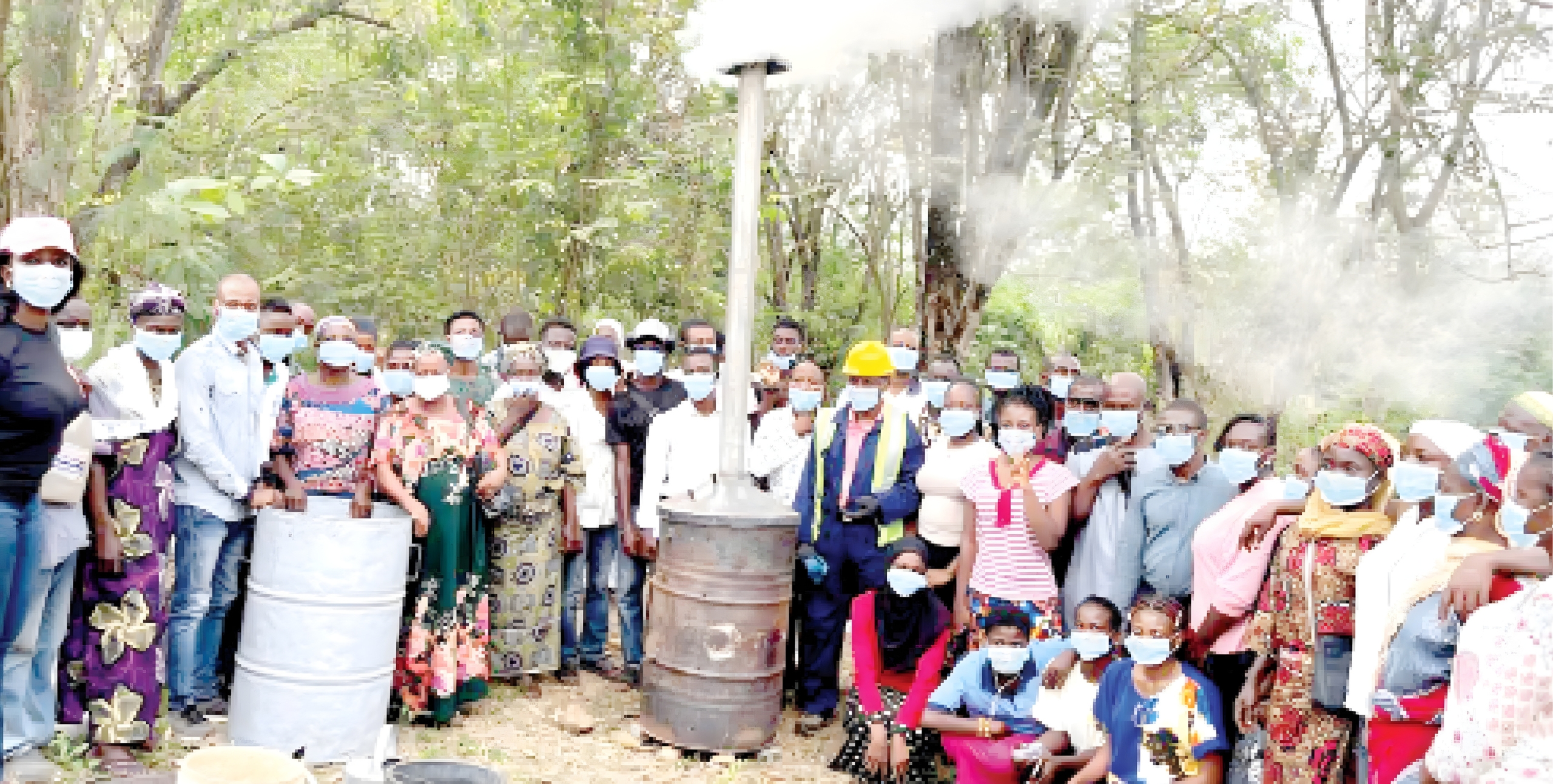
The Forestry Research Institute of Nigeria (FRIN) recently conducted a specialized technical training program in Ibadan, Nigeria, focused on the production and application of biocharBiochar is a carbon-rich material created from biomass decomposition in low-oxygen conditions. It has important applications in environmental remediation, soil improvement, agriculture, carbon sequestration, energy storage, and sustainable materials, promoting efficiency and reducing waste in various contexts while addressing climate change challenges. More for wetland farming. This initiative targeted local farmers and extension agents, aiming to integrate sustainable soil management practices into the region’s agricultural framework. The program, facilitated by FRIN’s Department of Soil Resources and Agricultural Land Management, provided participants with the technical knowledge required to convert organic waste into a stable soil amendmentA soil amendment is any material added to the soil to enhance its physical or chemical properties, improving its suitability for plant growth. Biochar is considered a soil amendment as it can improve soil structure, water retention, nutrient availability, and microbial activity. More. By focusing on localized production, the institute seeks to improve food security and soil health within the humid forest zones of the country.
A significant challenge addressed during this training is the degradation and nutrient leachingLeaching is the process where nutrients are dissolved and carried away from the soil by water. This can lead to nutrient depletion and environmental pollution. Biochar can help reduce leaching by improving nutrient retention in the soil. More common in Nigerian wetland soils, which often leads to declining crop yields. These agricultural zones face high acidity and poor nutrient retention, exacerbated by the high cost and environmental toll of imported synthetic fertilizers. Smallholder farmers in the Ibadan region frequently struggle with waste management, as agricultural residues are often discarded or burned in the open, contributing to air pollution rather than soil restoration. The lack of accessible, low-cost soil enhancers has historically limited the productivity of these essential wetland ecosystems.
To mitigate these issues, FRIN introduced a decentralized solution involving the on-site production of biochar from readily available agricultural waste. The training demonstrated low-technology carbonization methods that farmers can implement without significant capital investment. Experts from FRIN detailed the specific chemical interactions between biochar and wetland soil, explaining how the material’s porous structure helps retain moisture and nutrients. This approach transforms the existing problem of agricultural waste into a circular economy solution, providing a sustainable alternative to conventional fertilizers while sequestering carbon in the soil.
The outcomes of the FRIN initiative include a measurable increase in the technical capacity of Ibadan’s farming community and the promotion of climate-smart agricultural practices. Participants are now equipped to produce their own soil amendments, reducing their reliance on external inputs and lowering overall production costs. By stabilizing soil pHpH is a measure of how acidic or alkaline a substance is. A pH of 7 is neutral, while lower pH values indicate acidity and higher values indicate alkalinity. Biochars are normally alkaline and can influence soil pH, often increasing it, which can be beneficial More and improving nutrient availability, the program is expected to lead to higher crop resilience and improved yields in the targeted wetlands. Furthermore, the adoption of these techniques serves as a model for carbon-sequestering waste management that can be replicated across other ecological zones in Nigeria.



Leave a Reply