

In the United States, Washington-based Forest Concepts has introduced a suite of technological innovations aimed at streamlining the biomassBiomass is a complex biological organic or non-organic solid product derived from living or recently living organism and available naturally. Various types of wastes such as animal manure, waste paper, sludge and many industrial wastes are also treated as biomass because like natural biomass these More preprocessing pipeline. The company, which evolved from an environmental restoration firm into a specialized engineering entity, recently received the American Society of Agricultural and Biological Engineers AE50 Award for its Advanced Drying Controls. These systems are designed to integrate seamlessly with modular biocharBiochar is a carbon-rich material created from biomass decomposition in low-oxygen conditions. It has important applications in environmental remediation, soil improvement, agriculture, carbon sequestration, energy storage, and sustainable materials, promoting efficiency and reducing waste in various contexts while addressing climate change challenges. More production facilities, such as the demonstration plant operated by Locoal in Houston, Texas. By focusing on the interplay between material size and moisture management, Forest Concepts provides a framework for more efficient conversion of woody biomass into value-added products like biochar.
The primary challenge addressed by these innovations is the operational bottleneck caused by material drying, which is frequently cited as the most expensive and energy-intensive intermediary step in biomass conversion. Traditional drying processes are often hindered by variable moisture content in feedstocks—influenced by weather, storage duration, and harvest timing—requiring constant operator supervision to prevent over- or under-drying. Furthermore, conventional drying can account for up to 70% of a facility’s total energy consumption. When unit operations like size reduction and drying are treated as isolated steps, the resulting inefficiencies lead to high labor costs and significant energy waste, particularly when using raw wood chips.
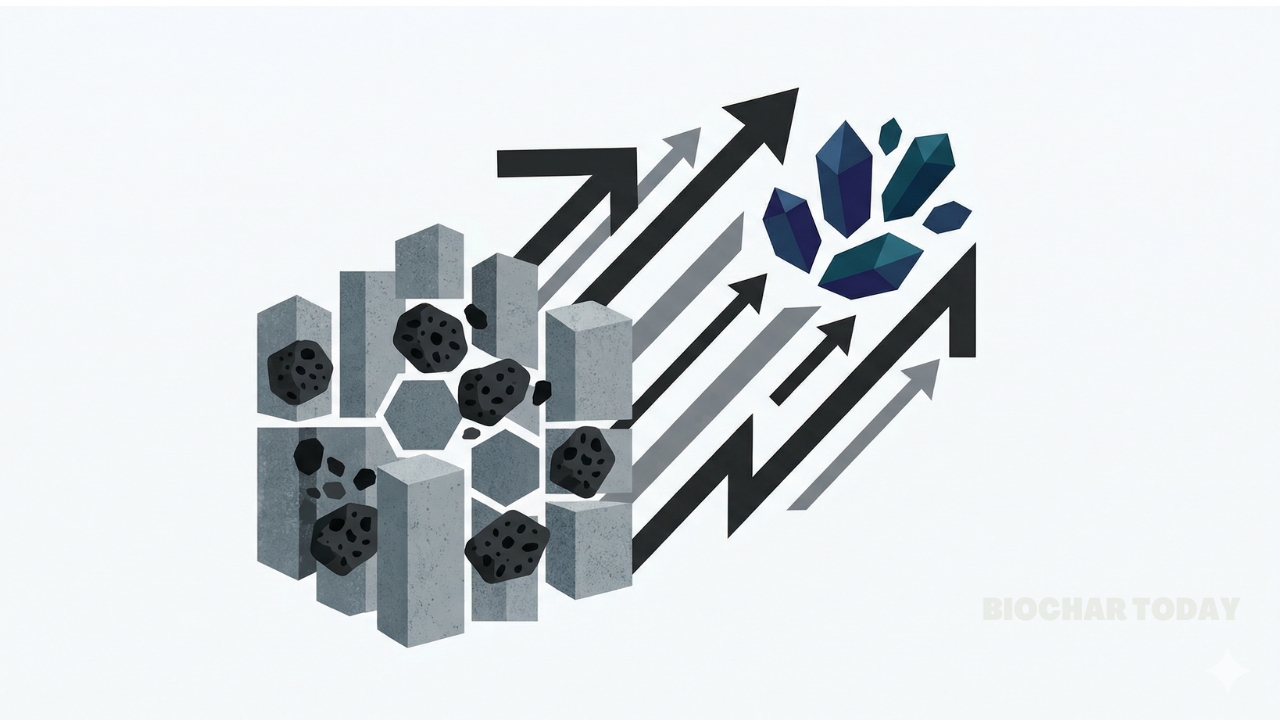
Forest Concepts’ solution involves a multi-phased approach that combines its “Crumbler” rotary shear technology with Advanced Drying Controls for belt dryers. The Crumbler system performs size reduction prior to drying, creating a “Crumbles” product that is highly flowable and easier to dry than traditional wood chips. The Advanced Drying Controls utilize a Research Dryer Apparatus (RDA) and sophisticated modeling software, SiPS TEA, to create a “fuel map” for the drying process. This allows the system to use process sensors to automatically adjust airflow and bed depth in response to real-time moisture fluctuations, maintaining a consistent temperature of approximately 120 degrees Celsius.
The outcomes of implementing these integrated systems are substantial in terms of both fiscal and energy efficiency. An analysis by the Idaho National Laboratory suggests that switching from traditional hammer mills to rotary shears can result in significant annual savings. By optimizing the sequence of unit operations—specifically performing size reduction before drying—Forest Concepts reports that facilities can reduce dryer energy consumption by approximately 50%. Additionally, the automation of these processes reduces the requirement for manual intervention, lowering labor costs while ensuring consistent product quality and lower atmospheric emissions.



Leave a Reply