
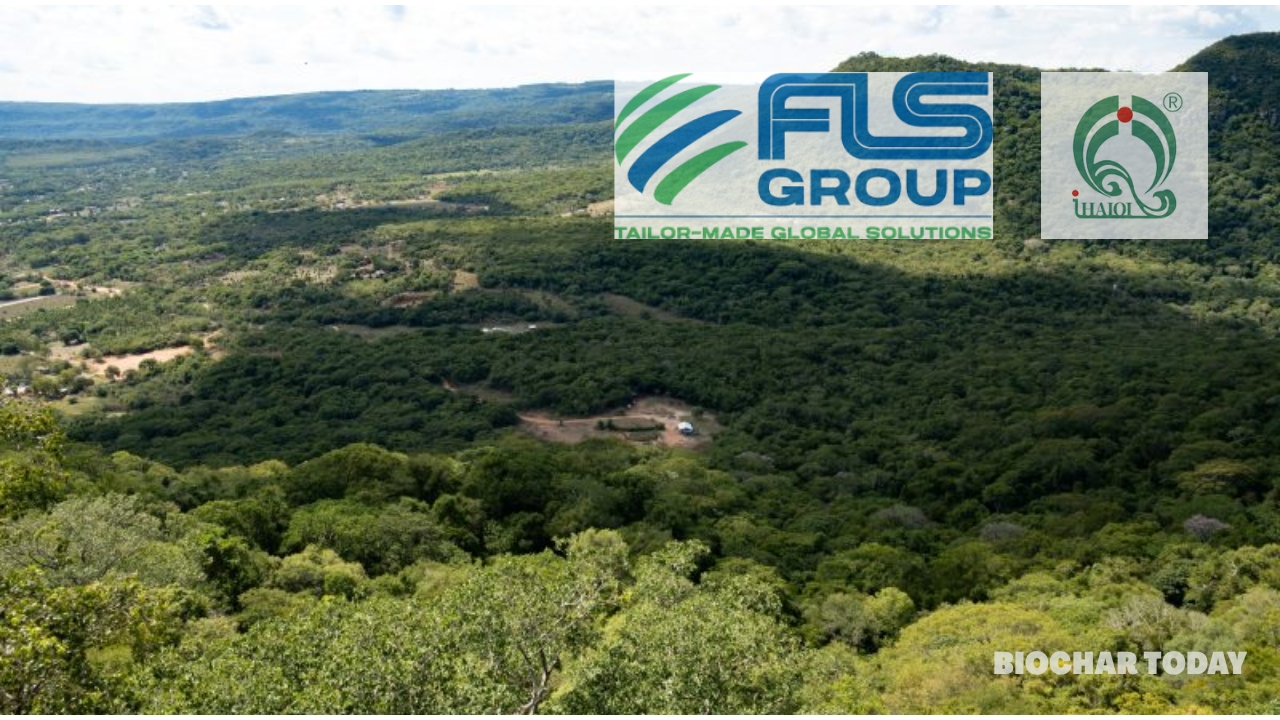
FLS and Haiqi have announced a strategic partnership to develop biomass-based Carbon Dioxide Removal (CDR) projects in Paraguay. This collaboration combines FLS’s regional operational expertise with Haiqi’s specialized gasificationGasification is a high-temperature, thermochemical process that converts carbon-based materials into a gaseous fuel called syngas and solid by-products. It takes place in an oxygen-deficient environment at temperatures typically above 750°C. Unlike combustion, which fully burns material to produce heat and carbon dioxide (CO2), gasification More and pyrolysisPyrolysis is a thermochemical process that converts waste biomass into bio-char, bio-oil, and pyro-gas. It offers significant advantages in waste valorization, turning low-value materials into economically valuable resources. Its versatility allows for tailored products based on operational conditions, presenting itself as a cost-effective and efficient More technology. The initiative focuses on converting agricultural and forestry residues into biocharBiochar is a carbon-rich material created from biomass decomposition in low-oxygen conditions. It has important applications in environmental remediation, soil improvement, agriculture, carbon sequestration, energy storage, and sustainable materials, promoting efficiency and reducing waste in various contexts while addressing climate change challenges. More, leveraging Paraguay’s significant biomassBiomass is a complex biological organic or non-organic solid product derived from living or recently living organism and available naturally. Various types of wastes such as animal manure, waste paper, sludge and many industrial wastes are also treated as biomass because like natural biomass these More resources to generate high-quality carbon credits. By establishing a localized infrastructure for carbon sequestration, the two organizations aim to integrate industrial-scale technology with regional environmental management strategies.
A primary challenge addressed by this partnership is the inefficient management of biomass waste in South America, which often leads to uncontrolled decomposition or burning, releasing greenhouse gases. Furthermore, the burgeoning carbon market requires standardized, scalable projects that can provide verifiable and durable sequestration. In Paraguay, the lack of advanced thermochemical processing infrastructure has historically limited the ability of local industries to participate in the global CDR market. FLS and Haiqi seek to bridge this gap by introducing technical systems capable of handling diverse feedstocks under rigorous monitoring standards.
The solution involves the deployment of Haiqi’s proprietary pyrolysis and gasification equipment, which is designed to optimize the conversion of organic waste into stable biochar. This hardware-centric approach is supported by FLS’s logistics and project management framework, ensuring that the supply chain—from biomass collection to biochar application—is efficient and transparent. The technology facilitates the thermal decomposition of biomass in an oxygen-limited environment, effectively locking carbon into a solid form while simultaneously producing syngasSyngas, or synthesis gas, is a fuel gas mixture consisting primarily of hydrogen and carbon monoxide. It is produced during gasification and can be used as a fuel source or as a feedstock for producing other chemicals and fuels. More, which can be utilized for renewable energy within the facility.
The anticipated outcomes of these projects include the sequestration of significant volumes of atmospheric carbon and the production of biochar for soil enhancement in Paraguayan agriculture. This partnership establishes a template for scalable CDR deployment in developing carbon markets. Beyond the environmental impact, the projects are expected to generate economic value through the sale of certified carbon removal credits. This initiative positions Paraguay as an emerging hub for carbon removal technology and strengthens the operational footprint of both FLS and Haiqi in the Southern Hemisphere.


Leave a Reply