
Key Takeaways
- BiocharBiochar is a carbon-rich material created from biomass decomposition in low-oxygen conditions. It has important applications in environmental remediation, soil improvement, agriculture, carbon sequestration, energy storage, and sustainable materials, promoting efficiency and reducing waste in various contexts while addressing climate change challenges. More made from plant waste that acts like a sponge to hold water in dry soils.
- Adding this material to the ground can boost crop growth by half and stop wind from blowing away healthy topsoil.
- Using local waste like leftover straw or sewage sludge to make biochar can lower production costs significantly.
- This natural solution helps the planet by locking away carbon in the ground for hundreds of years.
- Modern tools like drones and solar power are making it easier for farmers to use biochar more effectively.
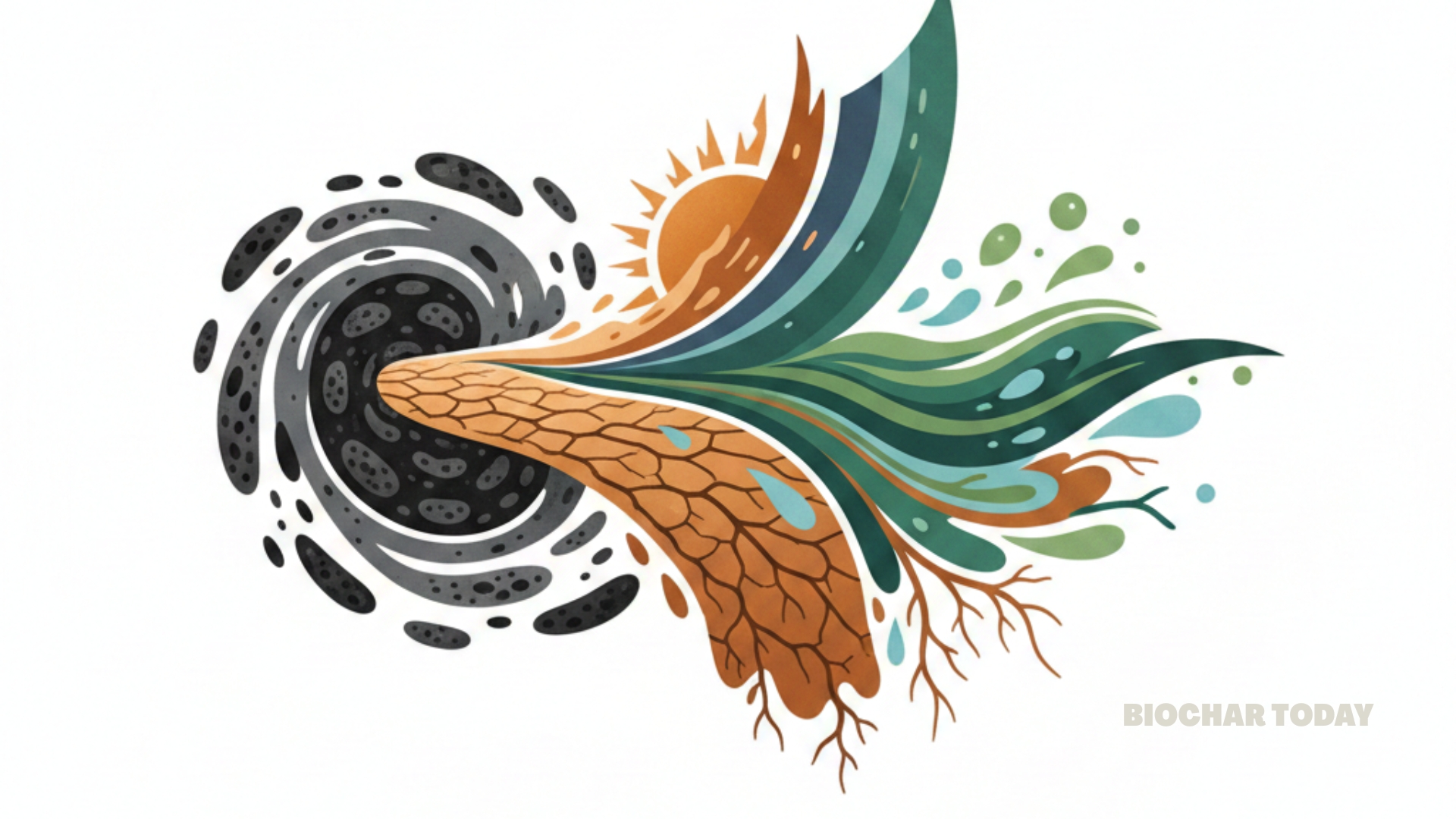
The study published in the journal Biochar by Abdul Waheed and his research team examines how this charcoal-like material serves as a climate-smart tool for reviving degraded lands. Arid and semi-arid regions cover nearly forty percent of the earth and face extreme challenges from low rainfall and poor soil quality. Traditional methods like heavy irrigation or chemical fertilizers often fail to solve deep-seated soil issues and can even increase salt buildup. Biochar offers a different path by providing a stable home for tiny beneficial organisms and creating a physical network that keeps moisture and nutrients where plants can reach them.
The research indicates that biochar possesses a massive surface area and a high capacity to hold onto essential nutrients. When added to the soil, it can increase the ability of the ground to hold water by fifteen to thirty-five percent. In specific field trials, researchers found that even small amounts of biochar could improve the water content in the top layer of soil by twelve percent. This is particularly vital in areas that receive very little rain, as it allows crops to survive longer during dry spells. Furthermore, biochar helps build stronger soil structures that are less likely to be washed away by water or blown away by the wind.
Beyond physical soil improvements, biochar plays a major role in fighting climate change by storing carbon. It can lock away up to eighty percent of the carbon found in the original plant waste, preventing it from entering the atmosphere as greenhouse gases. The study notes that on a global scale, this technology has the potential to mitigate nearly two billion tons of carbon dioxide every year. While making biochar can be expensive, the researchers point out that using stable waste sources like wood scraps or sewage sludge can cut costs by twenty to thirty percent. This makes the technology more accessible for large-scale environmental restoration.
Modern technology is also helping to bring biochar into the future of farming. The researchers discuss how drones can be used to apply biochar with high precision, which increases the efficiency of nutrient use by ten to fifteen percent. Additionally, combining biochar with solar-powered irrigation systems creates a sustainable cycle that supports both energy and water needs. By turning invasive plants or agricultural waste into a valuable soil amendmentA soil amendment is any material added to the soil to enhance its physical or chemical properties, improving its suitability for plant growth. Biochar is considered a soil amendment as it can improve soil structure, water retention, nutrient availability, and microbial activity. More, communities can protect their local biodiversity while also making their farms more productive.
The study concludes that for biochar to be most effective, it must be tailored to the specific needs of the local soil and climate. For example, some types of biochar work better in sandy soils, while others are better for soils with high salt content. By aligning the production of biochar with reliable waste supplies and new financial models, it can become a commercially viable way to restore the health of our planet. This nature-based solution provides a clear roadmap for protecting drylands and ensuring food security for the billions of people living in these vulnerable regions.
Source: Waheed, A., Xu, Q., Cui, D., Muhammad, M., Xu, H., Aili, A., Kuerban, A., & Ali, S. (2026). Biochar as a climate-smart strategy for restoring dryland soils and mitigating desertification. Biochar, 8(59).

Leave a Reply