
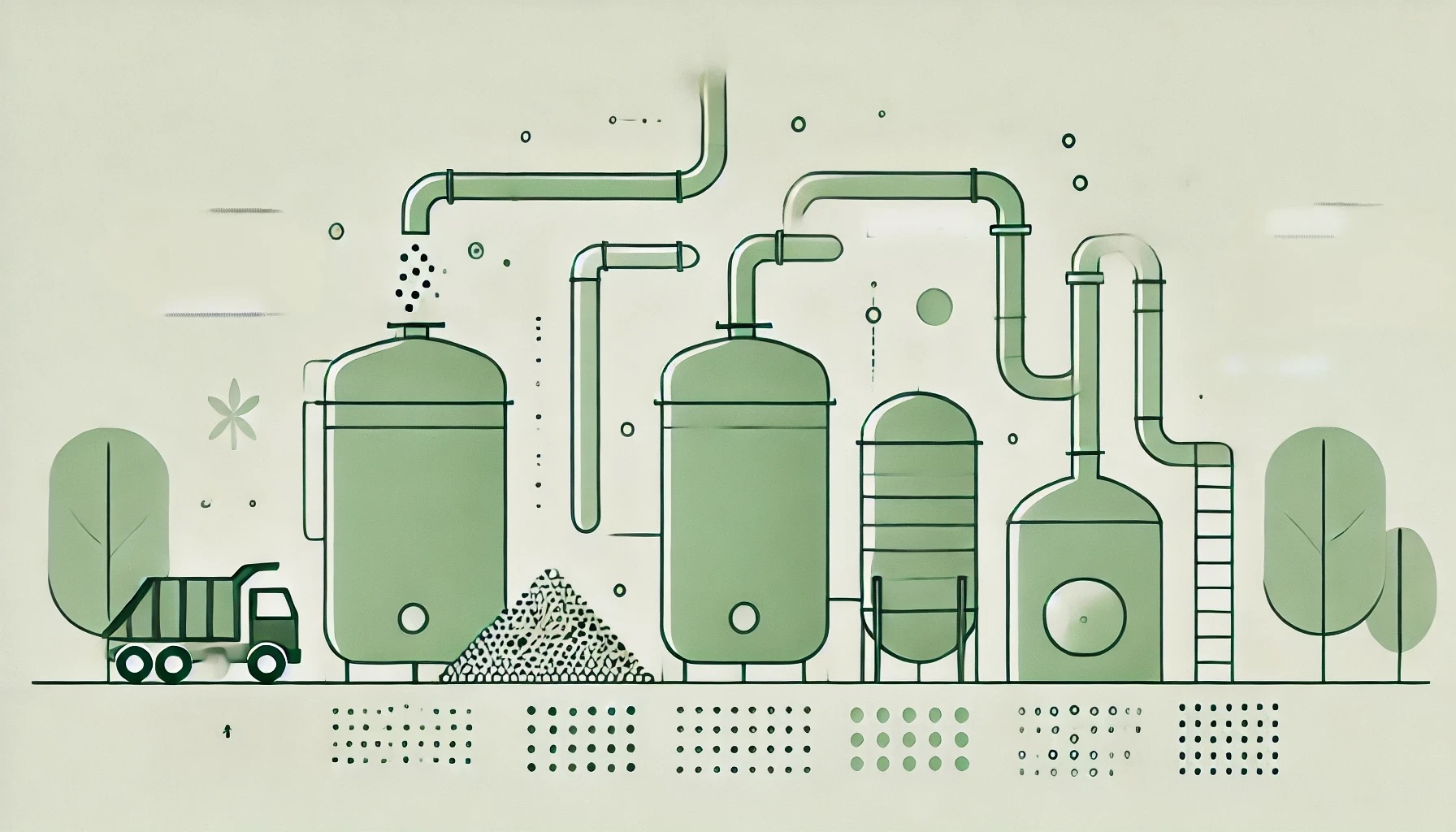
The anaerobic digestion (AD) of palm oil mill effluent (POME) is a promising approach for reducing waste and generating renewable energy. This study explores the addition of biocharBiochar is a carbon-rich material created from biomass decomposition in low-oxygen conditions. It has important applications in environmental remediation, soil improvement, agriculture, carbon sequestration, energy storage, and sustainable materials, promoting efficiency and reducing waste in various contexts while addressing climate change challenges. More to the AD process, optimizing its parameters for higher biogas and methane production while improving waste treatment efficiency. POME, a byproduct of palm oil milling, contains high organic content, posing environmental risks if untreated. AD offers a sustainable solution by converting this organic waste into biogas, primarily methane, while also minimizing the waste volume.
Biochar, a carbon-rich material derived from biomassBiomass is a complex biological organic or non-organic solid product derived from living or recently living organism and available naturally. Various types of wastes such as animal manure, waste paper, sludge and many industrial wastes are also treated as biomass because like natural biomass these More pyrolysisPyrolysis is a thermochemical process that converts waste biomass into bio-char, bio-oil, and pyro-gas. It offers significant advantages in waste valorization, turning low-value materials into economically valuable resources. Its versatility allows for tailored products based on operational conditions, presenting itself as a cost-effective and efficient More, was introduced into the AD process to improve microbial activity and system stability. The study examined various factors, including biochar dosage (0.5–2.5 g), feed-to-inoculum (FI) ratios (0.16–1.00), and organic loading (1.22–5.45 g VS/L). Results showed that biochar enhanced biogas production by 45% and methane yield by 73%, while improving volatile solids (VS) removal by 98%. These improvements are attributed to biochar’s ability to create a favorable environment for microorganisms, facilitate electron transfer, and reduce inhibitory compounds.
The optimal conditions were determined using Response Surface Methodology (RSM) and Central Composite Design (CCD). A biochar dosage of 0.5 g, an FI ratio of 0.266, and an organic loading of 4.536 g VS/L yielded the best results: 95.1% VS removal, 2950 mL of biogas, and a methane yield of 0.355 L/g VS. Kinetic modeling identified the Transference Function Model (TFM) as the most accurate for predicting methane production.
This study highlights biochar’s potential to enhance the AD of POME, offering a sustainable method for waste treatment and energy recovery. Future research should focus on scaling up the process, exploring different POME compositions, and conducting economic feasibility analyses to promote industrial adoption.
SOURCE: Yan, et al (2025) Optimizing anaerobic digestion of palm oil mill effluent (POME) with biochar: Synergistic impact of biochar addition and kinetic analysis. Journal of Water Process Engineering. https://doi.org/10.1016/j.jwpe.2024.106919



Leave a Reply