
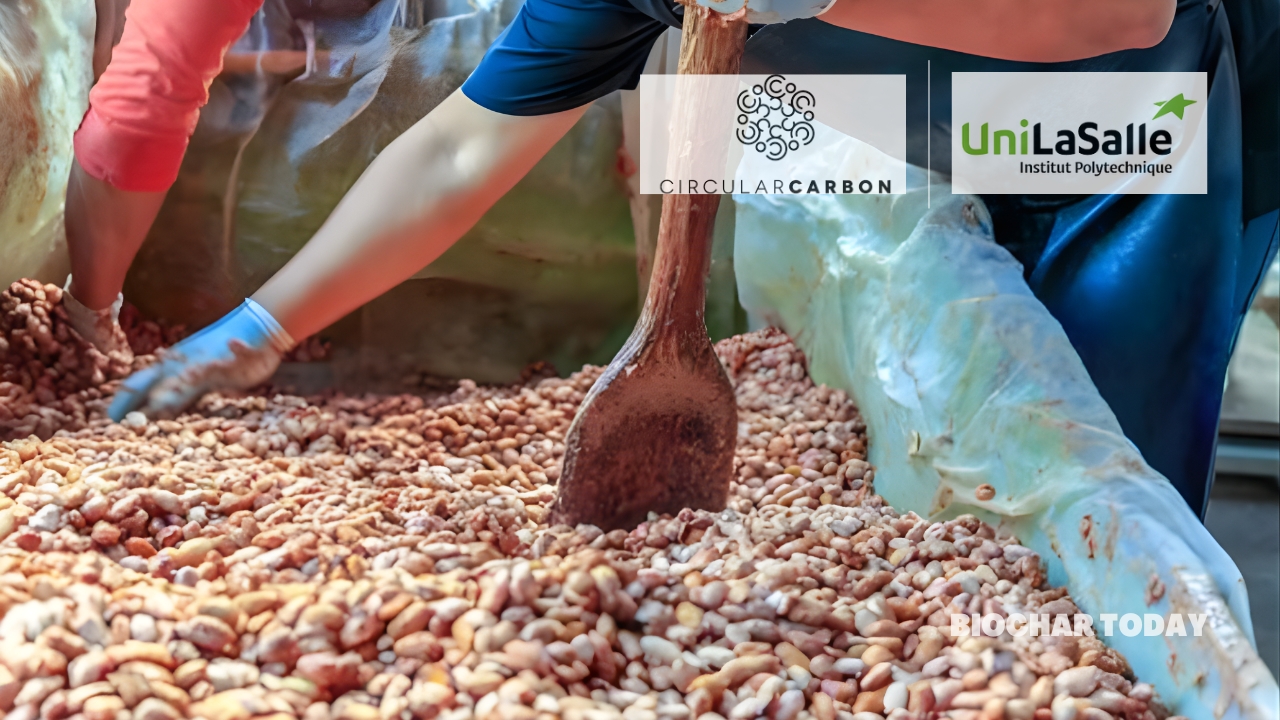
In the German port city of Hamburg, a specialized facility operated by Circular Carbon is transforming agricultural waste into a high-value climate solution. The plant processes cocoa bean shells, a byproduct typically discarded by the chocolate industry, and converts them into biocharBiochar is a carbon-rich material created from biomass decomposition in low-oxygen conditions. It has important applications in environmental remediation, soil improvement, agriculture, carbon sequestration, energy storage, and sustainable materials, promoting efficiency and reducing waste in various contexts while addressing climate change challenges. More through the process of pyrolysisPyrolysis is a thermochemical process that converts waste biomass into bio-char, bio-oil, and pyro-gas. It offers significant advantages in waste valorization, turning low-value materials into economically valuable resources. Its versatility allows for tailored products based on operational conditions, presenting itself as a cost-effective and efficient More. This initiative represents a significant shift in how the industry handles organic residues, moving away from waste disposal and toward active carbon management. By heating the husks to 600 degrees Celsius (1,112 degrees Fahrenheit) in an oxygen-free environment, the facility produces a stable black powder that serves as a permanent carbon sink.
The primary challenge addressed by this project is the detrimental environmental impact of conventional agricultural waste decomposition. When cocoa shells are left to rot in landfills or fields, they release carbon dioxide and methane, contributing directly to global atmospheric warming. Furthermore, the sheer volume of this byproduct—with humanity producing approximately 40 billion tons of CO2 annually—necessitates scalable solutions that can integrate into existing industrial supply chains. Current climate models from the Intergovernmental Panel on Climate Change (IPCC) suggest that billions of tons of carbon must be removed from the atmosphere to meet global targets, yet scaling such technology remains a significant hurdle.
To resolve these issues, Circular Carbon utilizes a network of pipes to receive shells directly from a neighboring chocolate factory, ensuring a localized and efficient feedstockFeedstock refers to the raw organic material used to produce biochar. This can include a wide range of materials, such as wood chips, agricultural residues, and animal manure. More supply. The pyrolysis process effectively “locks” the carbon contained within the plant matter into a stable, solid form. David Houben, an environmental scientist at the UniLaSalle Institute in France, notes that this method prevents the immediate release of greenhouse gases, instead sequestering the carbon for centuries. One ton of the resulting biochar is capable of storing the equivalent of 2.5 to three tons of carbon dioxide. Additionally, the process generates biogas as a byproduct, which is recycled to provide thermal energy for the production facility.
The outcomes of this circular approach are multifaceted, providing both environmental and industrial benefits. The Hamburg plant currently produces 3,500 tons of biochar and up to 20 megawatt hours of gas annually from 10,000 tons of cocoa shells. The final product is sold to local farmers to improve soil nutrient and water retention, particularly in sandy terrains. Beyond agriculture, the biochar is being integrated into the construction sector as an ingredient for “green” concrete. Financially, the project is bolstered by the sale of carbon certificates, allowing the industry to monetize carbon removal and support the expansion of three additional production sites.



Leave a Reply