
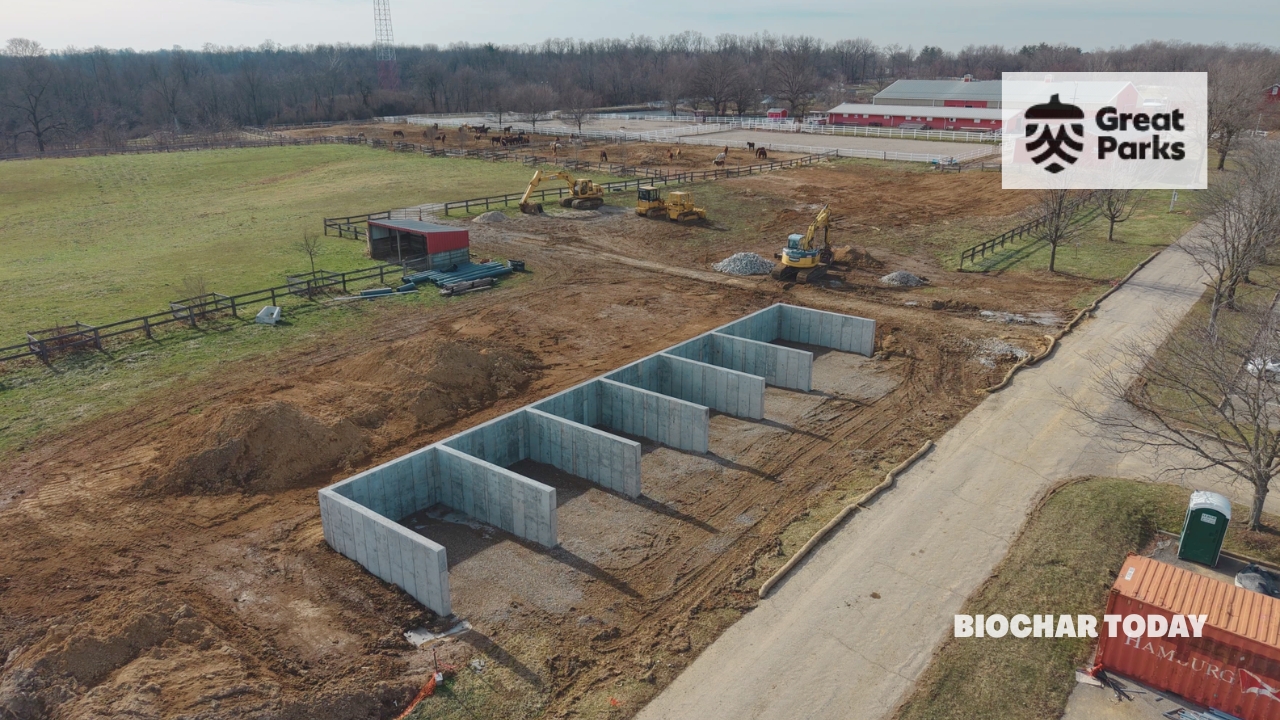
In February 2026, Great Parks of Hamilton County and Cincinnati Parks reached a critical milestone in their collaborative effort to convert municipal organic waste into high-value biocharBiochar is a carbon-rich material created from biomass decomposition in low-oxygen conditions. It has important applications in environmental remediation, soil improvement, agriculture, carbon sequestration, energy storage, and sustainable materials, promoting efficiency and reducing waste in various contexts while addressing climate change challenges. More. The municipal project in the United States leverages a 2022 Bloomberg Philanthropies grant to establish a local circular economy by processing park-derived wood debris and animal manure. Construction is currently underway on a dedicated composting facility at Winton Woods, while Cincinnati Parks prepares to begin building a production facility later this year to house the core pyrolysisPyrolysis is a thermochemical process that converts waste biomass into bio-char, bio-oil, and pyro-gas. It offers significant advantages in waste valorization, turning low-value materials into economically valuable resources. Its versatility allows for tailored products based on operational conditions, presenting itself as a cost-effective and efficient More machinery.
The primary challenge addressed by this initiative is the inefficient management of regional organic waste streams, specifically the smell and slow decomposition of manure from park equestrian centers and the disposal of wood debris. Traditionally, these materials contribute to greenhouse gas emissions through decomposition. This regional problem is exacerbated by the need to improve soil health and tree survivability in urban areas at high risk from climate-related stressors like extreme heat and drought.
The implemented solution involves a bifurcated operational strategy: Great Parks manages the composting of manure, while Cincinnati Parks operates the pyrolysis equipment to thermally convert wood waste into biochar. By integrating raw biochar into the manure compost, the park systems “supercharge” the final product with nutrients. This process significantly mitigates odors from manure and accelerates the composting cycle, resulting in a nutrient-dense soil amendmentA soil amendment is any material added to the soil to enhance its physical or chemical properties, improving its suitability for plant growth. Biochar is considered a soil amendment as it can improve soil structure, water retention, nutrient availability, and microbial activity. More ready for large-scale application.
The projected outcomes of this collaboration include enhanced regional soil health and significantly increased water retention and root strength for newly planted trees. This carbon-negative system is designed to become financially self-sustaining through the sale of biochar and carbon removal credits to private markets. Ultimately, the project aims to repurpose thousands of tons of wood waste annually, sequestering carbon for an average of 500 years and bolstering the climate resiliency of Hamilton County’s urban canopy.



Leave a Reply