
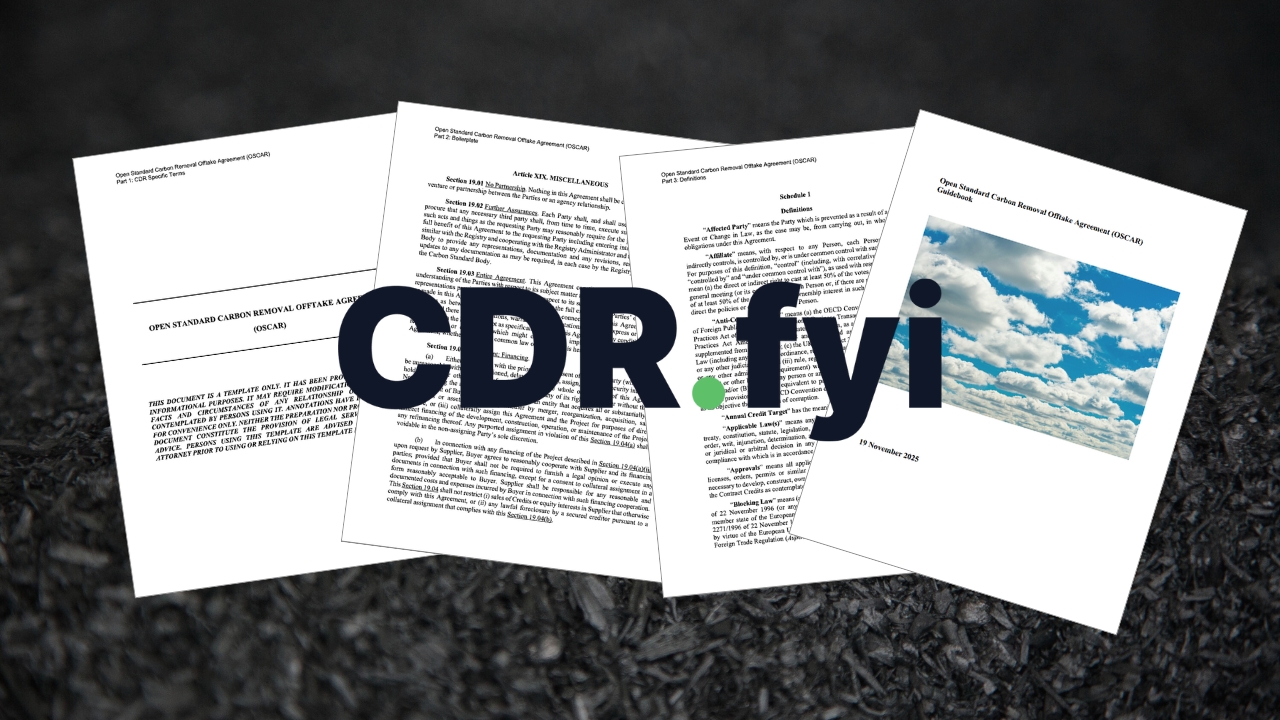
CDR.fyi, in collaboration with a coalition of industry veterans and legal experts, has officially released the Open Standard Carbon Removal Agreement (OSCAR). This new initiative, developed over the past year by Glenn Morley, Jason Grillo, and Elena Pérez Celis, with pro bono legal counsel from Peter Mayer of Stairs Dillenbeck Finley Mayer PLLC, introduces an open-source contracting framework designed specifically for durable carbon dioxide removal (CDR). Hosted by CDR.fyi, the release includes both a standardized contract template and a comprehensive guidebook, marking a significant step toward maturing the market infrastructure within the United States and beyond.
The major challenge addressed by this initiative is the prohibitive inefficiency and cost associated with negotiating bespoke legal agreements for every single carbon removal transaction. Until now, the nascent CDR market has relied heavily on custom-drafted contracts, a process that places a substantial burden on legal and procurement teams. This lack of standardization has slowed sales cycles and restricted market participation primarily to a few well-resourced leaders, creating high barriers to entry for new buyers and early-stage suppliers who cannot afford protracted legal negotiations.
To resolve these friction points, OSCAR provides a balanced, free, and publicly available contracting framework. The solution creates a “middle ground” template that separates standard procurement language from the specific provisions unique to carbon removal. Although drafted from a United States legal perspective, the framework is designed to be adaptable across various jurisdictions. By offering a structure that is readable by non-lawyers and accompanied by plain-language commentary, OSCAR enables parties to focus negotiations on material commercial terms rather than debating standard clauses.
The outcomes of adopting OSCAR are expected to be transformative for the speed and scalability of the carbon removal market. By reducing transaction times and legal expenses, the framework lowers internal barriers for corporate buyers, allowing them to build comfort with durable removals more quickly. For suppliers, it provides a familiar, professional contract structure that reduces buyer risk and accelerates deal closure. Ultimately, this move toward standardization signals a shift from bespoke pilot projects to repeatable, investable transactions necessary for gigaton-scale impact.
As biocharBiochar is a carbon-rich material created from biomass decomposition in low-oxygen conditions. It has important applications in environmental remediation, soil improvement, agriculture, carbon sequestration, energy storage, and sustainable materials, promoting efficiency and reducing waste in various contexts while addressing climate change challenges. More projects seek to scale, moving away from informal or highly customized agreements toward standardized, bankable contracts will be essential. Biochar developers should evaluate the OSCAR framework to align their own contracting practices with broader CDR market expectations, thereby enhancing their appeal to institutional buyers and facilitating more efficient capital flow.
Download the OSCAR template and guidebook via the following links:



Leave a Reply