
Key Takeaways
- Brazil can turn its massive amounts of farm and forest waste into a powerful tool for cleaning the atmosphere and helping the planet.
- The country has enough waste material to produce hundreds of millions of tons of biocharBiochar is a carbon-rich material created from biomass decomposition in low-oxygen conditions. It has important applications in environmental remediation, soil improvement, agriculture, carbon sequestration, energy storage, and sustainable materials, promoting efficiency and reducing waste in various contexts while addressing climate change challenges. More every year, which is a world-leading amount.
- Using this technology could trap more than half of all the carbon dioxide that Brazil releases from human activities and industry.
- Turning waste into biochar creates a valuable product that helps soil stay healthy while also providing a new source of income for rural areas.
- By using waste that currently just rots or burns, the country can significantly reduce its environmental footprint without hurting its economy.
In a comprehensive analysis published in the journal Environmental Research Letters, lead author Amanda Ronix and a team of international researchers explore the immense opportunities for intensive biochar use in Brazil. The study highlights that Brazil is uniquely positioned to become a global leader in carbon sequestration due to its enormous agricultural sector and the resulting biomassBiomass is a complex biological organic or non-organic solid product derived from living or recently living organism and available naturally. Various types of wastes such as animal manure, waste paper, sludge and many industrial wastes are also treated as biomass because like natural biomass these More waste. By assessing the availability of residues from crops like sugarcane, soy, corn, and forestry, the researchers quantify the country’s potential to transform waste into a stable form of carbon. This transformation not only addresses waste management but also serves as a critical strategy for the nation to meet its ambitious climate goals and transition toward a more circular economy.
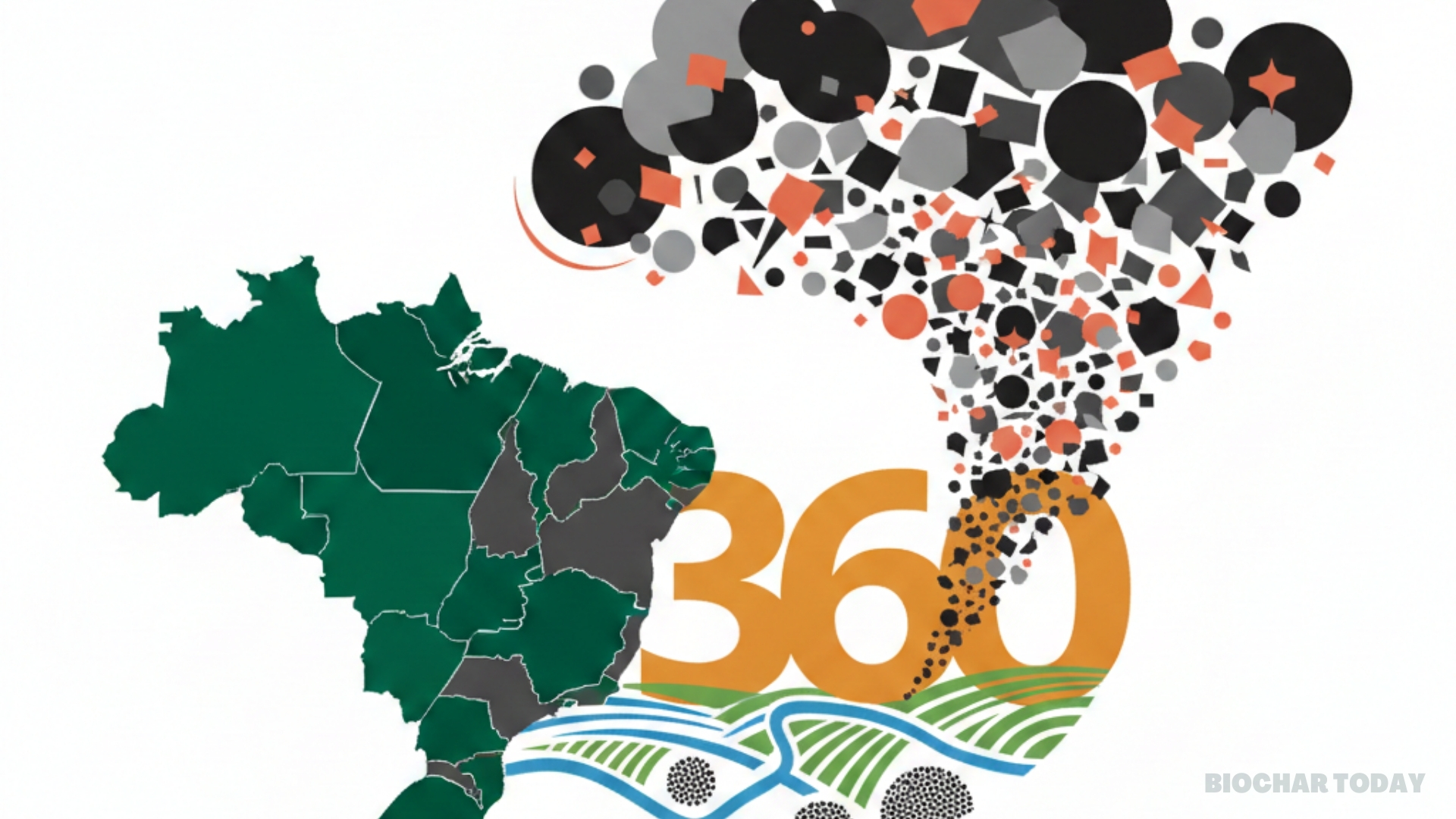
The findings reveal that the total potential for biochar production in Brazil is approximately 360 million tons per year, a staggering figure that underscores the scale of the available resources. The primary drivers of this potential are the residues from major crops; sugarcane alone contributes significantly, alongside soy and corn stalks. When these materials are processed through pyrolysisPyrolysis is a thermochemical process that converts waste biomass into bio-char, bio-oil, and pyro-gas. It offers significant advantages in waste valorization, turning low-value materials into economically valuable resources. Its versatility allows for tailored products based on operational conditions, presenting itself as a cost-effective and efficient More, they lock away carbon that would otherwise be released into the atmosphere as the plants decompose or are burned. Quantitatively, the study estimates that the implementation of biochar at this scale could lead to a net reduction of approximately 590 million tons of carbon dioxide equivalent annually. This reduction represents about 50 percent of the total greenhouse gas emissions reported by Brazil in recent years, demonstrating that biochar is not just a niche solution but a central pillar for national decarbonization.
Beyond the raw numbers of carbon removal, the researchers detail the significant co-benefits that an intensive biochar industry would bring to the Brazilian landscape. The application of biochar back into the soil serves as a powerful amendment that improves fertility, enhances water retention, and reduces the need for synthetic fertilizers, which are often expensive and environmentally taxing. For a country with vast tropical soils that are frequently nutrient-poor or acidic, biochar offers a scientifically backed method for long-term soil restoration. The study points out that the stability of biochar carbon means it remains in the ground for centuries, providing a permanent solution to atmospheric pollution while simultaneously supporting the agricultural productivity that is vital to the Brazilian economy.
The results also emphasize the industrial and economic shifts required to unlock this potential, noting that the technology is already moving from small-scale trials to industrial applications. Brazil already utilizes large amounts of charcoalCharcoal is a black, brittle, and porous material produced by heating wood or other organic substances in a low-oxygen environment. It is primarily used as a fuel source for cooking and heating. More in its steel industry, meaning the country possesses the foundational knowledge and infrastructure for thermochemical biomass processing. By pivoting some of this expertise toward biochar production for carbon sequestration, the nation can create a new value chain for agricultural residues that currently have little to no market value. This shift would create jobs in rural areas and provide farmers with a new stream of revenue through the sale of carbon credits on international markets, further incentivizing the adoption of sustainable practices across the countryside.
However, the researchers also identify that realizing this 360-million-ton potential requires overcoming specific logistical and policy barriers. The spatial distribution of biomass waste means that production facilities must be strategically located to minimize transportation costs and energy use. The study suggests that focusing on “hotspots” where agriculture and industry overlap—such as the central-western and southeastern regions—will yield the highest efficiency. Furthermore, establishing clear regulatory frameworks and carbon accounting standards is essential to ensure that the carbon removed is accurately measured and verified. The researchers conclude that with the right investment and policy support, Brazil can turn its agricultural waste into a global climate asset, proving that large-scale environmental protection and economic growth can go hand in hand.
Source: Ronix, A., et al. (2026). Perspectives and opportunities for the intensive use of biochar in Brazil. Environmental Research Letters.



Leave a Reply