
Key Takeaways
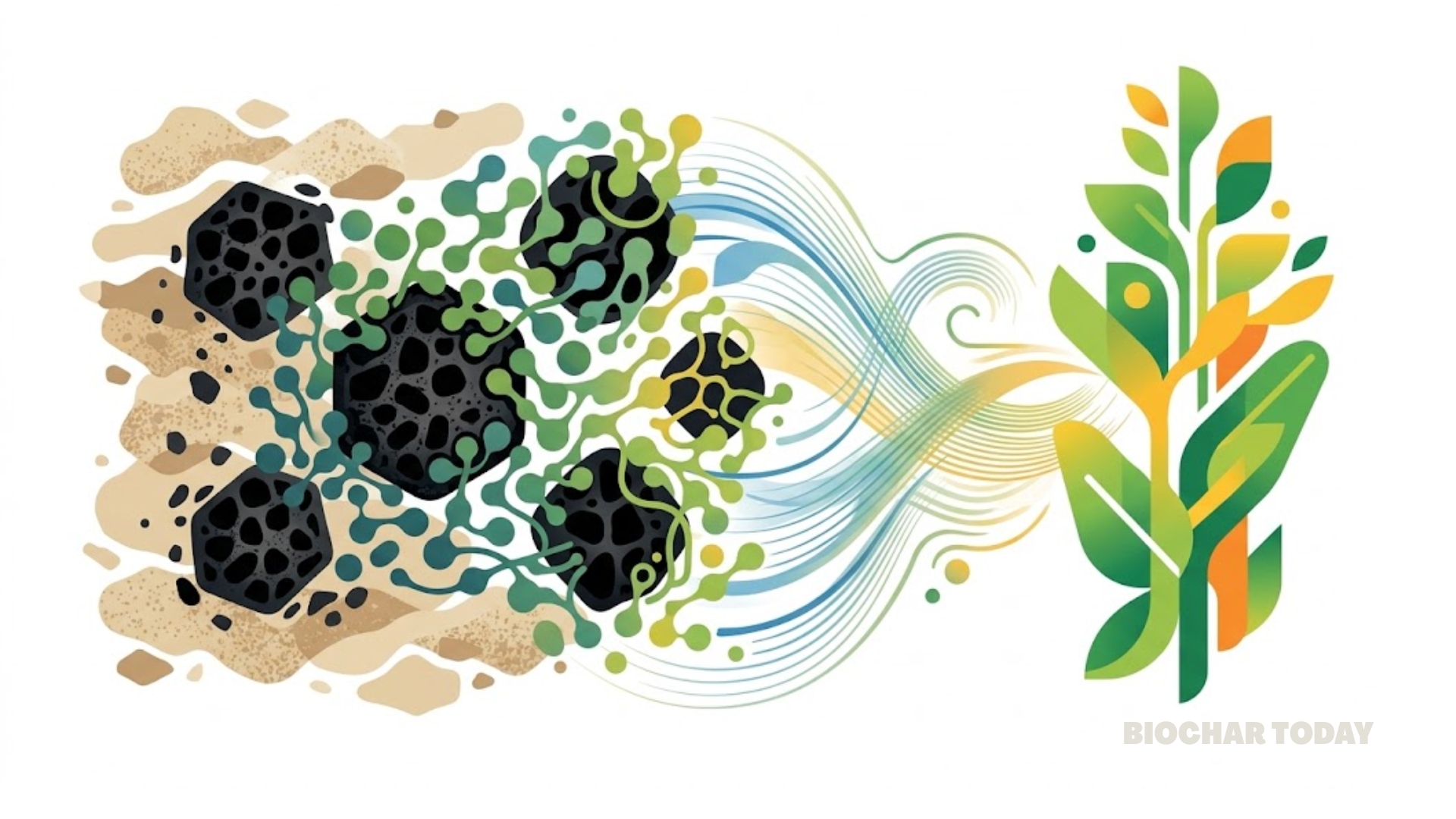
- Scientists found that mixing charcoal-like soil boosters with beneficial bacteria and yeast creates a powerful team for farming in desert conditions.
- This natural combination makes the soil less packed and more porous, allowing plant roots to grow deeper and breathe better.
- Using these recycled materials helps the soil hold onto vital nutrients like nitrogen and phosphorus, which normally wash away in sandy ground.
- Farmers using this method saw their crops grow significantly taller and produce one-third more food compared to traditional farming.
- This discovery offers a cheaper and more eco-friendly way to turn dry, sandy land into productive farmland without relying heavily on chemicals.
In a study published in the journal Scientific Reports, lead authors Doaa M. Khalifa and Aleksandra Głowacka explored an innovative path toward sustainable agriculture in the arid regions of Egypt. The research focused on the challenges posed by Egyptian sandy soils, which typically suffer from low fertility, poor water retention, and weak structure. To address these limitations, the team investigated the synergistic effects of combining biocharBiochar is a carbon-rich material created from biomass decomposition in low-oxygen conditions. It has important applications in environmental remediation, soil improvement, agriculture, carbon sequestration, energy storage, and sustainable materials, promoting efficiency and reducing waste in various contexts while addressing climate change challenges. More with specialized microbial biofertilizers, specifically the bacterium Bacillus amyloliquefaciens and the yeast Saccharomyces cerevisiae. By conducting field experiments over two growing seasons, the researchers sought to move beyond conventional mineral fertilizers, which often degrade long-term soil health and contribute to environmental pollution.
The results of this integrated soil management strategy were quantitatively significant across physical, chemical, and biological dimensions. On a physical level, the combination of biochar and microbial inoculants transformed the soil structure by reducing bulk density by 18%. This change effectively mitigated soil compaction, creating a more porous environment that reached a 22% increase in total porosityPorosity of biochar is a key factor in its effectiveness as a soil amendment and its ability to retain water and nutrients. Biochar’s porosity is influenced by feedstock type and pyrolysis temperature, and it plays a crucial role in microbial activity and overall soil health. Biochar More. This structural improvement is vital for arid ecosystems, as it facilitates better root penetration, enhances aeration, and improves the movement of water through the sandy profile. Chemically, the soil experienced a dramatic surge in available nutrients. The research showed that nitrogen levels increased by 45%, phosphorus by 52%, and potassium by 39%. These improvements highlight the ability of biochar to act as a long-term nutrient reservoir while the microbes actively solubilize and cycle these essential elements.
Biologically, the impact was even more pronounced. The study recorded a 65% increase in total microbial counts compared to untreated control plots. Furthermore, the activity of dehydrogenase—a key enzyme that serves as an indicator of soil metabolic health and respiration—rose by 42%. This biological boost indicates that biochar provides a protective habitat for beneficial microorganisms, offering them micro-niches that shield them from environmental stress. The enhanced microbial activity not only contributes to organic matter accumulation but also produces growth-promoting metabolites that directly benefit the crop.
These soil-level improvements translated directly into superior plant health and productivity for the cowpea crops. The researchers observed that plants treated with the biochar-microbe combination had a 28% higher chlorophyll content, suggesting more efficient photosynthesis and overall vigor. Morphological traits also improved significantly, with plant length increasing by 21% relative to the control group. Most importantly for food security, the seed yield of the cowpea plants increased by 33%. This suggests that the biological and physical enhancements provided by the amendments allowed the plants to maximize their genetic potential even under the resource-limited conditions of the desert.
The implications of this work extend to the broader goal of desert reclamation and circular bioeconomy. By using biochar produced from agricultural residues at relatively low temperatures, farmers can repurpose waste into a high-value soil conditioner. When paired with live microbial cultures, this approach provides a robust alternative to chemical-heavy farming. The study confirms that this dual-action treatment maintains soil moisture and nutrient availability more effectively than mineral fertilization alone. It offers a scalable and eco-friendly roadmap for Egyptian agroecosystems, proving that the restoration of degraded sandy land is possible through targeted biological intervention.
The researchers concluded that the integration of biochar and microbial biofertilizers represents a sustainable pathway for arid soil management. This method not only improves immediate crop yields but also builds a more resilient soil ecosystem capable of supporting future agricultural cycles with reduced environmental impact. By shifting toward these precision-based biological amendments, the agricultural sector can better adapt to the constraints of climate change and soil degradation in arid climates.
Source: Khalifa, D. M., Hewait, H. M., Stanciu, A. S., Eladly, R. M., Shalaby, M. E., & Głowacka, A. (2026). Interactive effects of biochar and microbial biofertilizers on sandy soil fertility and cowpea yield in Egyptian agroecosystems. Scientific Reports, 16, 1-29.



Leave a Reply