
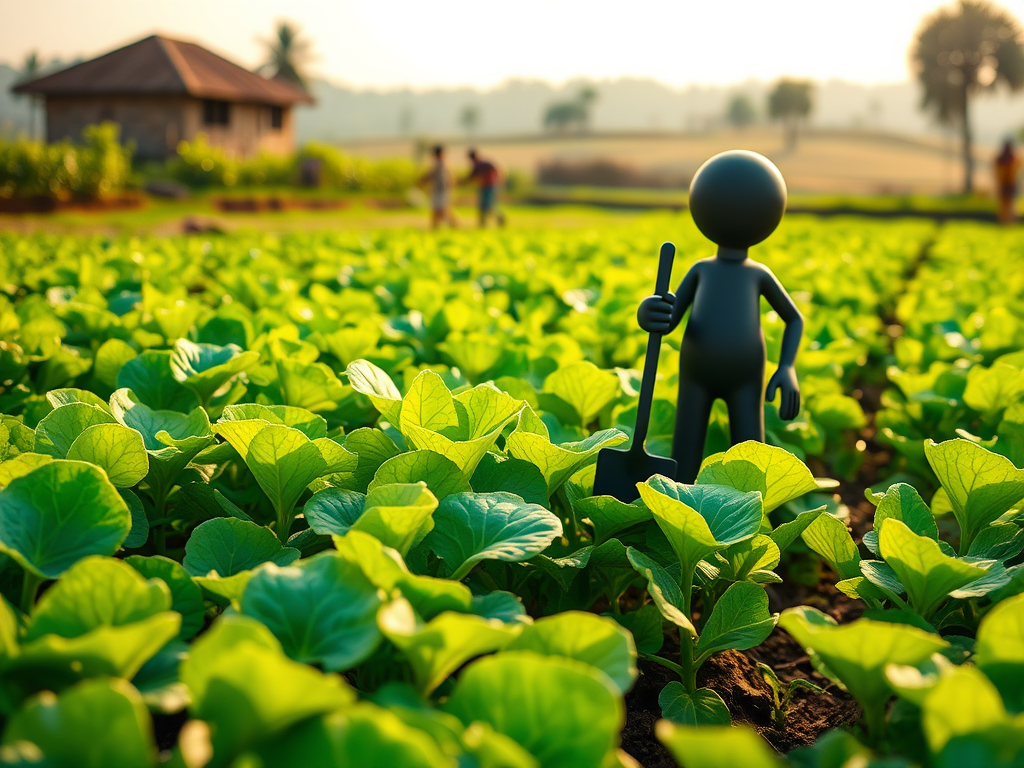
In a world where water scarcity is a growing concern, researchers are constantly searching for sustainable solutions to ensure food security. One such solution is the use of biocharBiochar is a carbon-rich material created from biomass decomposition in low-oxygen conditions. It has important applications in environmental remediation, soil improvement, agriculture, carbon sequestration, energy storage, and sustainable materials, promoting efficiency and reducing waste in various contexts while addressing climate change challenges. More to treat wastewater for irrigation, a technique explored by Nimatu et al., in a study published in the Asian Journal of Biological Sciences.
The researchers focused on Amaranthus, a nutritious leafy vegetable commonly grown in Ghana, where water scarcity often forces farmers to rely on wastewater for irrigation. However, wastewater can contain pollutants, including heavy metals like cadmium and lead, which pose risks to human health. This is where biochar comes in. Biochar is a charcoal-like material produced from the pyrolysisPyrolysis is a thermochemical process that converts waste biomass into bio-char, bio-oil, and pyro-gas. It offers significant advantages in waste valorization, turning low-value materials into economically valuable resources. Its versatility allows for tailored products based on operational conditions, presenting itself as a cost-effective and efficient More of biomassBiomass is a complex biological organic or non-organic solid product derived from living or recently living organism and available naturally. Various types of wastes such as animal manure, waste paper, sludge and many industrial wastes are also treated as biomass because like natural biomass these More, such as agricultural waste. It has gained attention for its potential to remove pollutants from water and improve soil health.
The study investigated the effects of different biochar-treated wastewaters on Amaranthus growth under pot cultivation in both rainy and dry seasons. They found that high levels of contamination in the wastewater and soil reduced the growth of Amaranthus. This study highlights the potential of biochar as a sustainable solution for wastewater irrigation, particularly in water-scarce regions. By effectively removing heavy metals, biochar not only enhances the safety and quality of crops but also contributes to environmental sustainability. The implications of this research are significant, especially for farmers in arid and semi-arid regions who rely on wastewater for irrigation. Biochar offers a cost-effective and environmentally friendly way to improve the safety of their produce and ensure food security for their communities.
SOURCE: Nimatu, H. M., Nyarko, G., & Bayor, H. (2023). Effects of different biochars and the impact of heavy metals on growth and yield of Amaranthus at Zagyuri irrigation field Tamale, Ghana. 1 Asian Journal of Biological Sciences, 16(3), 322-336. https://doi.org/10.3844/ajbbsp.2023.322.336
.


Leave a Reply