

Key Takeaways
- Adding charcoal-like material to waste digesters helps tiny organisms work faster and better to create clean energy.
- This method can trap harmful pollutants and prevent them from leaking into the environment during energy production.
- Using this special material can significantly lower the carbon footprint of waste treatment plants.
- The leftover material from this process makes a richer, safer fertilizer for growing healthy crops.
- Scientists are now using computer brains to predict exactly how much of this material is needed for the best results.
In a comprehensive review published in the scientific journal Molecules, Marta García-Prats, Daniel González, and Antoni Sánchez examine the rapidly evolving landscape of biocharBiochar is a carbon-rich material created from biomass decomposition in low-oxygen conditions. It has important applications in environmental remediation, soil improvement, agriculture, carbon sequestration, energy storage, and sustainable materials, promoting efficiency and reducing waste in various contexts while addressing climate change challenges. More use in anaerobic digestion. The agricultural and waste management sectors are increasingly turning to this carbon-rich material to solve long-standing efficiency issues in energy recovery. Research in this specific field has exploded in the last decade, with the number of scientific publications growing from a few hundred to over eight thousand five hundred by 2024. This surge in interest reflects a global push toward renewable energy and the need to meet ambitious biomethane production targets, such as Europe’s goal of reaching thirty-five billion cubic meters annually by 2030.
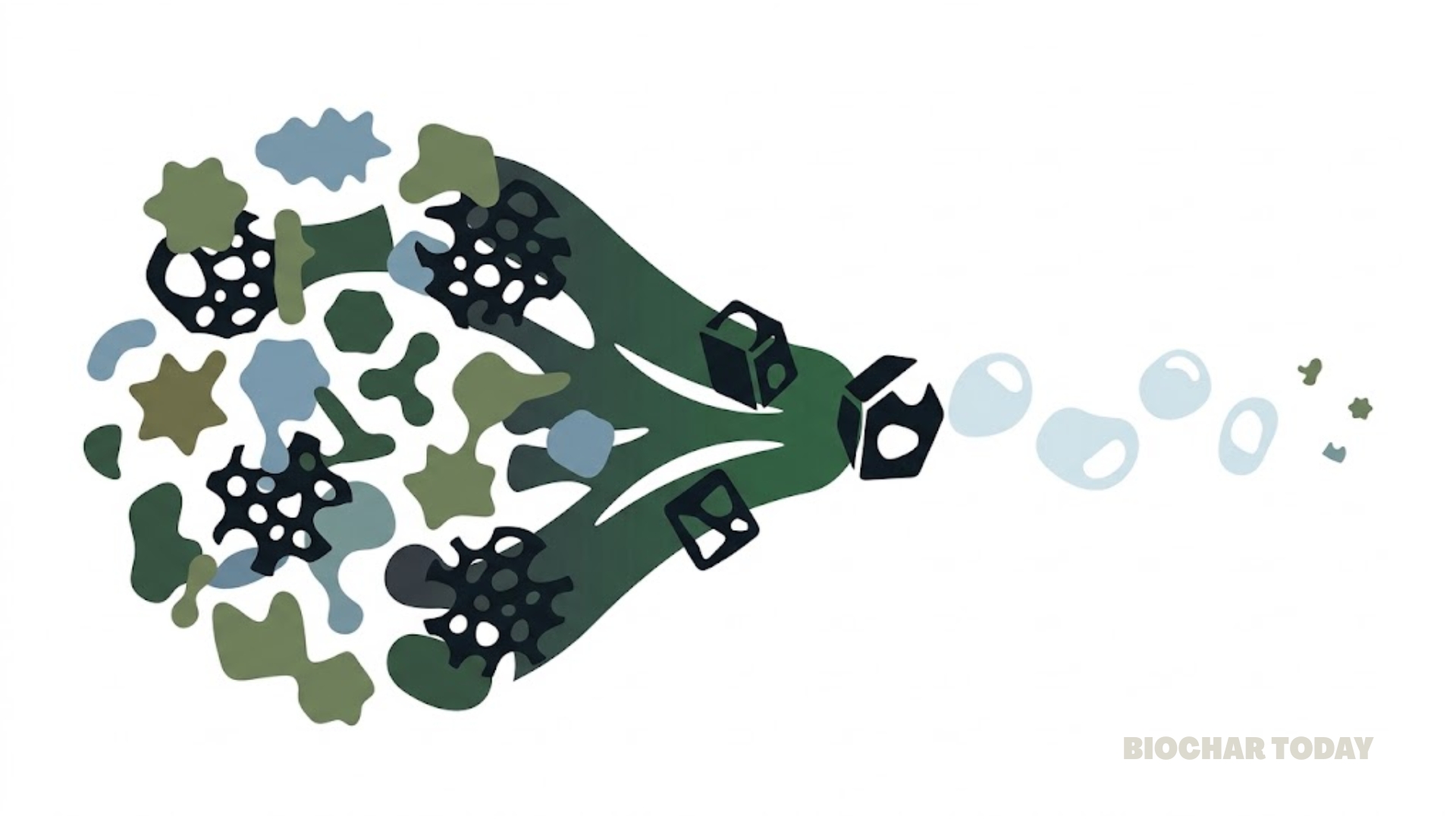
The study identifies that biochar acts as a powerful catalyst within the digestion process by providing a physical home for beneficial microbes. Its highly porous structure allows microorganisms to attach and form stable colonies, which prevents them from being washed out of the system. This stability is crucial for maintaining high methane yields even when the system is stressed by high levels of ammonia or acids that would normally stop the biological reaction. Furthermore, biochar facilitates a process called direct interspecies electron transfer, essentially acting as a biological wire that allows different types of microbes to exchange energy more efficiently. This leads to faster breakdown of organic waste and higher purity in the resulting biogas.
Beyond energy production, the integration of biochar provides significant environmental benefits through the reduction of greenhouse gas emissions. Life cycle assessments show that adding biochar can reduce the global warming potential of waste treatment by as much as forty-two percent compared to traditional methods. This reduction happens because biochar helps capture carbon and prevents the release of nitrous oxide, a potent greenhouse gas, when the leftover waste is eventually applied to fields as fertilizer. Additionally, biochar has been shown to suppress the spread of antibiotic resistance genes in animal manure, which is a growing public health concern. By filtering out these harmful genetic elements, the process makes waste recycling safer for the environment.
The review also highlights a move toward high-tech optimization using artificial intelligence and machine learning. These advanced tools allow operators to predict the best amount of biochar for different types of waste, such as food scraps, sewage sludge, or farm manure. By training computer models on large amounts of experimental data, researchers can now optimize energy output without the need for thousands of expensive and time-consuming laboratory tests. This digital approach is paving the way for larger, industrial-scale applications of the technology.
Finally, the study discusses the economic reality of implementing these systems on a wide scale. While biochar adds an initial cost to the process, it can make waste treatment plants more profitable by increasing the total amount of methane produced and reducing the need for expensive post-treatment cleaning. In some scenarios, such as treating highly polluted industrial wastewater, biochar supplementation was found to be the only way to make the process economically viable. The authors suggest that the most effective way to use this technology in the future is through a closed-loop model where waste is used to create energy and the leftover solids are turned back into biochar to be reused in the system. This circular approach ensures that no resources are wasted and helps modern societies move closer to a truly sustainable, zero-waste future.
Source: García-Prats, M., González, D., & Sánchez, A. (2026). Current trends and future prospects of biochar use to improve anaerobic digestion: An up-to-date critical review. Molecules, 31(503).



Leave a Reply