
Key Takeaways
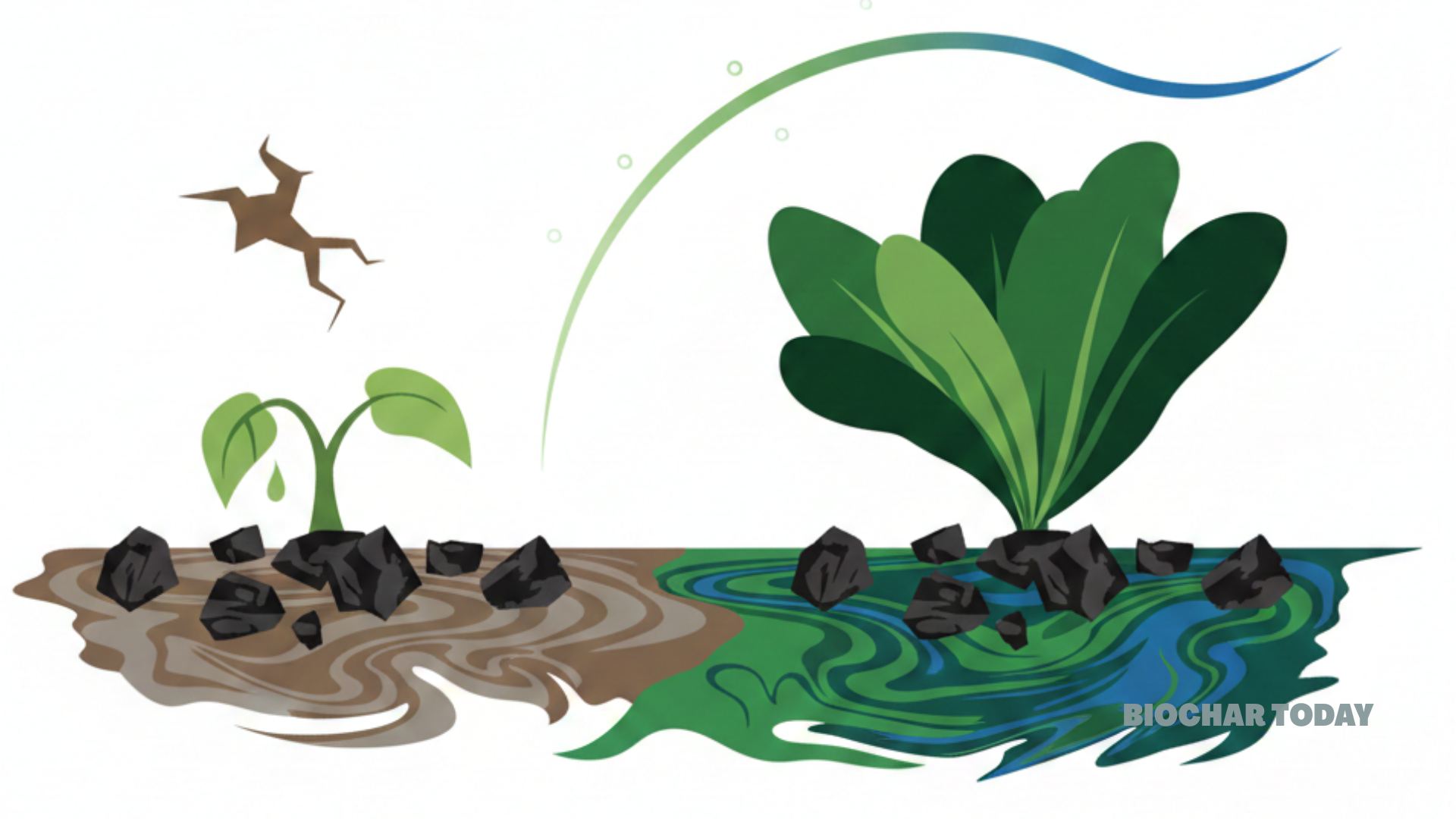
- High-temperature biocharBiochar is a carbon-rich material created from biomass decomposition in low-oxygen conditions. It has important applications in environmental remediation, soil improvement, agriculture, carbon sequestration, energy storage, and sustainable materials, promoting efficiency and reducing waste in various contexts while addressing climate change challenges. More can increase the total weight of lettuce plants by more than 33 percent when water is scarce.
- Adding biochar to farm soil improves its ability to hold onto life-sustaining water by up to 24 percent.
- Advanced camera technology combined with artificial intelligence can now predict plant thirst with 93 percent accuracy.
- Biochar made from corn stalks helps lettuce grow nearly 30 percent taller even during dry spells.
- This natural soil additive acts like a permanent underground sponge that keeps roots hydrated and healthy.
The Journal of Agriculture and Food Research recently featured a study by Ruogu Tang, Ashish Reddy Mulaka, Wenxin Rong, Xu Yuan, Yin Bao, and Juzhong Tan titled “Biochar-Amended Soils Enhance Drought Resilience in Lettuce: Integrating Hyperspectral Imaging (HSI) and CNN-Based Moisture Prediction.” The research team addressed the growing threat of global water scarcity by testing a dual-purpose strategy: using biochar to keep soil moist and employing artificial intelligence to monitor plant health without touching the crops. By turning agricultural waste like corn stalks into a specialized soil amendmentA soil amendment is any material added to the soil to enhance its physical or chemical properties, improving its suitability for plant growth. Biochar is considered a soil amendment as it can improve soil structure, water retention, nutrient availability, and microbial activity. More, the scientists aimed to create a sustainable safety net for leafy vegetables, which are famously sensitive to even minor dry spells.
The findings reveal that the temperature at which biochar is produced significantly dictates its effectiveness in the field. Biochar created at high temperatures, specifically 700 degrees Celsius, developed a much more porous internal structure that functioned as an effective water reservoir. When mixed into the soil at a 5 percent concentration, this material increased the soil’s water-holding capacity from 28.5 percent to 35.6 percent. This improvement ensured that more moisture remained in the root zone rather than draining away. Consequently, lettuce grown in this amended soil maintained a higher leaf moisture content during a week-long drought, showing a 5.63 percent increase in hydration compared to plants in standard soil.
Beyond physical growth, the study introduced a groundbreaking way to “see” how thirsty a plant is before it starts to wilt. Using hyperspectral imaging—a technology that captures hundreds of light bands invisible to the human eye—the researchers could detect subtle physiological changes in the lettuce. They paired this data with a convolutional neural network, a type of advanced computer model, to translate these light patterns into exact moisture readings. The system was remarkably successful, achieving a 93 percent accuracy rate in predicting the water status of the plants. This means farmers could eventually use cameras to scan entire fields and identify exactly which areas need water, saving significant amounts of time and resources.
The results emphasize that biochar is not just a waste product but a sophisticated tool for modern agriculture. In addition to boosting plant size and height by roughly 30 percent during water shortages, the biochar significantly enhanced the soil’s chemical health. It increased the cation exchange capacity, which is a measure of how well the soil holds onto nutrients, from 6.75 to 18.22 units. This chemical boost helps plants stay nourished even when the environment is harsh. The authors suggest that integrating these sustainable materials with high-tech monitoring provides a powerful path toward climate-resilient farming, ensuring food security as drought events become more frequent and severe.
Source: Tang, R., Mulaka, A. R., Rong, W., Yuan, X., Bao, Y., & Tan, J. (2026). Biochar-amended soils enhance drought resilience in lettuce: Integrating hyperspectral imaging (HSI) and CNN-based moisture prediction. Journal of Agriculture and Food Research, 13, 102711.



Leave a Reply