
Key Takeaways
- Applying biocharBiochar is a carbon-rich material created from biomass decomposition in low-oxygen conditions. It has important applications in environmental remediation, soil improvement, agriculture, carbon sequestration, energy storage, and sustainable materials, promoting efficiency and reducing waste in various contexts while addressing climate change challenges. More to acidic soils initially helps the environment by significantly lowering the release of nitrous oxide, a potent greenhouse gas.
- In the first five years, biochar helps soil bacteria turn harmful gases into harmless nitrogen, effectively cleaning the air.
- Over a longer period of nine years, the beneficial effects of biochar disappear as the material ages and the soil becomes more acidic.
- Long-term biochar use eventually leads to a massive spike in greenhouse gas emissions because the soil loses its ability to break down nitrogen waste.
- Future climate strategies must account for the fact that biochar’s benefits are temporary and can actually cause more harm to the atmosphere over time.
The study, published in the journal Biochar by Shumin Guo and a team of researchers, explores how the “legacy effects” of biochar application on acidic soils change over time. Acidic soils are known global hotspots for nitrous oxide, a greenhouse gas far more potent than carbon dioxide and a major cause of ozone depletion. While biochar has been hailed as a miracle tool for carbon sequestration and emission reduction, this research suggests its climate benefits are not permanent. By examining tea plantations in China where biochar had been used for three, five, and nine years, the team discovered a dramatic shift in how the soil breathes.
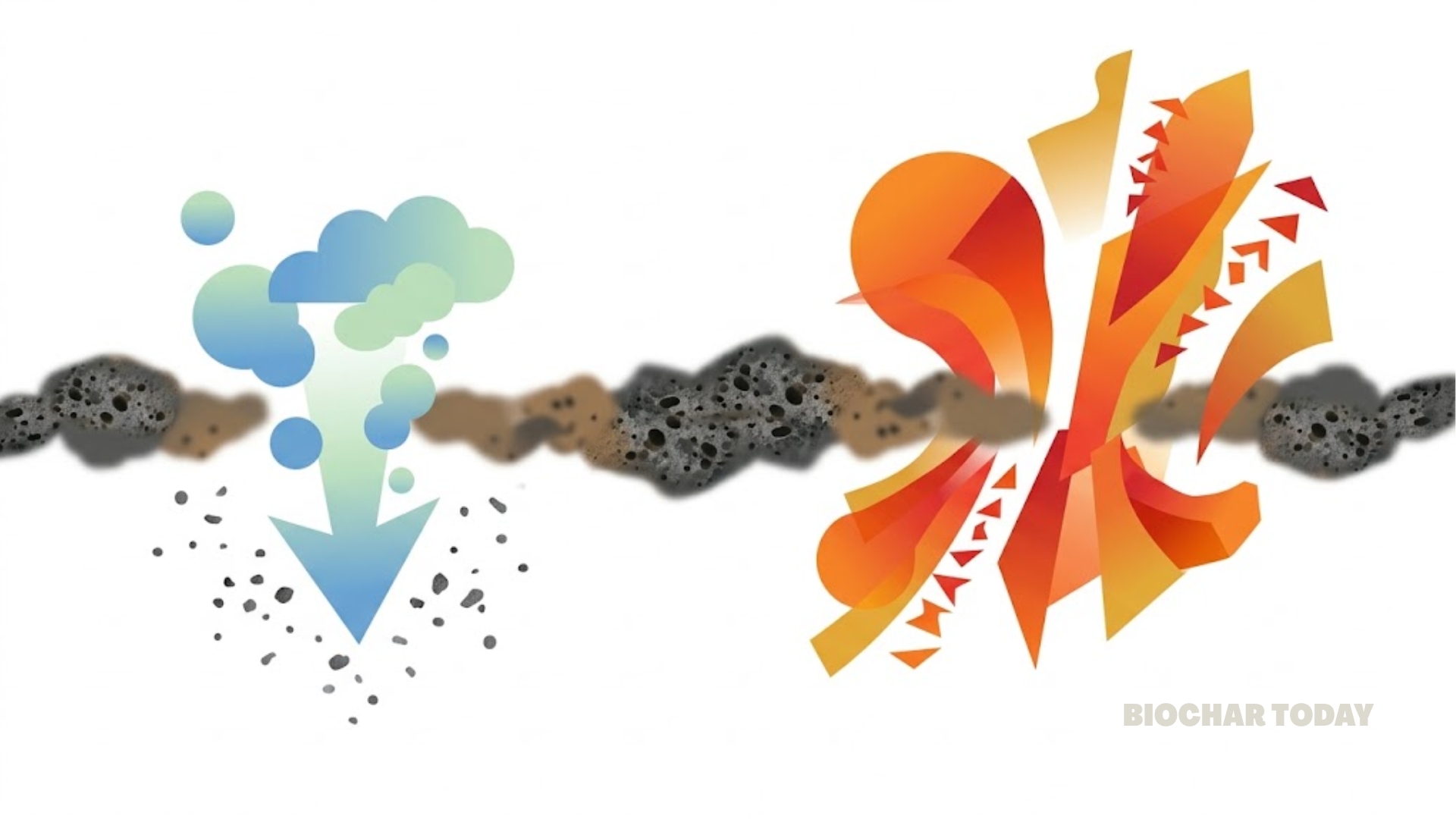
In the short term, specifically at the three-year and five-year marks, biochar lived up to its reputation. It significantly cut down nitrous oxide emissions, with reductions of 41 percent and 84 percent respectively. This success was driven by a two-pronged microbial attack. First, the biochar inhibited the production of the gas by shifting soil processes away from high-emission pathways. Second, and more importantly, it boosted the soil’s ability to “inhale” and neutralize the gas. The researchers found that biochar created a more hospitable environment for specific beneficial bacteria, such as Rhodanobacter and Gemmatimonas, which possess a special gene that allows them to convert nitrous oxide into harmless nitrogen gas. This process was further supported by an increase in dissolved organic carbon, which acted as a fuel source for these helpful microbes.
However, the story changed completely when looking at the nine-year legacy site. In these older soils, the biochar no longer acted as a shield; instead, it became a catalyst for pollution, causing nitrous oxide emissions to skyrocket by 400 percent. The researchers found that as the biochar aged over nearly a decade, it lost its ability to support the gas-neutralizing microbes. The soil became more acidic over time, likely due to the accumulation of acidic groups on the surface of the aging biochar. This drop in pHpH is a measure of how acidic or alkaline a substance is. A pH of 7 is neutral, while lower pH values indicate acidity and higher values indicate alkalinity. Biochars are normally alkaline and can influence soil pH, often increasing it, which can be beneficial More, combined with a depletion of available organic carbon, created a “bottleneck” where the soil could still produce the greenhouse gas but had lost the microbial machinery to break it down.
Furthermore, the long-term presence of biochar led to a restructuring of the entire microbial community. There was a notable decline in the abundance of bacteria capable of full nitrogen conversion and a shift toward fungal activity. Because many fungi lack the necessary genetic tools to complete the nitrogen cycle, they release nitrous oxide as a final byproduct rather than converting it further. This imbalance meant that even though the total production of nitrogen gases was slightly lower in the old biochar plots, the inability of the soil to reduce that gas led to much higher net releases into the atmosphere.
These findings serve as a critical warning for environmental policy and sustainable farming. The study demonstrates that the cooling effect of biochar on the climate is time-dependent and can eventually reverse. It highlights the danger of assuming that a single application of biochar will provide permanent climate mitigation. To truly utilize biochar as a sustainable tool, scientists may need to develop secondary interventions, such as targeted microbial boosters or specific soil amendments, to prevent the eventual spike in emissions. Without considering these long-term microbial shifts, current carbon-offsetting strategies involving biochar might inadvertently contribute to future global warming.
Source: Guo, S., Lin, H., Li, Z., Han, Z., Wu, J., Bo, X., Shen, M., Zhang, Z., Liu, S., Wang, J., & Zou, J. (2026). Divergent legacy effects of biochar on nitrous oxide emissions in acidic soils driven by altered microbial N pathways. Biochar, 8(40).




Leave a Reply