
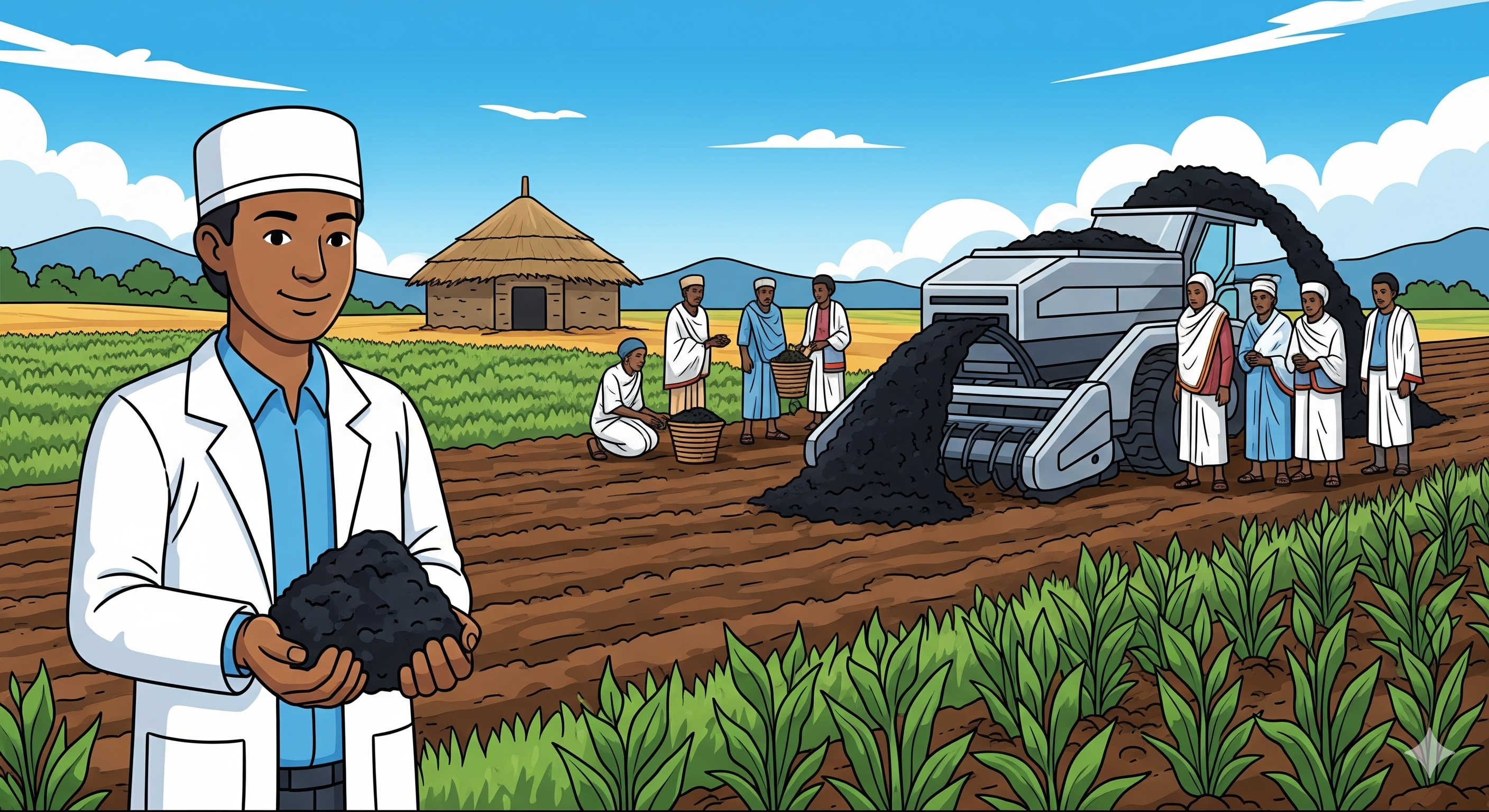
A collaborative project between the German development cooperation and the Ethiopian Ministry of Agriculture is set to share its findings at the upcoming Africa Climate Summit (ASC2) from September 8-10, 2025. The “ETH-Soil” project, implemented by the Deutsches Biomasseforschungszentrum (DBFZ) on behalf of the BMZ, has been focused on establishing successful and sustainable capacity-building for the quality-assured production and application of biochar-based fertilizers from biogenic residues since 2021. The Ethiopian Ministry of Agriculture has decided to use the summit as a platform to showcase the positive outcomes of the ETH-Soil initiative to colleagues from other African nations.
The Africa Climate Summit aims to coordinate concrete measures and financing options to combat climate change on the continent. Within the Ethiopian pavilion, a panel discussion scheduled for September 10, 2025, will facilitate an experience exchange on the long- and short-term effects of biochar-based soil improvers. Teshome Bogale, Director General of the Oromia Agricultural Research Center, a partner in the ETH-Soil project, will moderate the discussion and report on the nearly four years of practical biocharBiochar is a carbon-rich material created from biomass decomposition in low-oxygen conditions. It has important applications in environmental remediation, soil improvement, agriculture, carbon sequestration, energy storage, and sustainable materials, promoting efficiency and reducing waste in various contexts while addressing climate change challenges. More trials conducted within the project. The trials have demonstrated the efficacy of biochar in enhancing soil health.
The utilization of biochar as a soil amendmentA soil amendment is any material added to the soil to enhance its physical or chemical properties, improving its suitability for plant growth. Biochar is considered a soil amendment as it can improve soil structure, water retention, nutrient availability, and microbial activity. More is also gaining traction globally as a method for carbon removal, with studies pointing to its potential role in providing up to 7% of the world’s phosphorus needs when derived from waste, further underscoring its versatility and relevance in both agricultural and climate contexts. This presentation at the ASC2 will provide a significant opportunity to disseminate this knowledge and encourage broader adoption across Africa.
SOURCE: Development cooperation: Saxon-Ethiopian innovations represented at the Africa Climate Summit 2025





Leave a Reply