
A recent review published in Science of the Total Environment by Wang et al., discusses the use of biocharBiochar is a carbon-rich material created from biomass decomposition in low-oxygen conditions. It has important applications in environmental remediation, soil improvement, agriculture, carbon sequestration, energy storage, and sustainable materials, promoting efficiency and reducing waste in various contexts while addressing climate change challenges. More for phosphorus recovery and reuse. The review highlights the global challenges of phosphorus pollution and scarcity, emphasizing the need for efficient recycling of this critical resource. Biochar, a sustainable and economical material, has shown significant potential as an adsorbent for phosphorus, offering a viable solution for its recovery from wastewater.
The authors systematically address methods for preparing and modifying biochar to enhance its suitability for phosphate adsorption. The review analyzes how coexisting ions in wastewater either promote or inhibit phosphate adsorption, crucial for understanding and optimizing the adsorption process in complex environmental systems. It also assesses the challenges of biochar application for phosphate adsorption in effluents with varying concentrations.
Furthermore, the paper summarizes research on the concurrent removal of various pollutants alongside phosphate from real wastewaters, showcasing biochar’s multifaceted potential in addressing multiple contaminants in a single treatment process. The review additionally discusses factors influencing phosphate desorption from biochar and explores practical applications of phosphorus-enriched biochar, such as its use as a slow-release fertilizer, additive in concrete, and novel adsorbent for heavy metals.
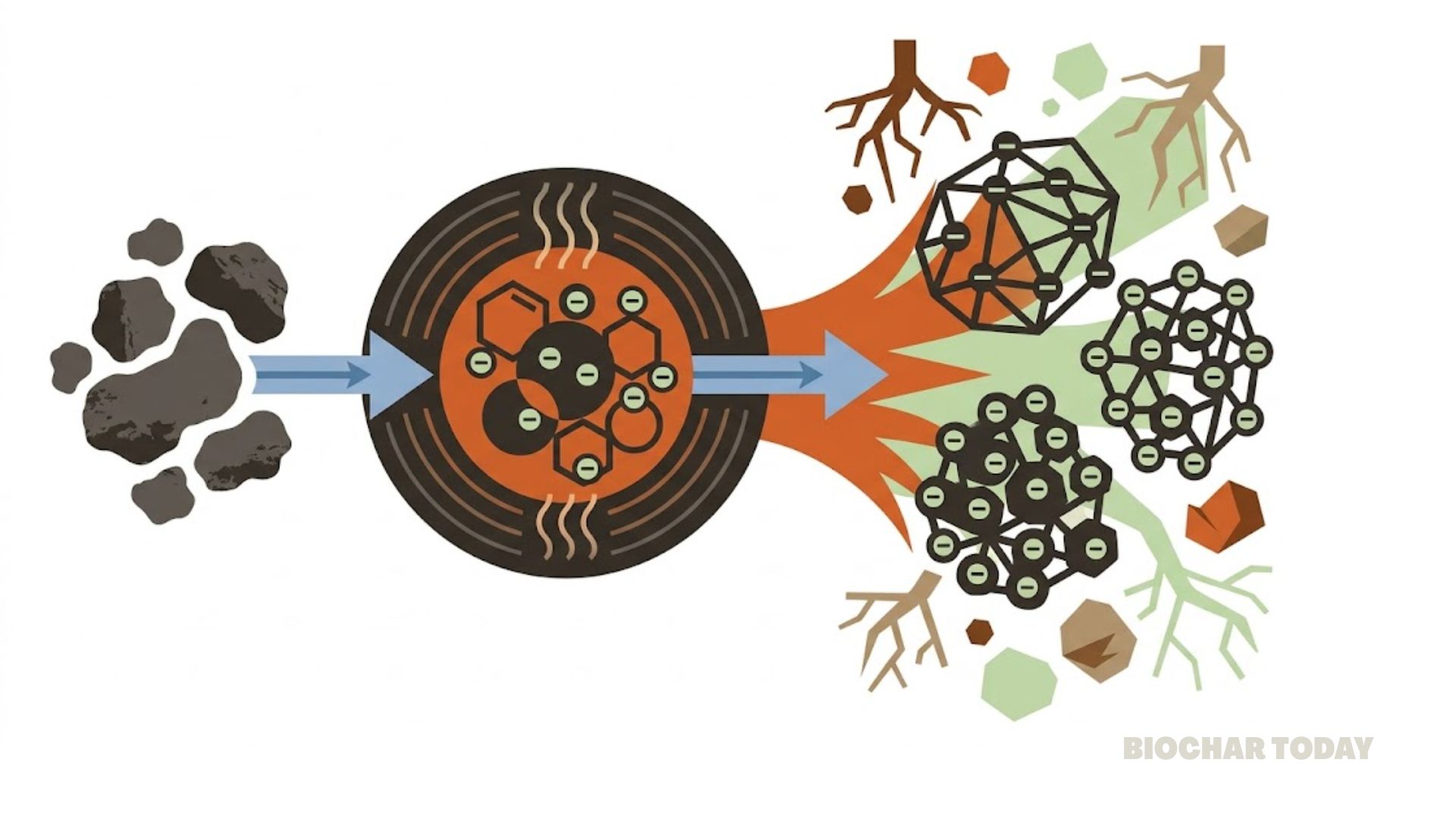
The study emphasizes that biochar modification, particularly chemical metal modification, significantly enhances phosphate adsorption capacity (by 611%) and adsorption rate (by 873%). The effectiveness of metal modification is attributed to mechanisms like electrostatic attraction, ion exchange, complexation, and precipitation, which often interact synergistically.
This review provides a comprehensive analysis of current research and suggests practical strategies for developing effective and practical phosphorus management strategies using biochar adsorption technology.
SOURCE: Wang, Y., Munir, T., Wu, X., Huang, Y., & Li, B. (2025). Phosphorus recovery and reuse: Innovating with biochar in the circular economy. Science of the Total Environment, 973, 179143.


Leave a Reply