
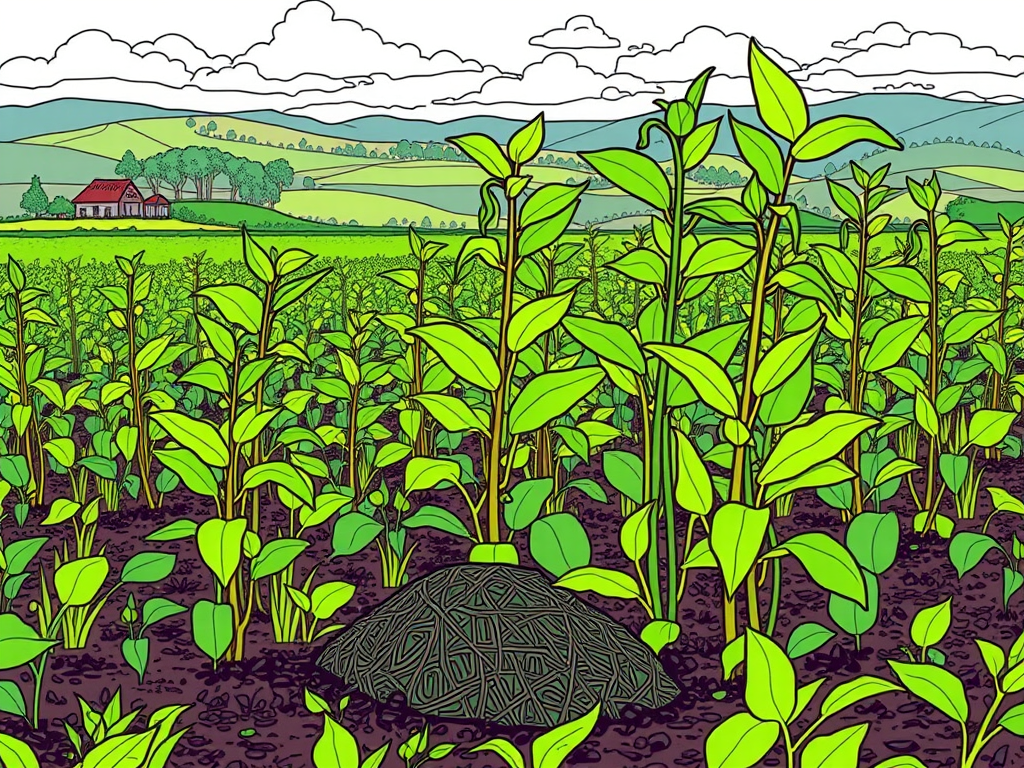
In a study published in Field Crops Research, Talent Namatsheve et al. explored how biocharBiochar is a carbon-rich material created from biomass decomposition in low-oxygen conditions. It has important applications in environmental remediation, soil improvement, agriculture, carbon sequestration, energy storage, and sustainable materials, promoting efficiency and reducing waste in various contexts while addressing climate change challenges. More and conservation agriculture affect nitrogen fixationNitrogen is a crucial nutrient for plant growth, but plants can’t directly absorb it from the air. Nitrogen fixation is a process where certain bacteria convert atmospheric nitrogen into a form that plants can use. Biochar can provide a home for these nitrogen-fixing bacteria, enhancing More and grain yield of pigeon pea in Uganda. The research revealed that biochar application under conservation agriculture significantly enhances biological nitrogen fixation and increases pigeon pea grain yield across different agro-ecological regions in Uganda.
The authors established three on-station experiments in different agro-ecological regions of Uganda. The experiments compared conventional tillage with crop rotation to conservation agriculture practices with and without biochar amendments. Conservation agriculture involved minimum tillage and residue retention. Biochar was applied at rates of 2 Mg ha⁻¹ in both years or 4 Mg ha⁻¹ in the first year.
The study found that biological nitrogen fixation varied across sites, with the highest rates observed in Gulu, which also had the lowest soil nitrogen levels. Biochar amendments in conservation agriculture systems increased nitrogen fixation in all sites in 2023. Grain yield also increased significantly with biochar application in conservation agriculture systems compared to conventional practices.
These findings suggest that biochar enhances nitrogen fixation in pigeon pea, particularly in nitrogen-deficient soils, which leads to improved grain yield. The study highlights the potential of combining biochar with conservation agriculture to enhance productivity in low-input systems in sub-Saharan Africa.
SOURCE: Namatsheve, T., Mulder, J., Obia, A., & Martinsen, V. (2025). Biological N₂-fixation and grain yield of pigeon pea: The role of biochar and conservation agriculture in low-input systems. Field Crops Research, 328, 109923.




Leave a Reply