
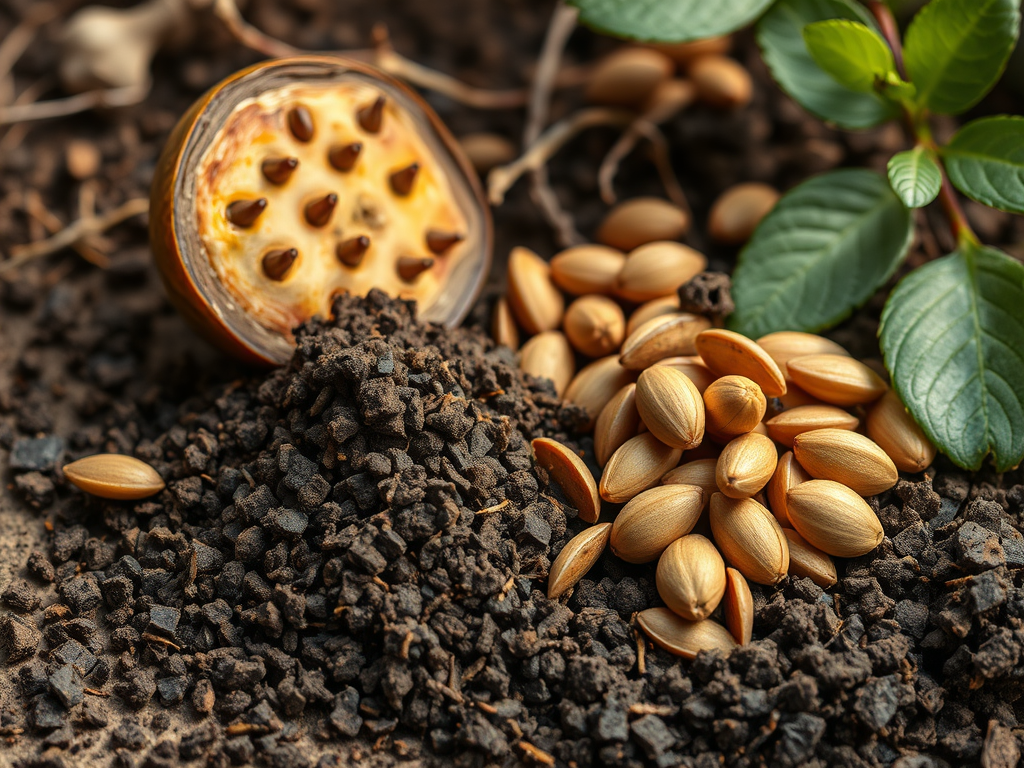
Elango et al., in BiomassBiomass is a complex biological organic or non-organic solid product derived from living or recently living organism and available naturally. Various types of wastes such as animal manure, waste paper, sludge and many industrial wastes are also treated as biomass because like natural biomass these More Conversion and Biorefinery, explored the potential of Thaumatococcus daniellii fruit as a biomass source for biorefinery. This plant is native to West Africa, and its fruit is used to produce thaumatin, a high-value sweet protein. However, the extraction of thaumatin leaves behind a significant amount of waste, accounting for about 90% of the fruit. This study investigated the potential of utilizing this waste for biocharBiochar is a carbon-rich material created from biomass decomposition in low-oxygen conditions. It has important applications in environmental remediation, soil improvement, agriculture, carbon sequestration, energy storage, and sustainable materials, promoting efficiency and reducing waste in various contexts while addressing climate change challenges. More production, contributing to a more sustainable and efficient biorefinery process.
The researchers analyzed the fruit pulp and seeds of T. daniellii to determine their suitability for biochar production. They evaluated the proximate, ultimate, compositional, and thermochemical characteristics of both components. The results showed that the seeds have a higher potential for biochar production, with a yield of 35.1 wt.% compared to 24.5 wt.% for the pulp. The biochar derived from the seeds also had a higher carbon content (74.8 wt.%) than that from the pulp (69.2 wt.%). However, the biochar from the pulp exhibited a higher surface area (174.8 m2/g) compared to the seeds (113.7 m2/g).
This study highlights the potential of utilizing T. daniellii fruit waste for biochar production, adding value to the biorefinery process and contributing to a more sustainable approach. The biochar derived from this waste can be used as a soil amendmentA soil amendment is any material added to the soil to enhance its physical or chemical properties, improving its suitability for plant growth. Biochar is considered a soil amendment as it can improve soil structure, water retention, nutrient availability, and microbial activity. More, contributing to carbon sequestration and improving soil health. Additionally, the biochar can be further processed to produce other valuable products, such as activated carbonActivated carbon is a form of carbon that has been processed to create a vast network of tiny pores, increasing its surface area significantly. This extensive surface area makes activated carbon exceptionally effective at trapping and holding impurities, like a molecular sponge. It is commonly More.
SOURCE: Elango, L. Y., Langmi, H. W., Beckley, V. N., Etape, E. P., Akoachere, J. F., & Foba-Tendo, J. (2025). Preliminary characterisation of the Thaumatococcus daniellii fruit as a potential biomass source for biorefinery. Biomass Conversion and Biorefinery, 1-10. https://doi.org/10.1007/s13399-025-06643-0



Leave a Reply