
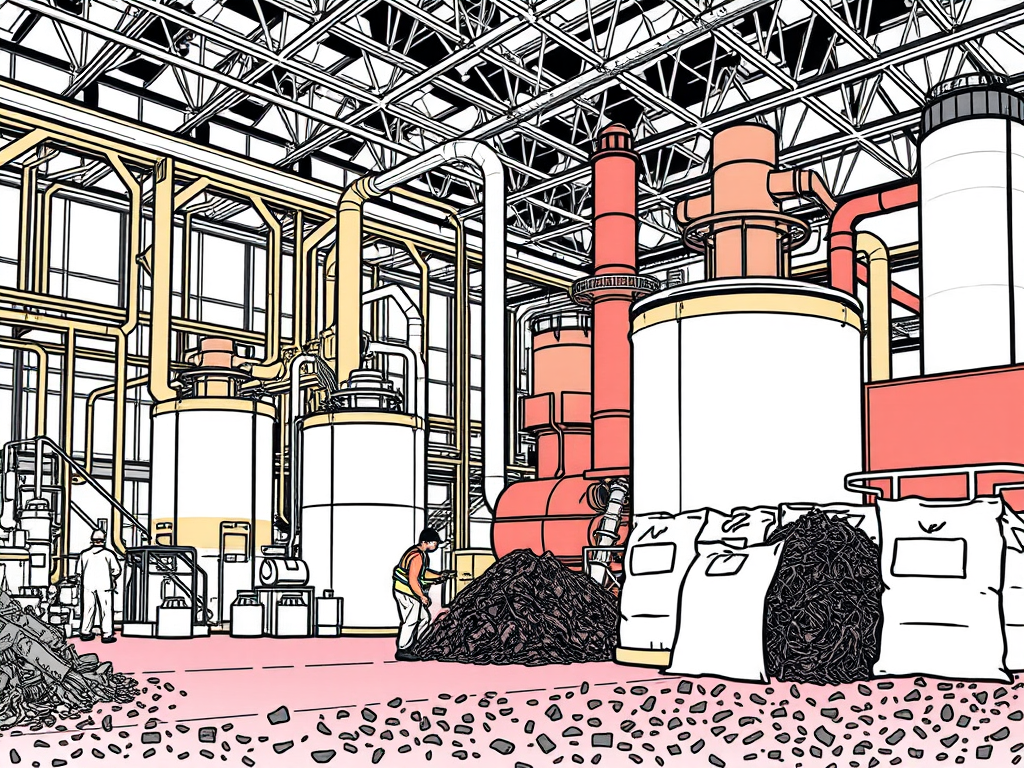
A recent study published in Waste and BiomassBiomass is a complex biological organic or non-organic solid product derived from living or recently living organism and available naturally. Various types of wastes such as animal manure, waste paper, sludge and many industrial wastes are also treated as biomass because like natural biomass these More Valorization by Robiul Islam Rubel and Lin Wei delves into the economic feasibility of producing biochar-based controlled-release nitrogen fertilizers (BCRNFs) at different industrial scales. The research highlights the potential for BCRNFs to offer a more sustainable approach to fertilization by improving nutrient use efficiencyNutrient use efficiency refers to how effectively plants can take up and utilize nutrients from the soil. Biochar can improve nutrient use efficiency by enhancing nutrient availability and retention in the soil. More and reducing environmental impacts.
The study conducted a cost analysis for three different production capacities: small (500 kg/h), medium (2000 kg/h), and large (4000 kg/h) to evaluate how production scale affects cost. The analysis revealed a significant decrease in unit production costs as the production scale increased. This represents a roughly 21% reduction in unit cost by scaling up production.
The study identified feedstockFeedstock refers to the raw organic material used to produce biochar. This can include a wide range of materials, such as wood chips, agricultural residues, and animal manure. More costs as the most significant factor influencing the overall production cost of BCRNFs. Across all production scales, feedstock costs constituted a substantial portion of the total, ranging from 47.30% in small-scale to 59.98% in large-scale facilities. Within the feedstock category, urea was found to be the most cost-sensitive component. Interestingly, the analysis showed that even with significant fluctuations (+/- 30%) in biocharBiochar is a carbon-rich material created from biomass decomposition in low-oxygen conditions. It has important applications in environmental remediation, soil improvement, agriculture, carbon sequestration, energy storage, and sustainable materials, promoting efficiency and reducing waste in various contexts while addressing climate change challenges. More and compost prices, the overall unit price of BCRNF remained relatively stable.
The researchers also explored the impact of operating the production facilities at different shift schedules. They found that increasing from a single-shift to two- or three-shift operations could further reduce the unit production cost. For example, a small-scale facility operating at $0.62/kg in a single shift could potentially reduce costs to $0.52/kg with a three-shift operation.
While the production cost analysis provides valuable insights, the study acknowledges that the economic feasibility of BCRNFs also depends on their adoption by growers. The production costs of BCRNFs are currently higher than conventional urea. However, the authors highlight that BCRNFs offer benefits such as increased nutrient use efficiency, improved crop yields, and positive impacts on soil health and the environment. These factors could offset the higher price and make BCRNFs an economically viable option for growers seeking sustainable agricultural practices.
Source: Rubel, R. I., & Wei, L. (2025). Economic Assessment of Biochar-Based Controlled-Release Nitrogen Fertilizer Production at Different Industrial Scales. Waste and Biomass Valorization, 0(0), 1-17.





Leave a Reply