
Key Takeaways
- Waste from farms and food processing can be turned into a stable charcoalCharcoal is a black, brittle, and porous material produced by heating wood or other organic substances in a low-oxygen environment. It is primarily used as a fuel source for cooking and heating. More that improves soil health.
- This process also helps clean the soil by soaking up harmful pollutants like heavy metals and pesticides.
- This material acts like a sponge to hold onto water and nutrients which helps plants grow better during dry spells.
- Using this charcoal in soil can significantly increase the amount of food a farm produces.
- It helps the environment by trapping carbon underground for hundreds of years and keeping it out of the atmosphere.
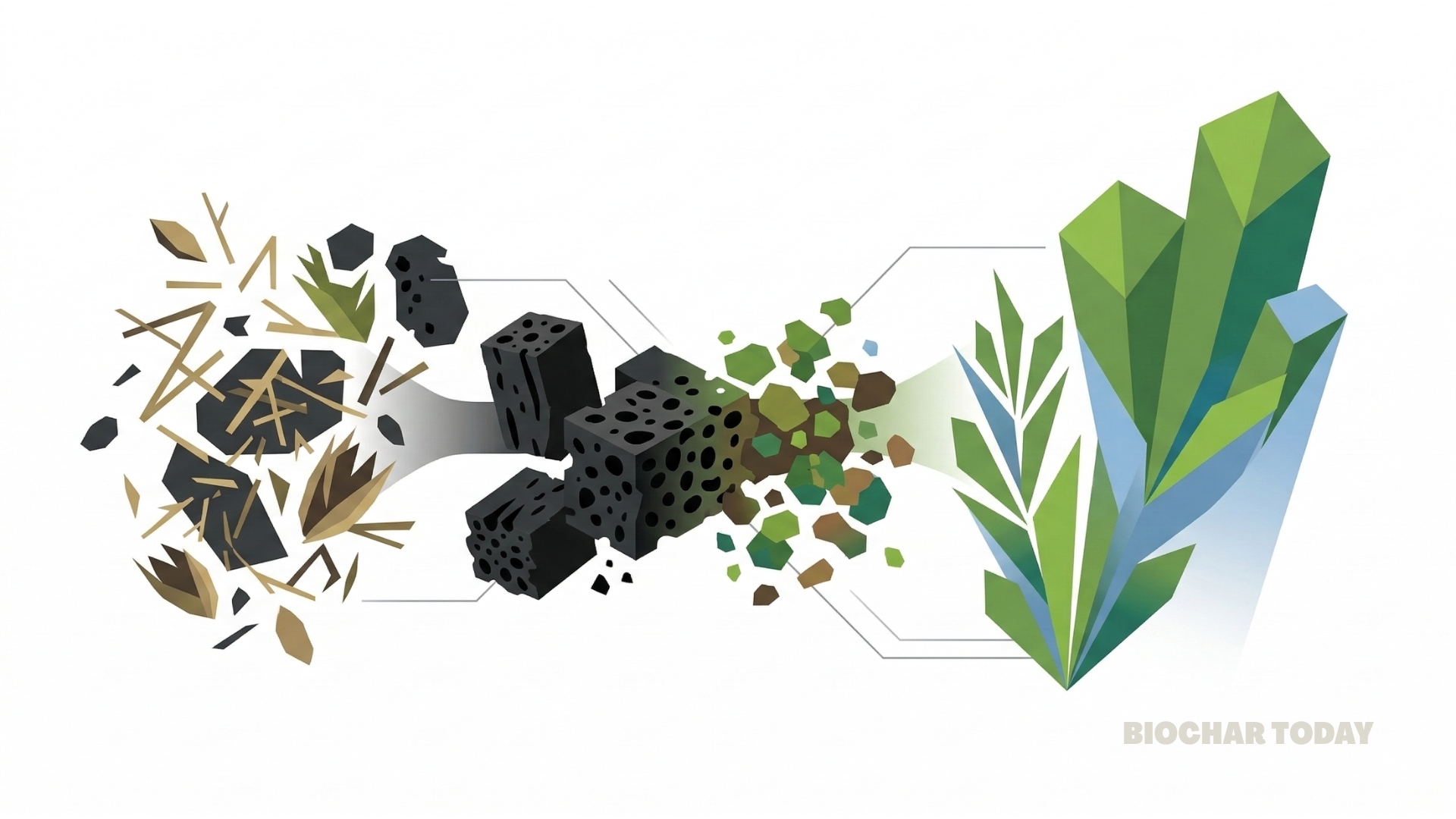
In the 2026 article published in the journal Discover Soil, lead author Aniruddha Sarker and an international team of researchers examine the transformative potential of converting agricultural byproducts into biocharBiochar is a carbon-rich material created from biomass decomposition in low-oxygen conditions. It has important applications in environmental remediation, soil improvement, agriculture, carbon sequestration, energy storage, and sustainable materials, promoting efficiency and reducing waste in various contexts while addressing climate change challenges. More. This carbon-rich material is created through the thermal decomposition of organic matter in oxygen-limited environments, a process known as pyrolysisPyrolysis is a thermochemical process that converts waste biomass into bio-char, bio-oil, and pyro-gas. It offers significant advantages in waste valorization, turning low-value materials into economically valuable resources. Its versatility allows for tailored products based on operational conditions, presenting itself as a cost-effective and efficient More. The study positions biochar as a critical tool for modern sustainable agriculture, capable of addressing the global burden of crop residues and food industry waste. By shifting away from traditional disposal methods like incineration or simple composting, which often fail to capture the full value of the waste, biochar production offers a way to stabilize carbon and create a highly functional soil amendmentA soil amendment is any material added to the soil to enhance its physical or chemical properties, improving its suitability for plant growth. Biochar is considered a soil amendment as it can improve soil structure, water retention, nutrient availability, and microbial activity. More. This research highlights how engineered charcoal can serve as a long-term carbon sink, remaining in the soil for hundreds or even thousands of years.
The findings demonstrate that biochar significantly modifies the physical characteristics of agricultural land, which is particularly vital for soils in arid or degraded regions. One of the most important results is the enhancement of soil porosityPorosity of biochar is a key factor in its effectiveness as a soil amendment and its ability to retain water and nutrients. Biochar’s porosity is influenced by feedstock type and pyrolysis temperature, and it plays a crucial role in microbial activity and overall soil health. Biochar More and the subsequent increase in water-holding capacity. By creating a more porous soil structure, biochar helps agricultural systems retain moisture up to their field capacity, which typically ranges from forty to sixty percent. This increased retention allows plants to better withstand periods of drought and reduces the overall requirement for frequent irrigation. Additionally, the application of biochar reduces soil bulk density, which alleviates compaction and creates a more favorable environment for root development and the movement of oxygen within the soil. These physical improvements are fundamental to restoring the functionality of soils that have been depleted by intensive farming or environmental stress.
Beyond physical structure, the researchers found that biochar acts as a powerful regulator of soil chemistry and nutrient dynamics. It possesses a high cation exchange capacity, which enables the soil to hold onto essential elements like potassium, magnesium, and calcium that might otherwise wash away. This nutrient reservoir effect ensures that fertilizers remain available for plant uptake over a longer period, which simultaneously reduces the need for synthetic inputs and prevents the leachingLeaching is the process where nutrients are dissolved and carried away from the soil by water. This can lead to nutrient depletion and environmental pollution. Biochar can help reduce leaching by improving nutrient retention in the soil. More of chemicals into groundwater. The study also confirms the alkaline nature of many biochars, which effectively raises the pHpH is a measure of how acidic or alkaline a substance is. A pH of 7 is neutral, while lower pH values indicate acidity and higher values indicate alkalinity. Biochars are normally alkaline and can influence soil pH, often increasing it, which can be beneficial More of acidic soils. This liming effect is especially beneficial in tropical agricultural zones, where soil acidity often limits crop productivity. By modulating the chemical environment and enhancing nutrient use efficiencyNutrient use efficiency refers to how effectively plants can take up and utilize nutrients from the soil. Biochar can improve nutrient use efficiency by enhancing nutrient availability and retention in the soil. More, biochar provides a consistent boost to plant physiology and overall biomassBiomass is a complex biological organic or non-organic solid product derived from living or recently living organism and available naturally. Various types of wastes such as animal manure, waste paper, sludge and many industrial wastes are also treated as biomass because like natural biomass these More production.
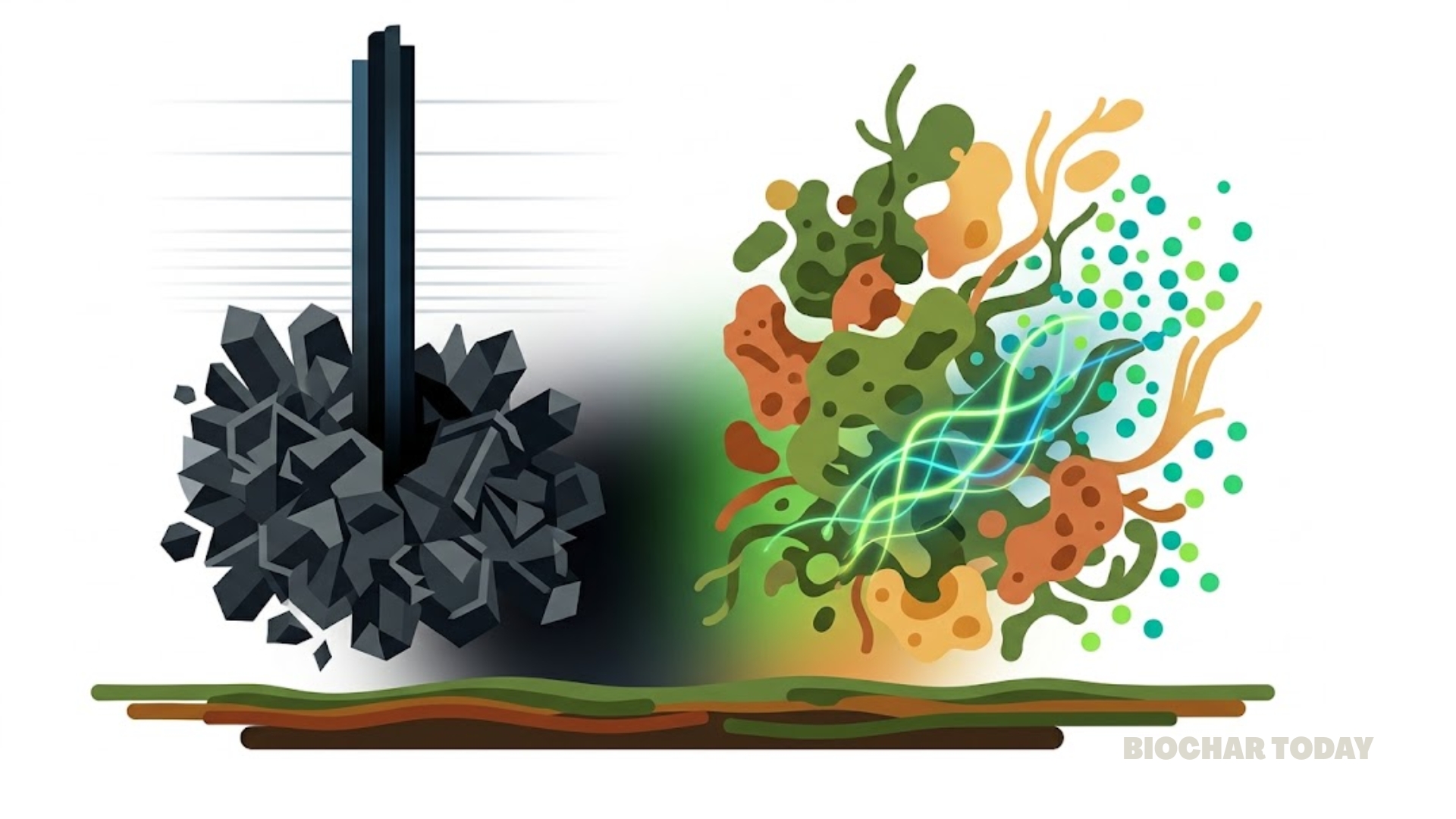
The biological impact of biochar is another key finding of the manuscript, as it provides a stable and protected habitat for beneficial soil microorganisms. The porous architecture of the material serves as a refuge for bacteria and fungi that are essential for nutrient cycling and soil health. The study indicates that biochar amendments lead to increased microbial biomass and diversity, which can help suppress soil-borne pathogens and protect crops from disease. Furthermore, biochar supports the growth of mycorrhizal fungiThese are friendly fungi that form a partnership with plant roots. They act like an extension of the root system, helping plants access water and nutrients more effectively. Biochar can create a cozy habitat for these helpful fungi, boosting their growth and improving plant health. More, which form a symbiotic relationship with plant roots to further improve phosphorus uptake. By fostering a thriving microbial community, biochar enhances the natural resilience of the agricultural ecosystem. This biological stimulation, combined with improved physical and chemical properties, creates a holistic improvement in soil functionality that supports higher agricultural productivity.
The manuscript provides compelling evidence for the role of biochar in environmental remediation and the cleanup of contaminated farmlands. Due to its high surface area and specific functional groups, biochar is exceptionally effective at adsorbing a variety of pollutants, including heavy metals like lead and cadmium, as well as organic contaminants such as pesticides. The study details how biochar can immobilize these harmful substances, preventing them from being absorbed by crops or entering the wider food chain. In some cases, biochar even acts as a catalyst to break down complex organic molecules into less toxic forms through advanced oxidation processes. This capability makes it an essential tool for restoring land that has been impacted by industrial runoff or the excessive use of agrochemicals. By trapping and neutralizing toxins, biochar ensures that the resulting agricultural produce is safer for human consumption.
The quantitative results reported in the study underscore the economic potential of this technology for global food security. Field trials across various countries show significant increases in crop production, with some experiments recording a three hundred percent increase in yields for crops like cucumbers. Other staple crops like rice and maize also showed improved performance, with yield enhancements ranging from six to over fifteen percent depending on the soil type and application rate. These results suggest that biochar can be an economically viable alternative to traditional soil amendments, especially as carbon market incentives begin to offset production costs. The research concludes that while site-specific strategies are necessary to match biochar types with local soil conditions, the widespread adoption of this sustainable innovation is a major step toward achieving global goals for zero hunger and climate action.
Source: Sarker, A., Masud, M. A. A., Deepo, D. M., Das, K., Kebede, M. M., Rakib, M. R. J., Samaraweera, H., Uddin, F. M. J., & Hasan, A. K. (2026). Agricultural byproducts converted to biochar to enhance soil functionality through sustainable innovation. Discover Soil, 3(27).




Leave a Reply